Executive Summary
TAO (Noise Catcher for Acoustic Telepresence) is an autonomous, portable acoustic sensing infrastructure for real-time environmental sound streaming—and the first field deployment within the Groise (Grammars of Noise) research initiative. Born from a collaboration between AHO, Soundly, Sensibel and Ocean Industries Concept Lab, TAO represents a direct response to the proliferation of AI-generated sounds—countering synthetic audio with the dissemination of nature-generated sounds at scale.
The project has evolved through three iterations:
- TAO V1 (Lanzarote, December 2025): Three deployments proving autonomous operation
- TAO V2 (Nezabudice, Czech Republic, December 26-27, 2025): Anthropomorphized binaural head for bee soundscape research
- TAO V3 (In Development): 3D-printed, phone-attachable design for open-source distribution
Through TAO's development, we established that "Latency as Gravity" in digital transmission—computational constraints determine perception hierarchy. Audio "travels faster" than video, fundamentally reshaping how we conceptualize remote acoustic presence.
Research Frame: Grammars of Noise
Groise (Grammars of Noise) is an investigation into what counts as noise, where, and for whom—recognizing that noise is not merely (technical) interference but a contextual, political, and epistemological category that AI is now radically reconfiguring. Categories that once delineated noise from signal collapse in AI design and use. Groise investigates the structural logics, aesthetic implications, and pragmatic consequences of noise in the age of AI. TAO is a field deployment of this inquiry.
Groise draws on three intersecting traditions. Bernie Krause's soundscape ecology reframes noise as relational: his acoustic niche hypothesis demonstrates that natural soundscapes are not chaos but structured systems where each organism has evolved to vocalize within specific bandwidths—what registers as noise to one system may be essential signal to another. Cécile Malaspina's epistemology of noise extends this insight philosophically, arguing that the distinction between signal and noise is not given but decided—a normative act that reveals what systems value and what they discard. And Bogna Konior's work on existential technologies, developed through her reading of Stanisław Lem, frames AI as operating at evolutionary scales that exceed conventional epistemic and moral frameworks—technologies that don't merely process information but reshape the conditions under which knowledge and relation become possible.
Partners & Collaborators
TAO V1: Lanzarote Deployments
TAO V1 was deployed across three distinct environments in Lanzarote, Canary Islands:
1. Famara
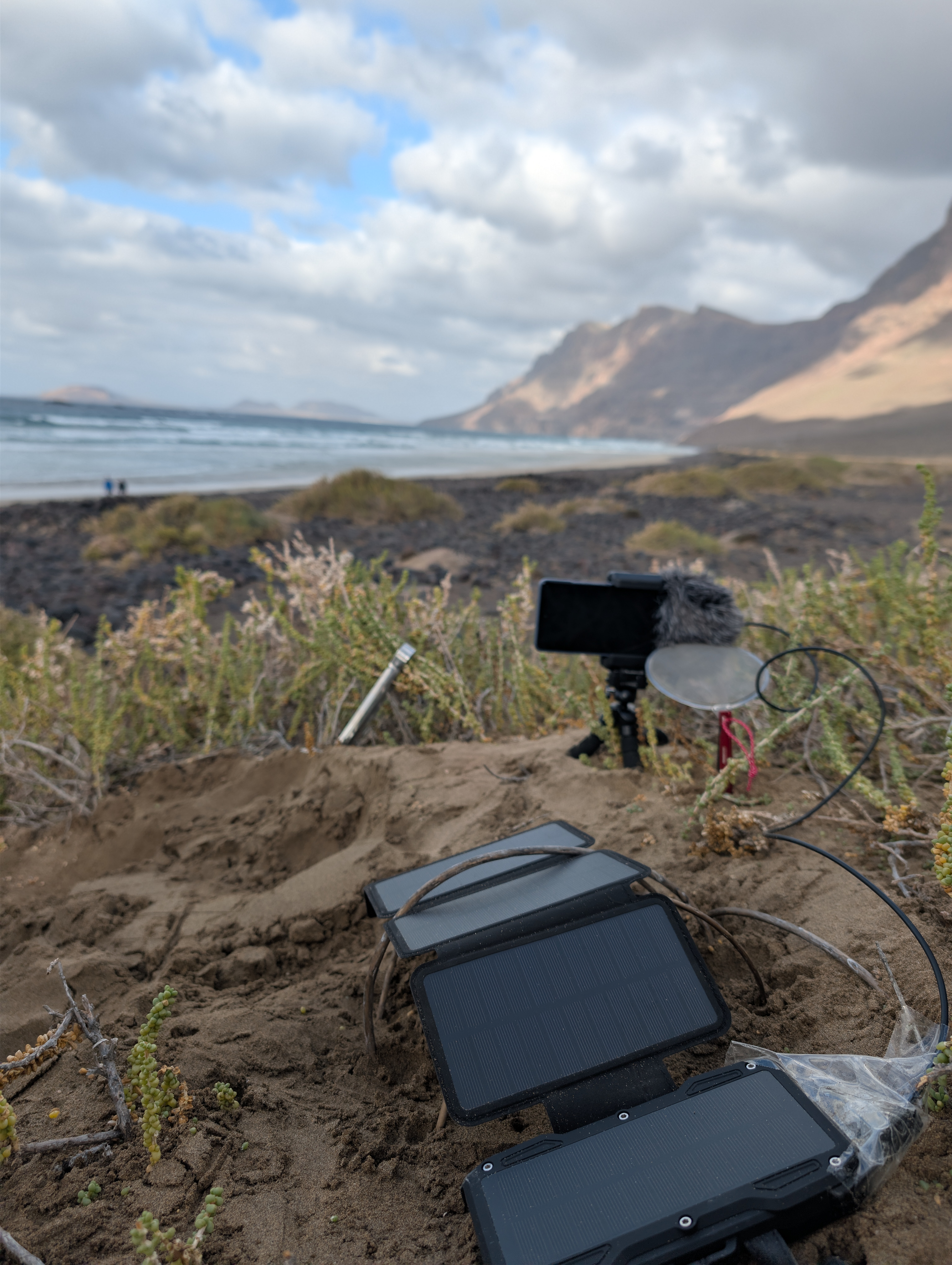
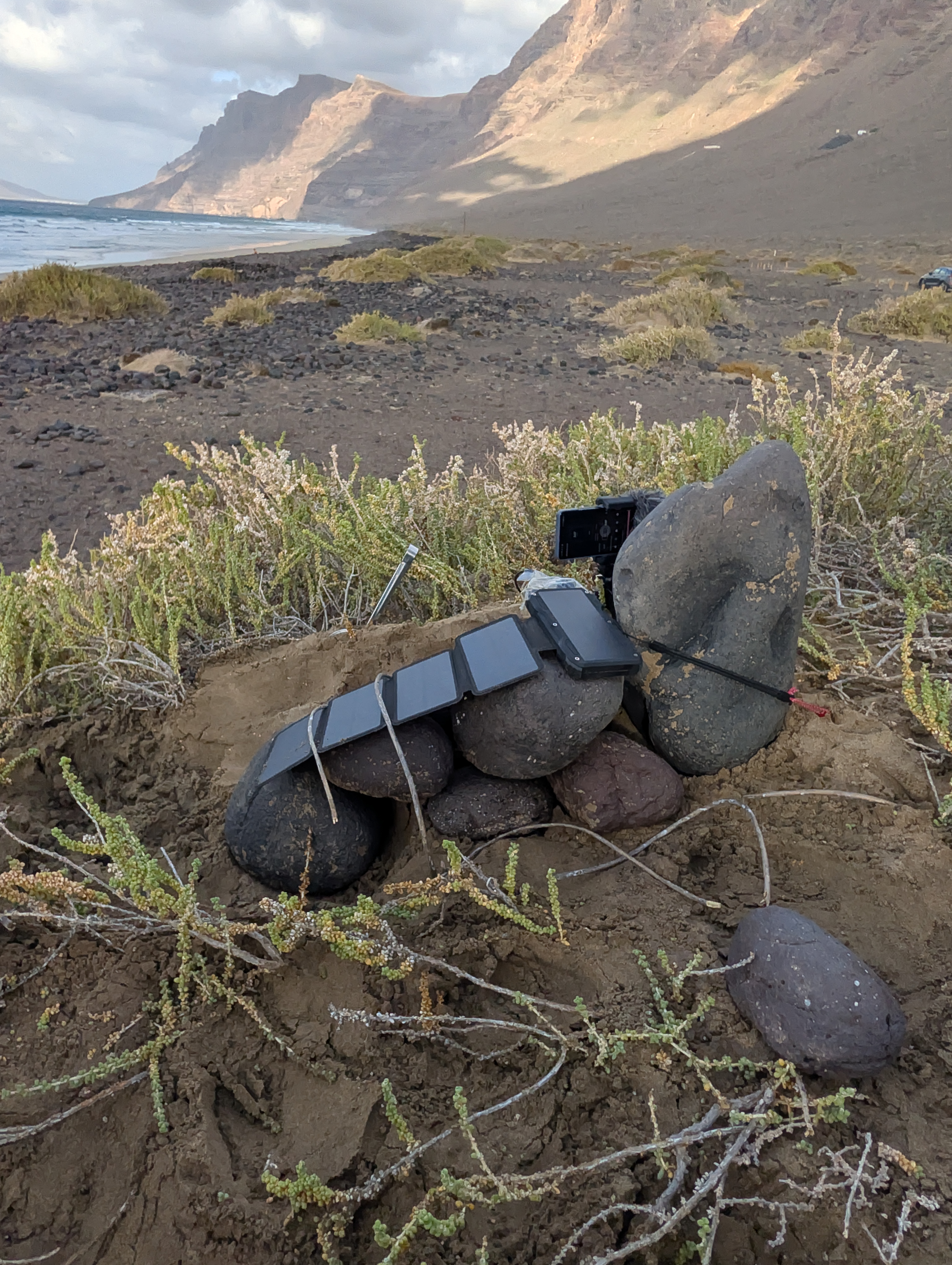
Coastal deployment capturing wave dynamics, wind patterns, and the acoustic signature of volcanic coastline.
2. Mirador del Río
High-altitude deployment (475m) overlooking La Graciosa island, documenting the acoustic gradient between sea and mountain.
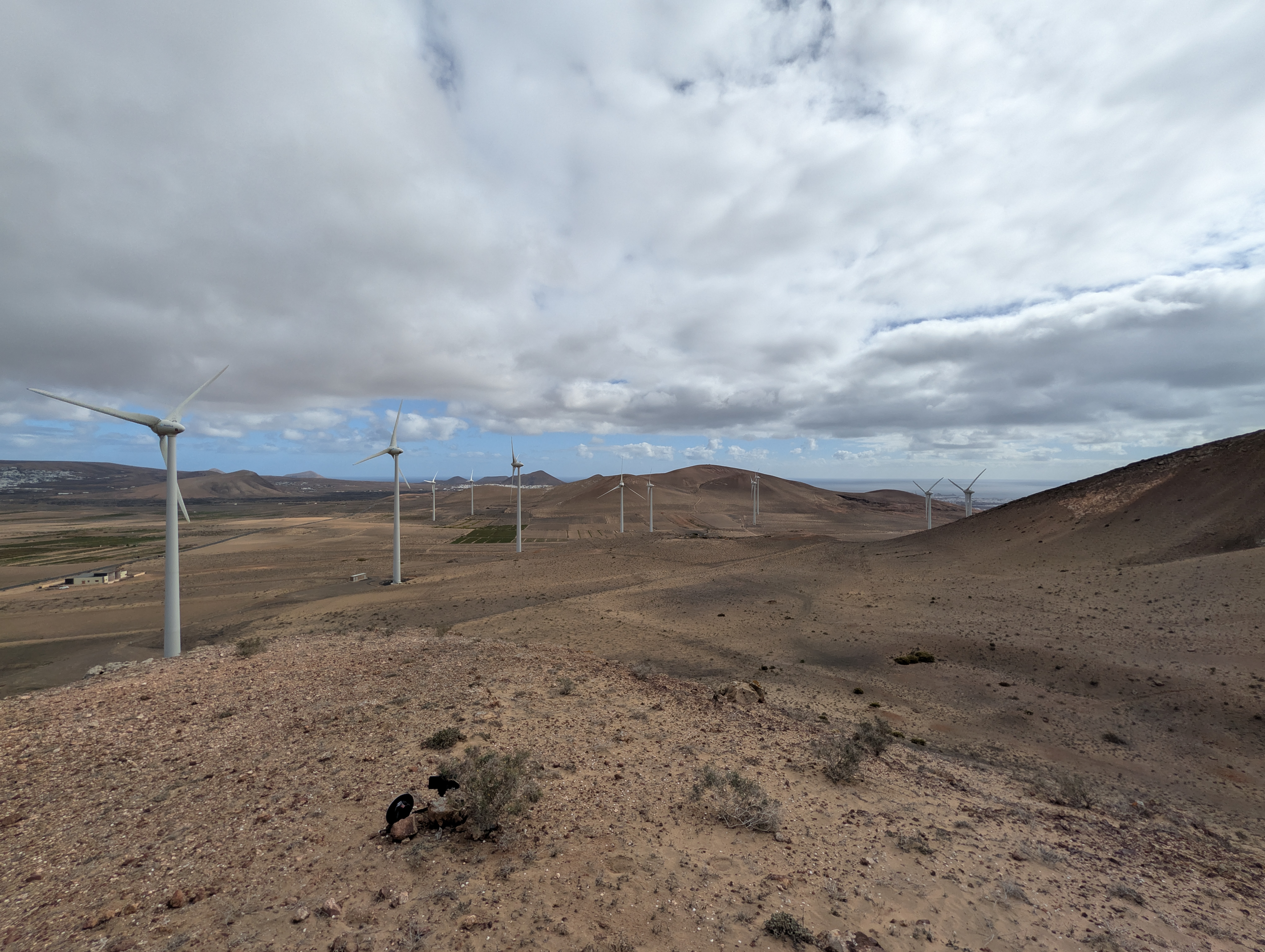
3. San Bartolomé Eolic Park
Energetically Autonomous Configuration: A self-sufficient modification using a fan that harvested its own wind energy, making TAO V1 completely energy-independent. This deployment proved the concept of truly autonomous acoustic sensing—no external power, no human intervention.
Technical Achievements
| Metric | Result |
|---|---|
| Uptime | 98.8% (7-day deployment) |
| Upload success rate | 99.2% |
| Modem power reduction | 95% (Store-and-Burst protocol) |
| Hardware cost | €535 (3-5× cheaper than SBC alternatives) |
| Thermal stability | Zero throttling at 41°C ambient |
Store-and-Burst Protocol
Problem: Continuous streaming at 4.45W = impossible solar balance
Solution: 19-minute acquisition / 1-minute transmission duty cycle
- Modem active only 5% of total time
- System average power: 2.61W (down from 4.45W)
- Result: 95% power reduction for cellular modem
Hardware Platform
Motorola Moto G86 Power 5G:
- MediaTek Dimensity 7300 (4nm FinFET)
- 5000mAh battery (19.25 Wh)
- IP68/IP69K rating
- Integrated MEMS microphone array
Core Finding: "Latency as Gravity"
Through TAO's development, we arrived at a practical lesson about digital transmission: latency behaves a bit like gravity. The limits of computation and networking don't just affect performance but also shape what becomes perceptually salient in remote sensing, and in what order.
| Telemetry Type | Data Mass | Decoding Latency |
|---|---|---|
| Audio (OGG Opus 192kbps) | 24 KB/s | <50ms |
| Video (MKV H.264 500kbps) | 62.5 KB/s | 100-200ms (4× audio) |
Architectural Implication: Audio is prioritized as "Ground Truth"—the continuous, unbroken timeline. Video serves as secondary, discontinuous layer.
We hear the planet before we see it.
The Atmospheric Clock
Post-deployment, TAO V1 evolved into a generative broadcast system—an "Atmospheric Clock" that breathes with seasonal cycles.
Elastic Time (Video)
Unlike traditional loops, video speed is dynamic:
- Anchors: Sunrise and Sunset sequences play at normal speed at Oslo's exact solar moments
- Elasticity: Time between events varies—video slows to fill the gap perfectly
- Winter example: 6-hour day → video at 0.23x speed (movement becomes living painting)
- Summer example: Short night → video at 0.8x speed
Polyrhythmic Audio
Audio is never stretched—plays at 1.0x to preserve texture and fidelity. Because video slows and audio doesn't, the two streams drift and realign constantly, creating an infinite, non-repeating experience.
TAO V2: Nezabudice Deployment
TAO V2 was deployed in Nezabudice, Czech Republic (December 26-27, 2025), in collaboration with Nezamed—a local honey producer—to investigate:
- Soundscape quality in agricultural/apiary environments
- Impact on bees of various acoustic signatures
- Seasonal patterns in environmental sound
The Anthropomorphized Form
TAO V2's physical manifestation consciously positions itself within a lineage of anthropomorphized listening technologies. Like the Neumann KU 100 "Fritz", TAO's configuration of SensiBel AURORA microphones within furry windscreens creates a ritualized head-form—a modern interpretation of binaural recording techniques.
Cultural Iconography
| Reference | Quality Evoked |
|---|---|
| Metropolis's Maria | Porcelain-android gaze, blank receptivity |
| No-Face (Kaonashi) | Absorptive presence, boundary dissolution |
| Ghost in the Shell | Shell-without-ghost materiality |
| Greek Prosōpon | Theatrical masks as divine speech amplifiers |
Through its anthropomorphized form, TAO occupies a unique position at the intersection of scientific instrument, autonomous agent, and ritual object—channeling environmental acoustics into networked presence.
Audio Recordings
Sample recordings from the TAO V2 deployment, captured using SensiBel AURORA MEMS microphones—professional-grade binaural recording hardware developed by Norwegian audio technology innovators.
Beehive Ambient — 5 Minute Sample (Amplified)
Amplified environmental audio from the apiary environment, revealing subtle acoustic textures.
Mic Test #1 at AVU Prague — December 21, 2025 (19:54)
Mic test #1 at AVU Prague.
Mic Test #2 at AVU Prague — December 22, 2025 (20:08)
Mic Test #2 at AVU Prague.
TAO V3: In Development
TAO V3 is being developed with Mikuláš Rett and Markéta Dolejšová at the Academy of Fine Arts Prague, targeting completion before Spring 2026.
| Feature | Description |
|---|---|
| 3D Printed | Reproducible, modifiable, open-source hardware |
| Phone-Attachable | Universal mounting for any mobile device |
| SensiBel Integration | Professional MEMS microphone quality |
| Open Source | Documentation for community replication |
| Marketable Path | Potential product development trajectory |
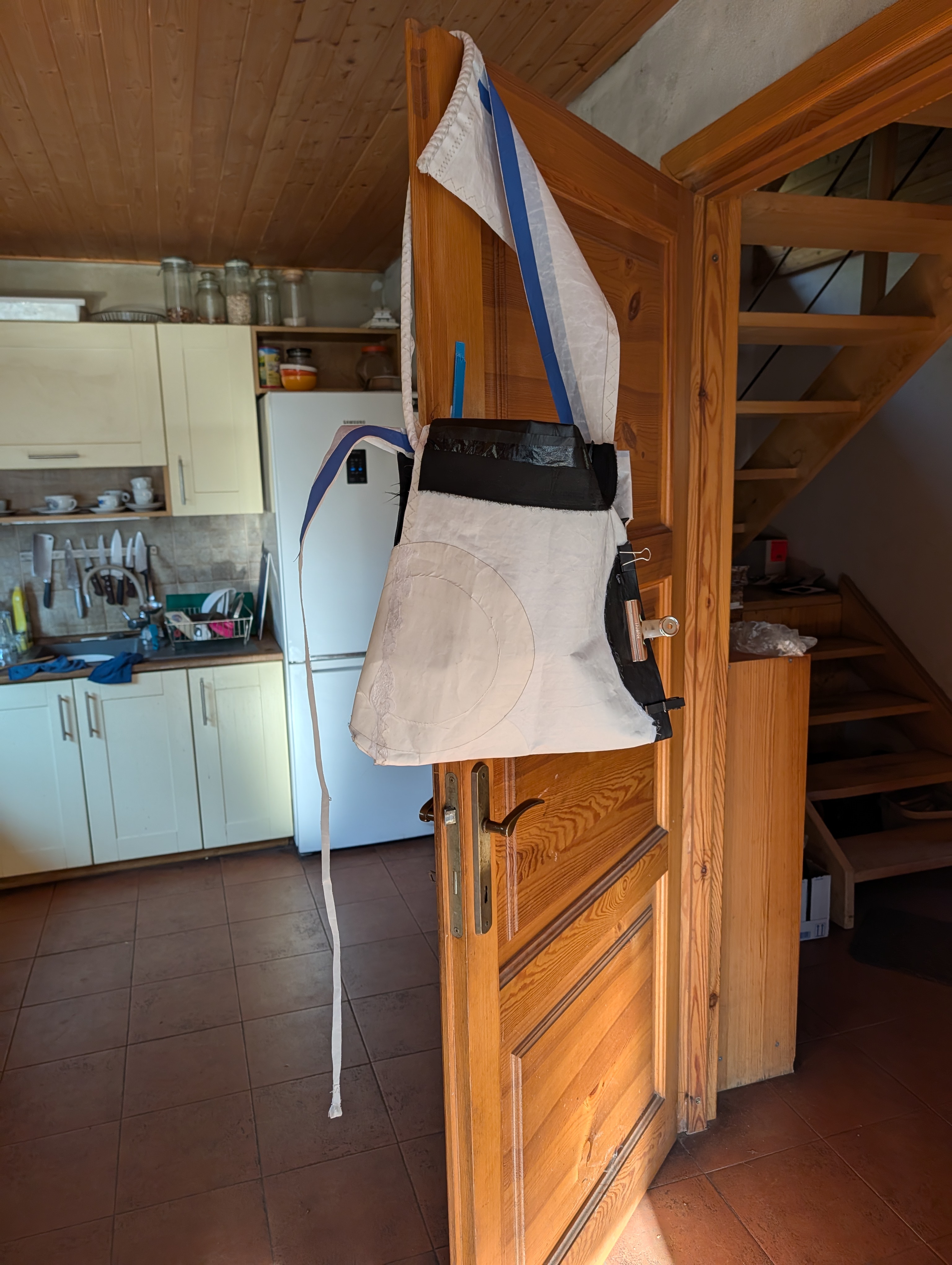
TAO Field Equipment: The TAO Bag
TAO Bag V1 (Current)
- Material: Recycled textile from decommissioned sailboat sail
- Lining: Sound-isolating material for acoustic protection
- Function: Transforms from carrying bag → field-deployable rain shelter
TAO Bag V2 (In Development)
A professional evolution in collaboration with SegraSegra—a Prague-based company specializing in high-quality techwear design.
Cross-Project Connections
TAO ←→ OpenAmbient / OICL
Acoustic Telepresence for Remote Vessel Operations
TAO's core findings offer potential applications for OpenAmbient's approach to remote maritime monitoring:
- "Latency as Gravity" suggests audio-first approaches may benefit vessel monitoring scenarios
- Store-and-Burst protocol could translate to offshore bandwidth constraints in remote vessel operations
- Wind management techniques developed for TAO may apply to boat surface microphones
- Autonomous operation principles could extend to semi-autonomous vessel monitoring
In this vision, the operator becomes a performer, creating human-AI duets in sense-making. Rather than passive surveillance, operators could actively manipulate tempo, filtering, and processing of real-time data streams—the AI observes these performance choices as data, enabling collaborative pattern detection that neither human nor AI could achieve alone.
Entropy as Resource: The "Schrödinger's Server" Finding
A critical TAO discovery with implications for remote maritime systems: during deployment, SFTP uploads would stall at 0% but resume when an SSH session was opened. Diagnosis: Entropy starvation—headless systems without hardware inputs deplete the kernel's cryptographic randomness pool. Solution: HAVEGE daemon injecting ~1Mbits/s of randomness.
For OpenAmbient's semi-autonomous vessel operations, this finding suggests that environmental noise itself could serve as an entropy source—the very acoustic data being captured for monitoring could simultaneously feed cryptographic systems, creating a self-sustaining security architecture where the ocean's randomness powers secure transmission of its own soundscape.
TAO ←→ CRAITR
Teaching Real-Time Embodied AI Collaboration at AHO course "Creative Practice with Generative AI - CRAITR"
The AHO course Creative Practice with Generative AI (CRAITR) uses TAO as a teaching platform for exploring the intersection of AI and environmental sensing:
- Demonstrates psychoacoustic processing techniques for environmental sensing
- Provides real-time embodied AI collaboration principles and infrastructure
- Student projects leverage TAO as teaching tool for AI + environmental sensing
- Showcases performative approaches to human-AI interaction
TAO ←→ Soundly
Technology Partnership for Environmental Sound
Soundly has been a key technology partner throughout TAO's development, contributing across multiple dimensions:
- Lanzarote Documentation: Video documentation of TAO V1 deployments across all three Canary Islands sites
- Home Series Development: Collaborative exploration of domestic acoustic environments and streaming concepts
- TAO V3 "Phone Exoskeleton": Joint development with Mikuláš Rett on the 3D-printed, phone-attachable acoustic sensing accessory
- Concept Development: Ongoing dialogue on the role of authentic environmental sound in an era of AI-generated audio
Noise as Computational Resource: A Research Direction
TAO's "Schrödinger's Server" discovery—where entropy starvation caused cryptographic failures in headless systems—opens a provocative research direction for Soundly. The finding that injecting randomness is necessary for secure autonomous systems suggests that environmental acoustic noise captured by TAO could serve dual purposes: both as content (soundscapes) and as computational fuel (cryptographic entropy). This positions sound libraries not just as creative resources, but potentially as sources of high-quality randomness for security-critical applications—a concept worth exploring in future Soundly × TAO collaborations.
Photo Documentation
Total Curated Images: 77 photographs + 8 spectrograms
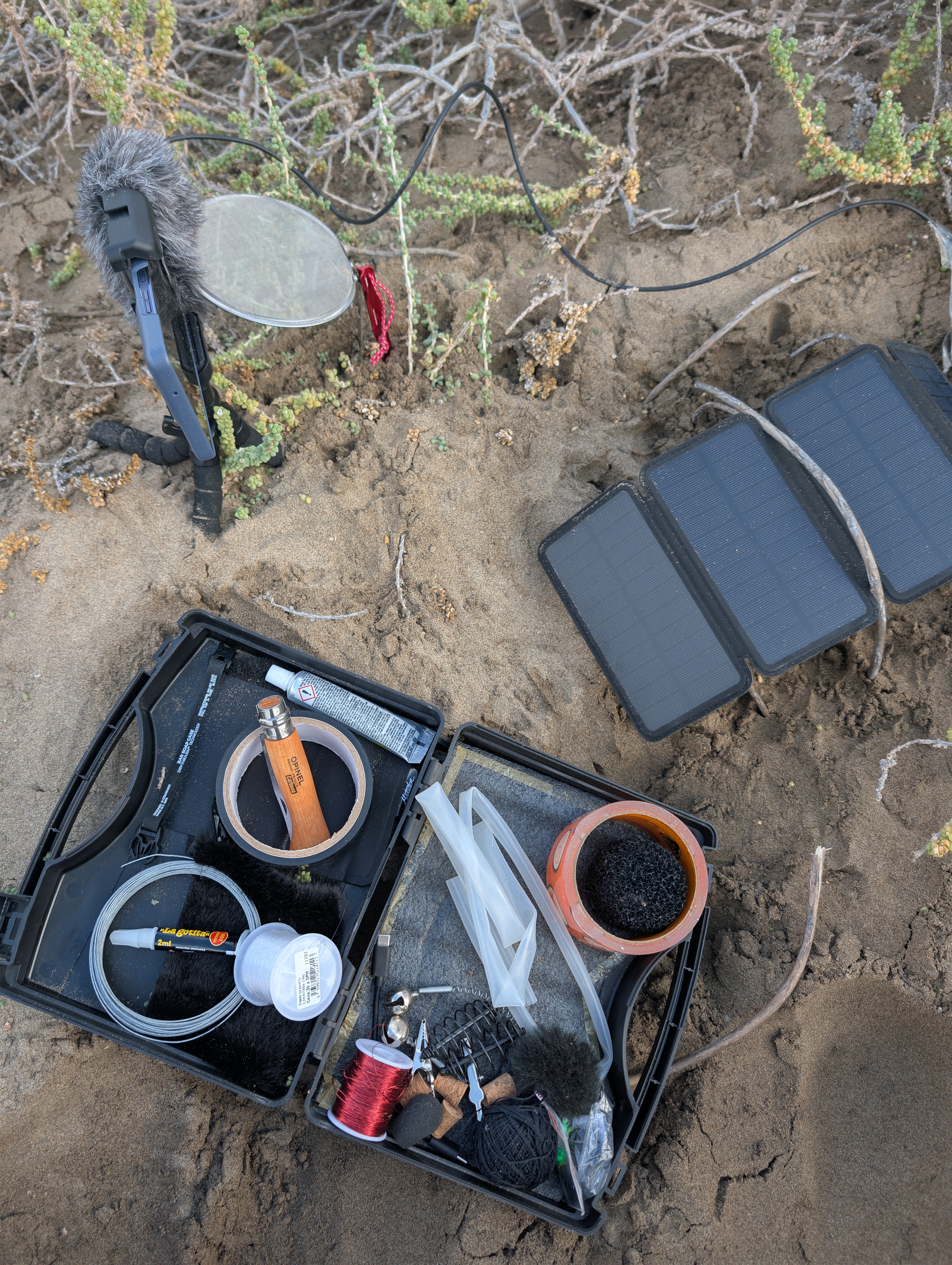
TAO V1: Build Process
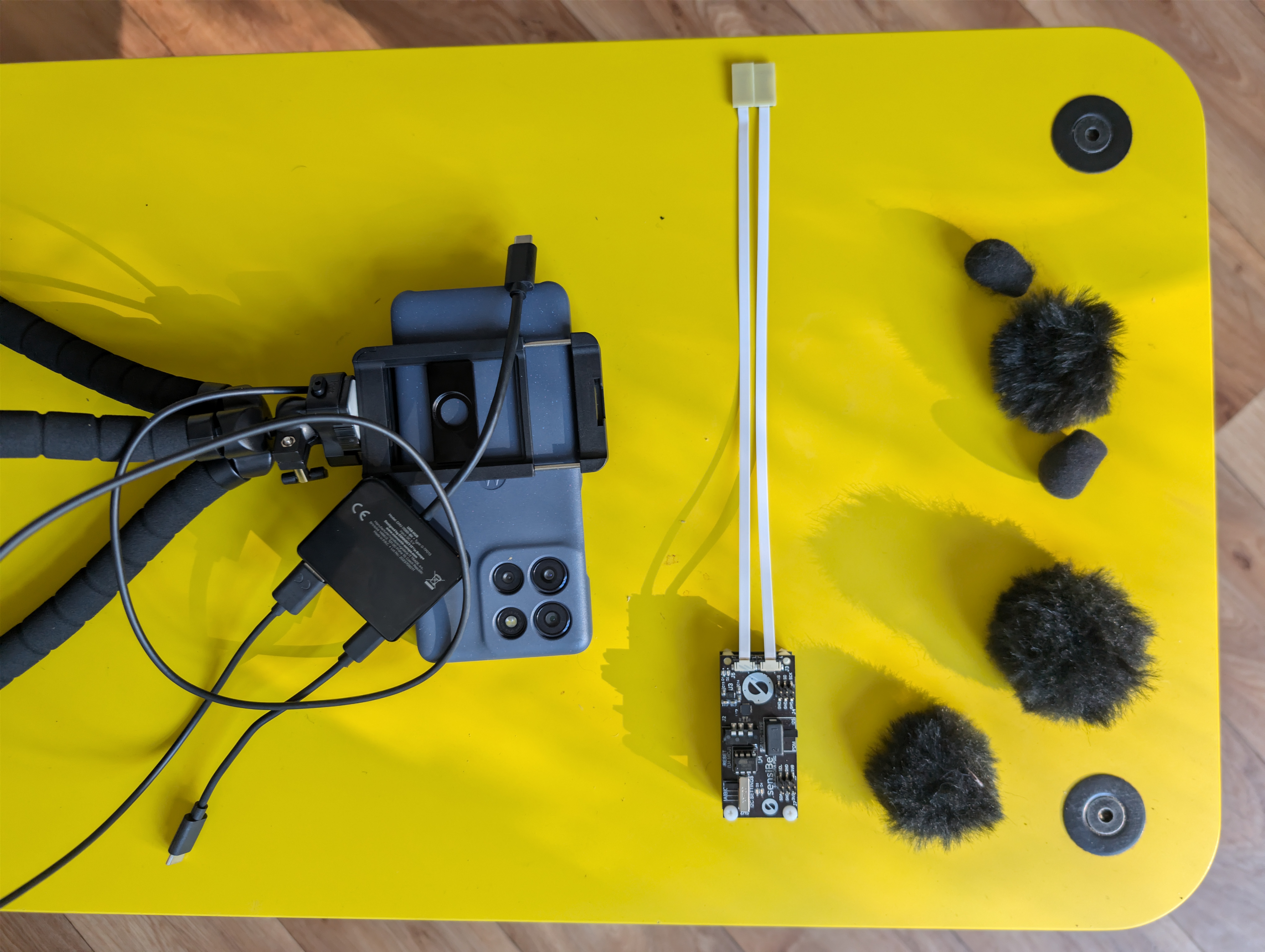 Initial assembly
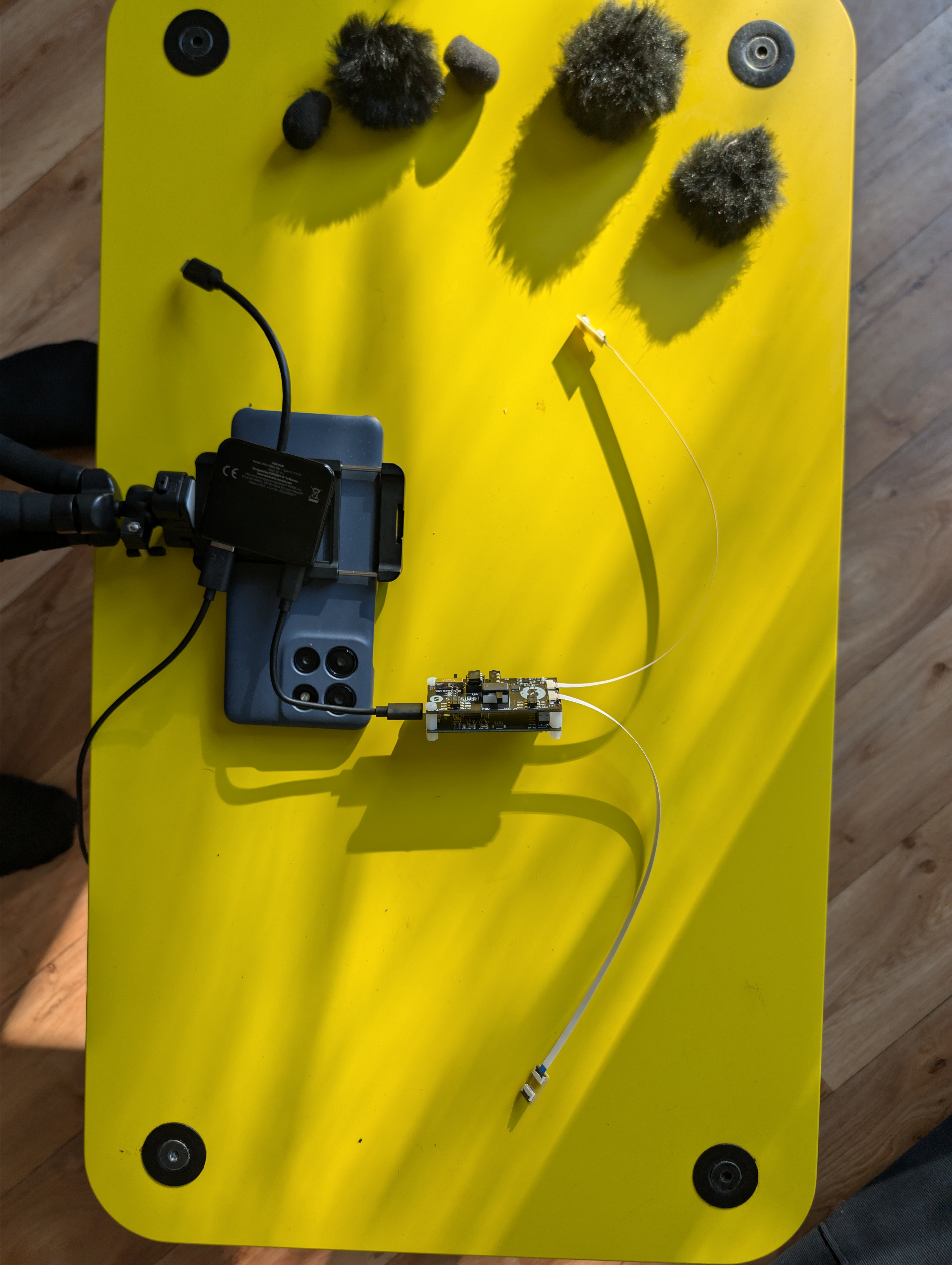 Component integration
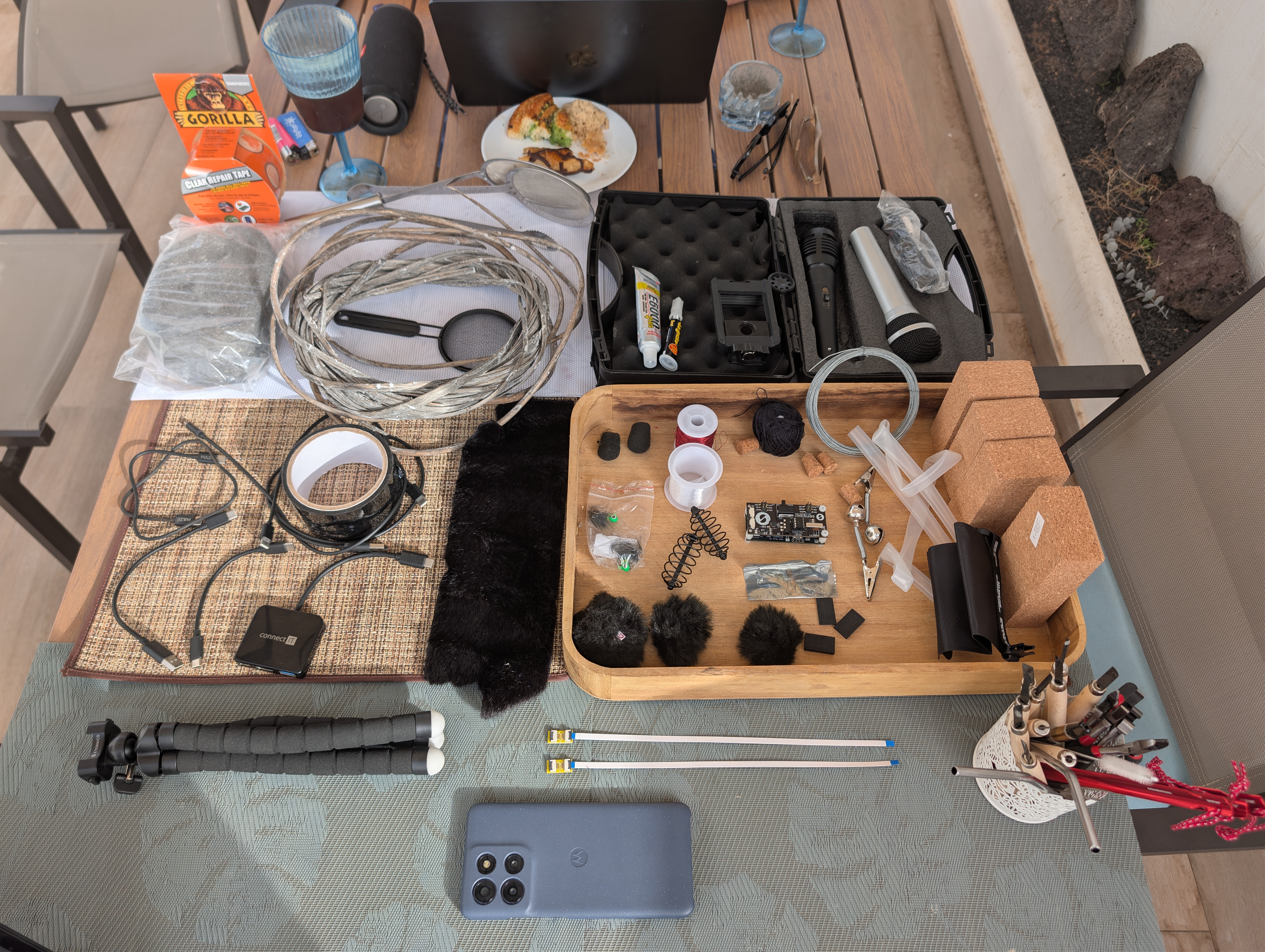 Hardware setup
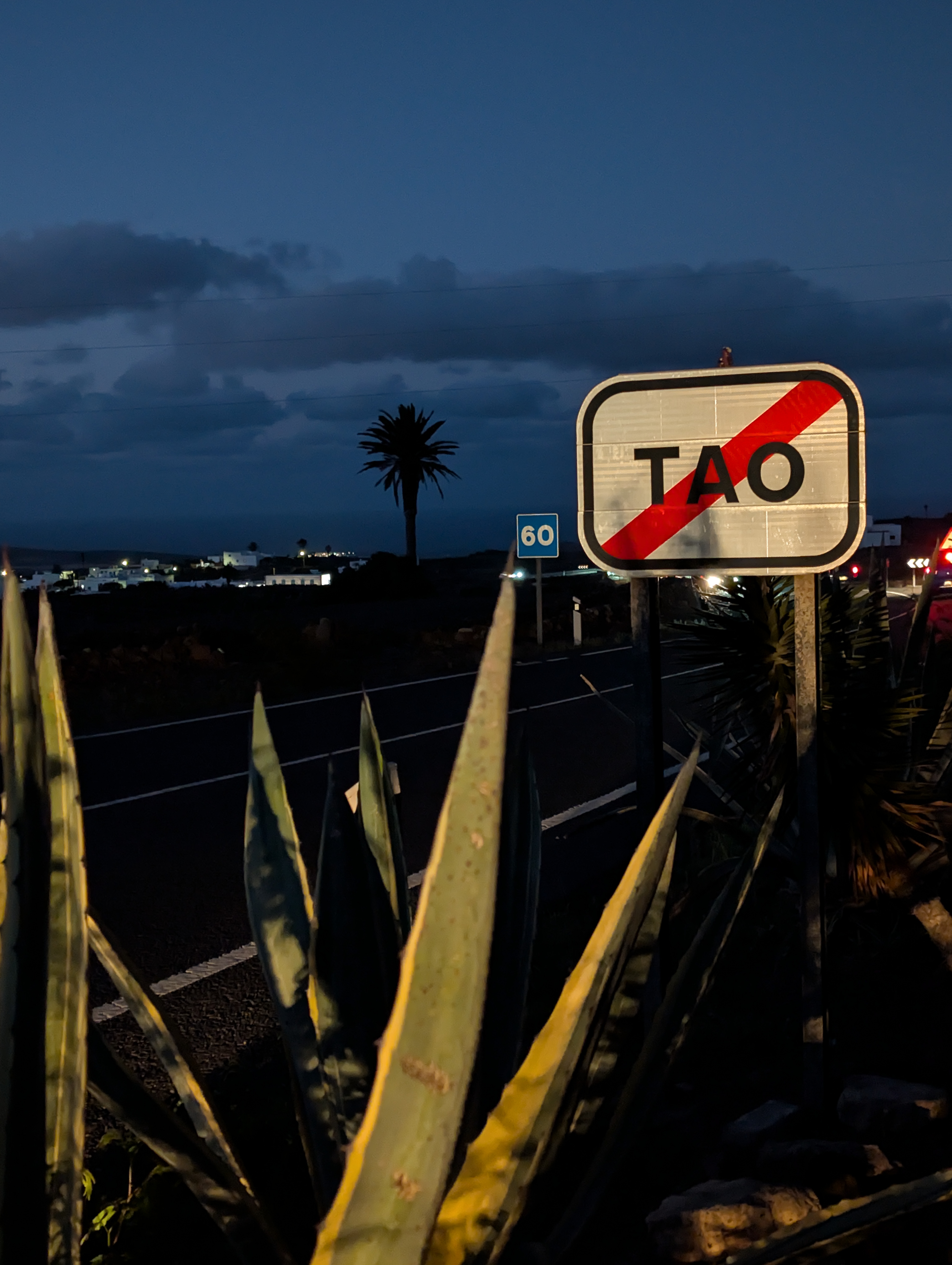 Testing phase
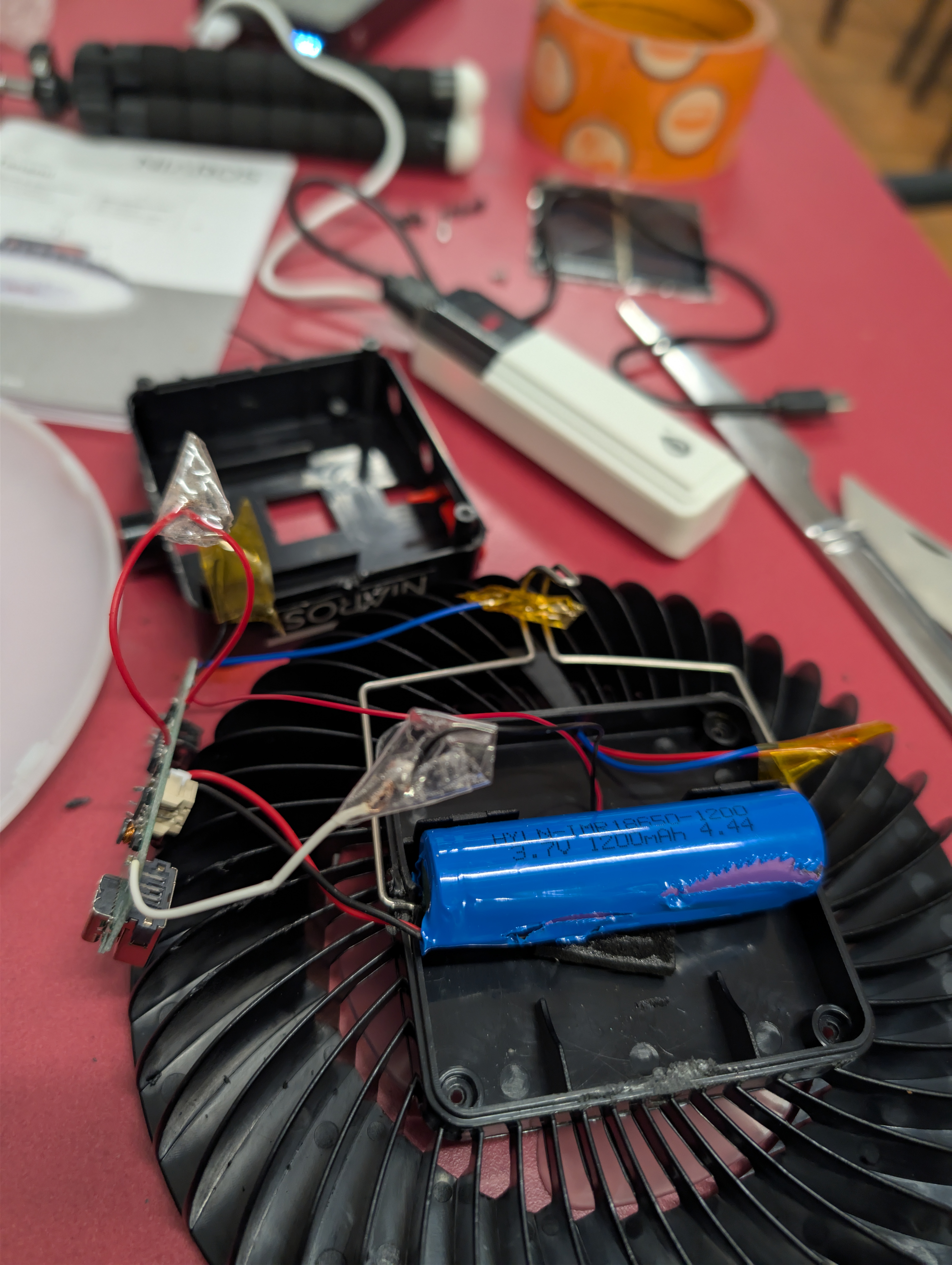 Final configuration
TAO V1: Famara — Coastal Deployment
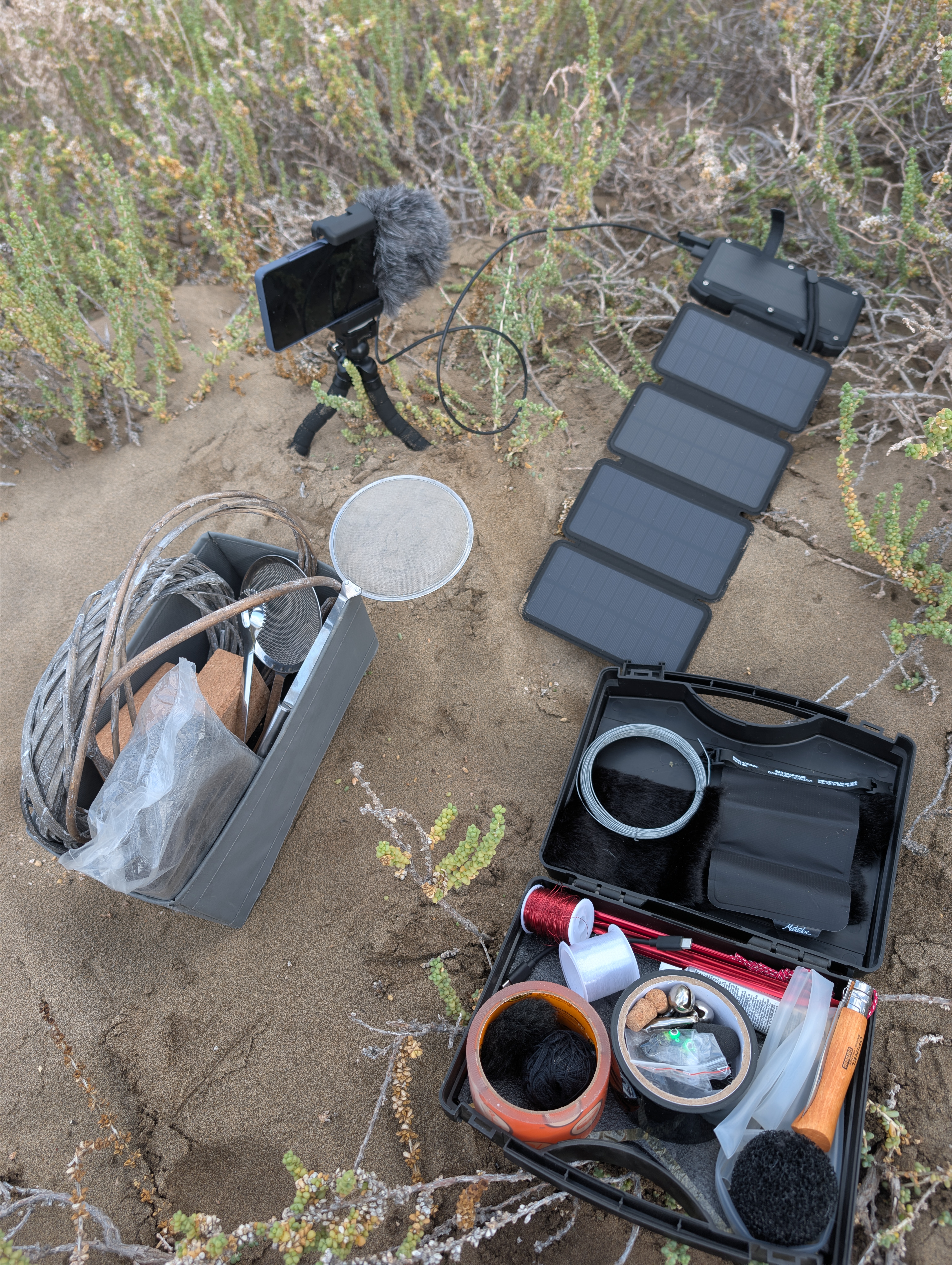 Coastal arrival
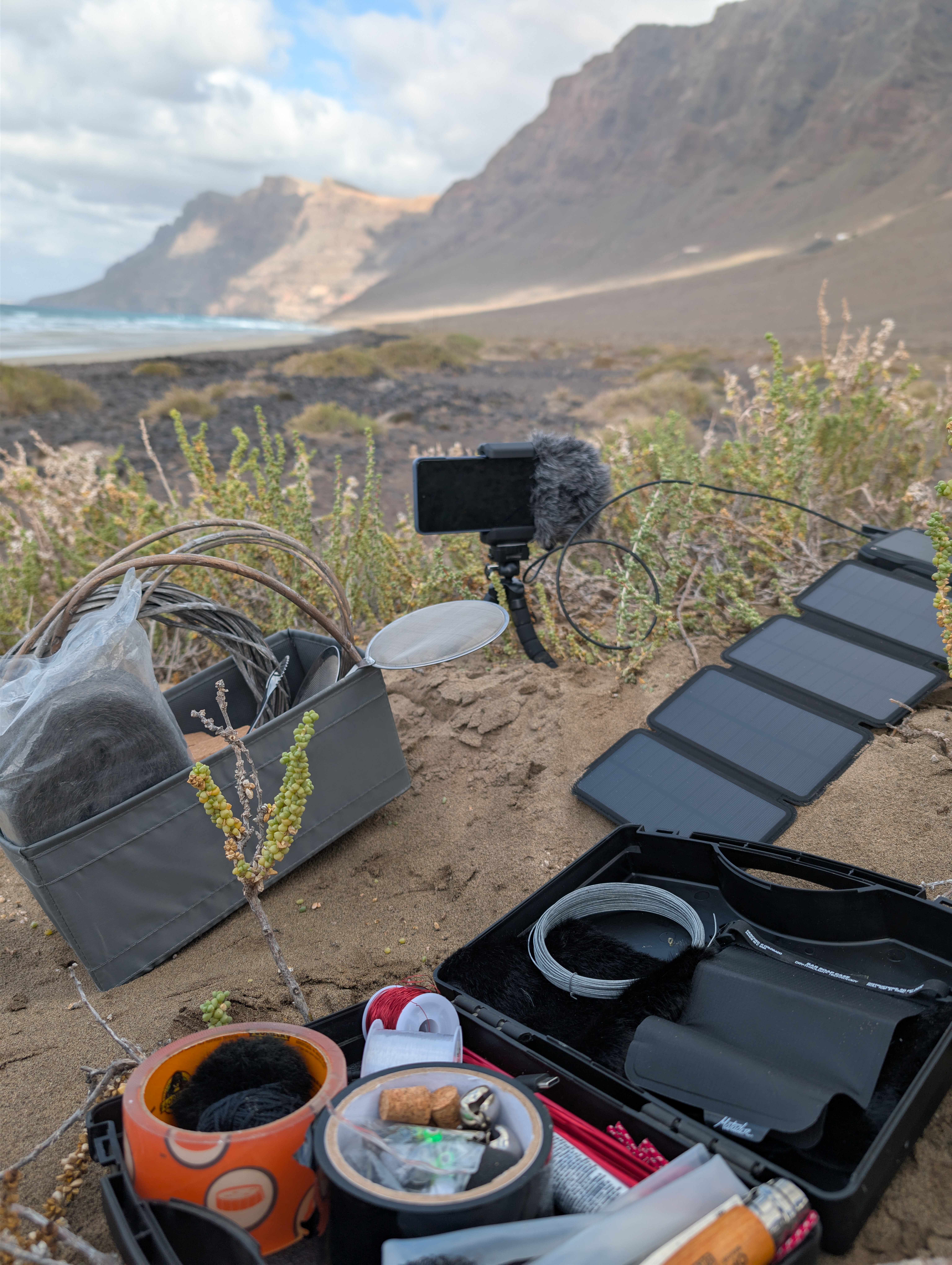 Volcanic coastline
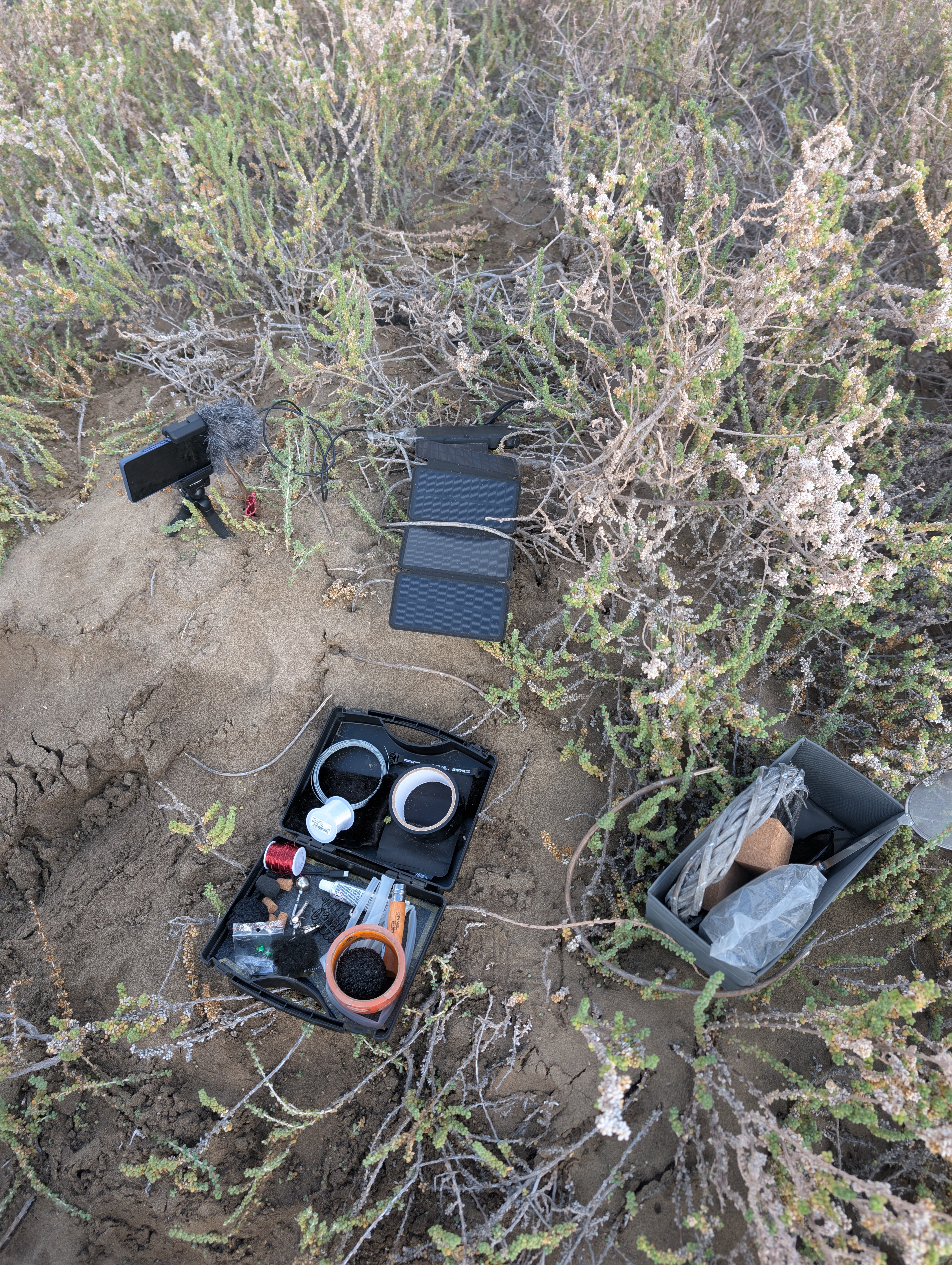 Deployment site
 Wave dynamics
 TAO V1 installed
 Coastal soundscape
TAO V1: Mirador del Río — High Altitude
 High altitude vista
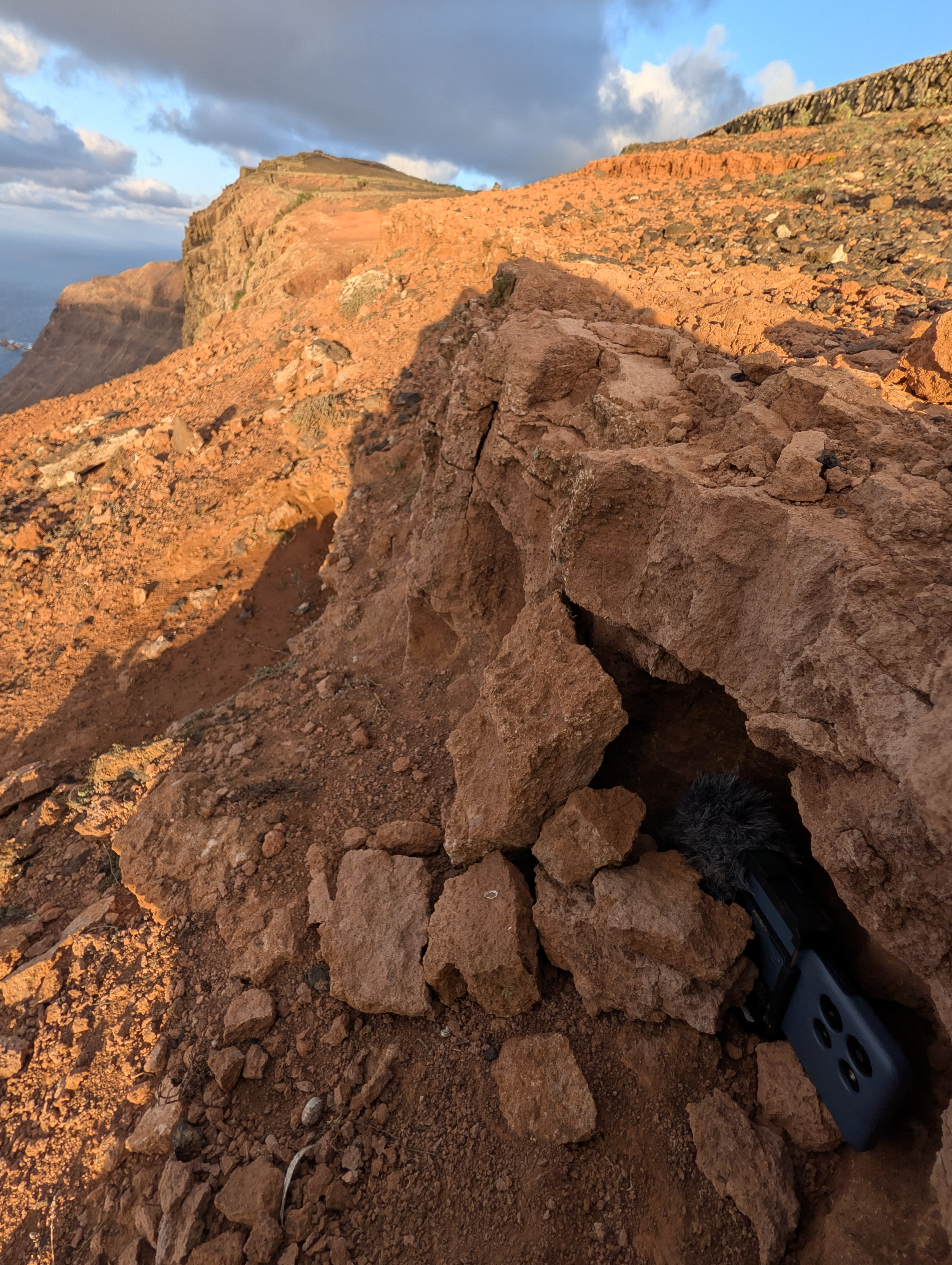 La Graciosa view
 475m deployment
 Acoustic gradient
 Sea-mountain interface
TAO V1: San Bartolomé Eolic Park
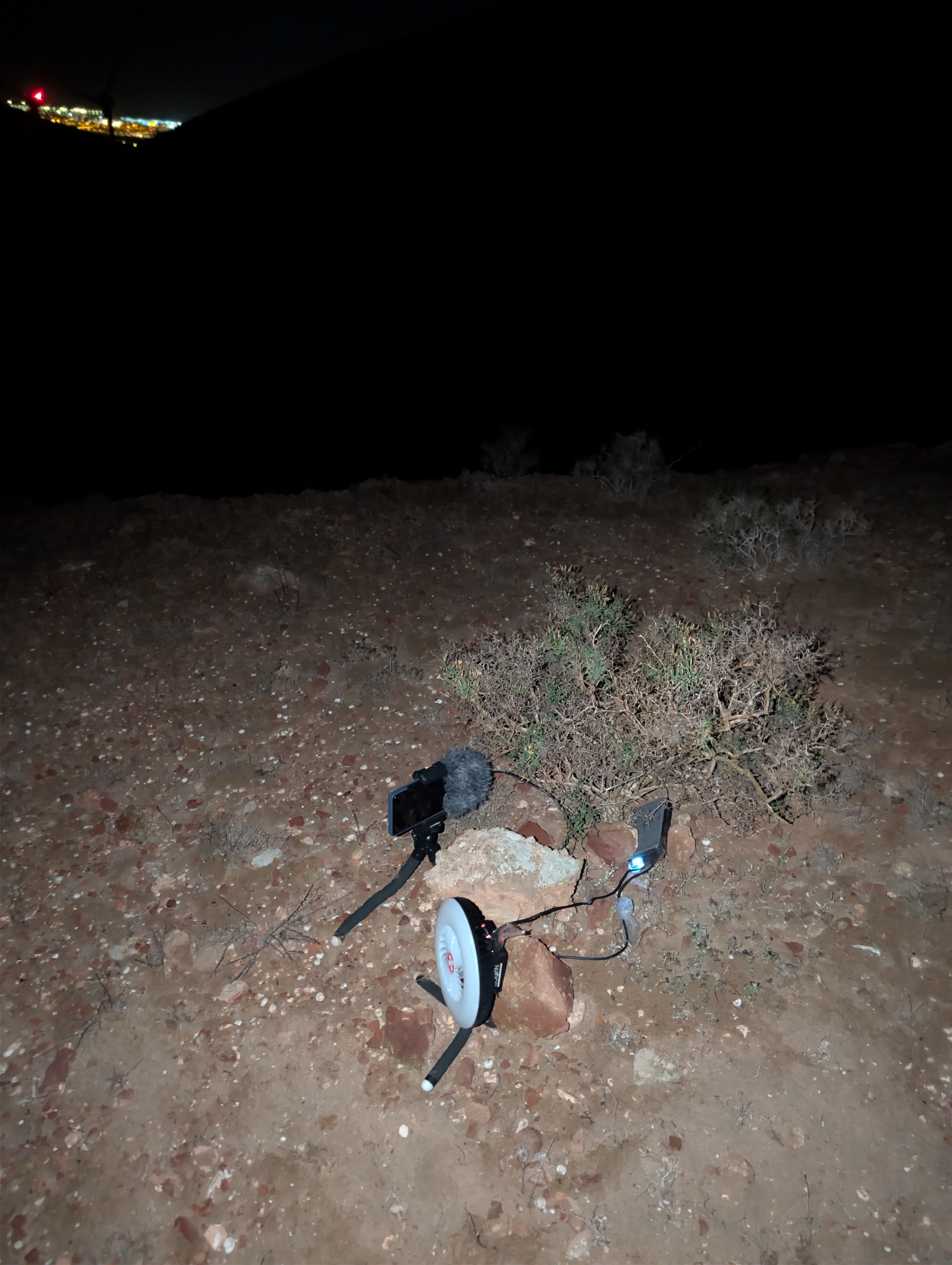 Wind farm arrival
 Turbine array
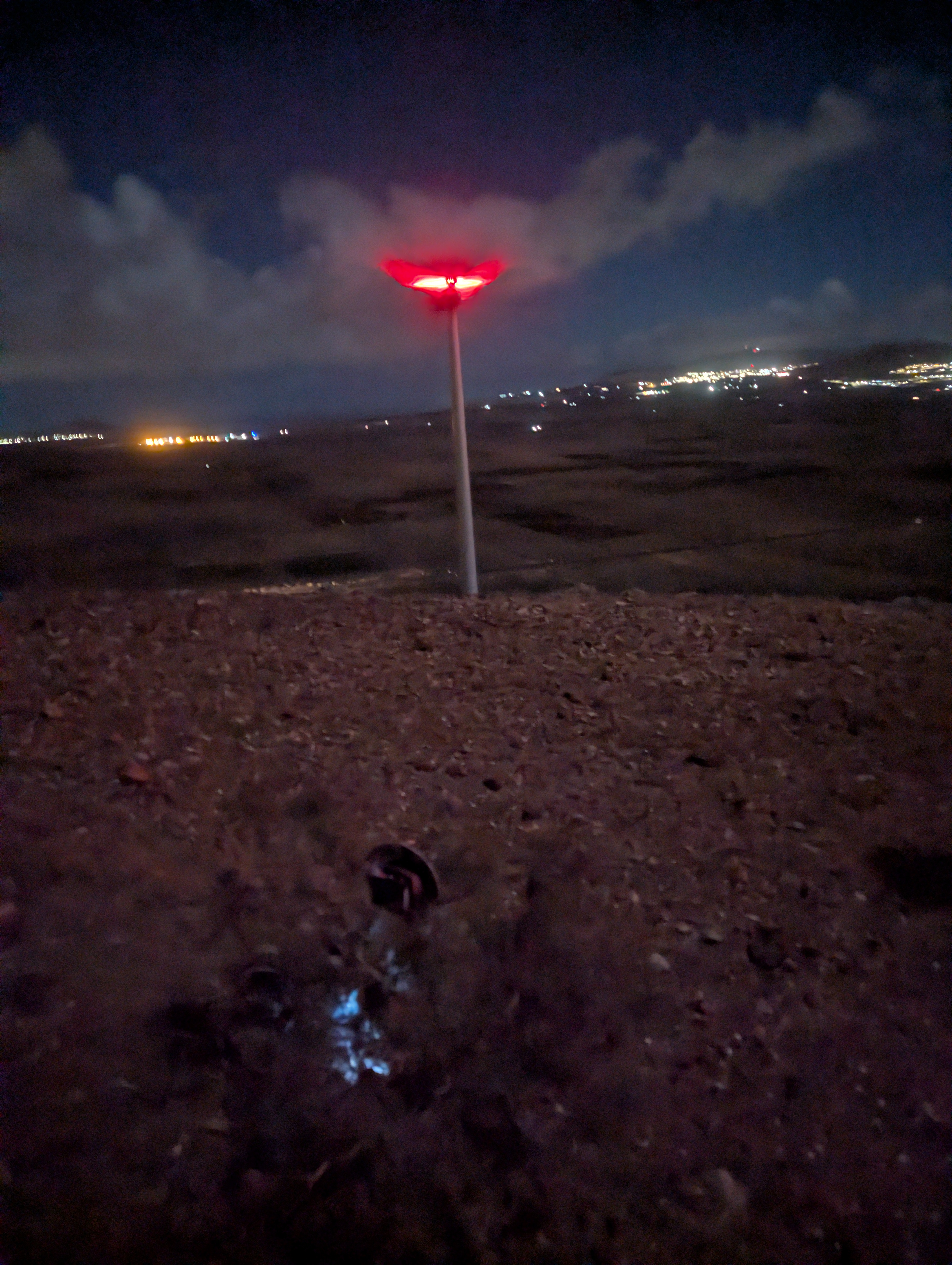 Night deployment
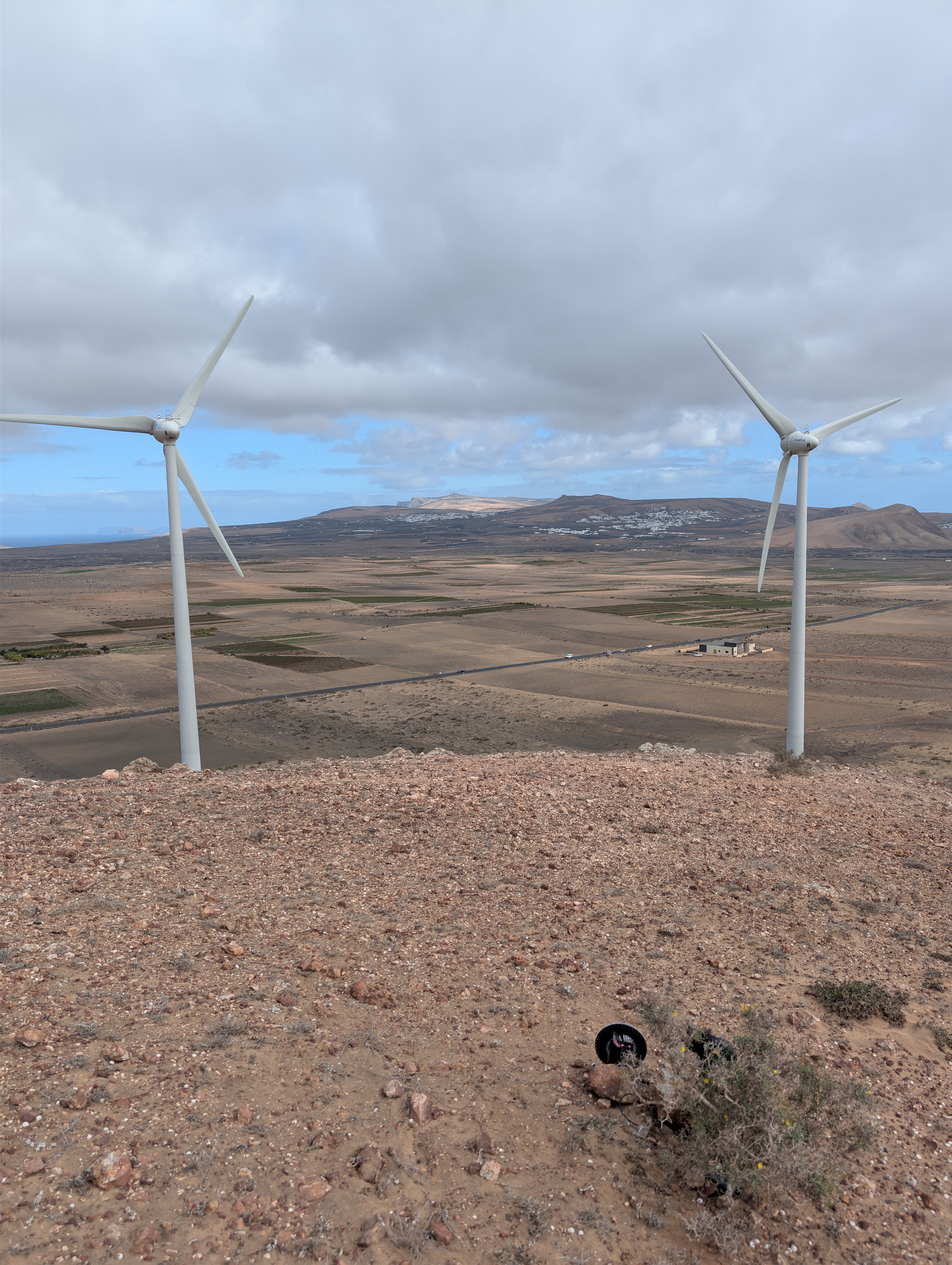 Wind energy harvest
 Autonomous config
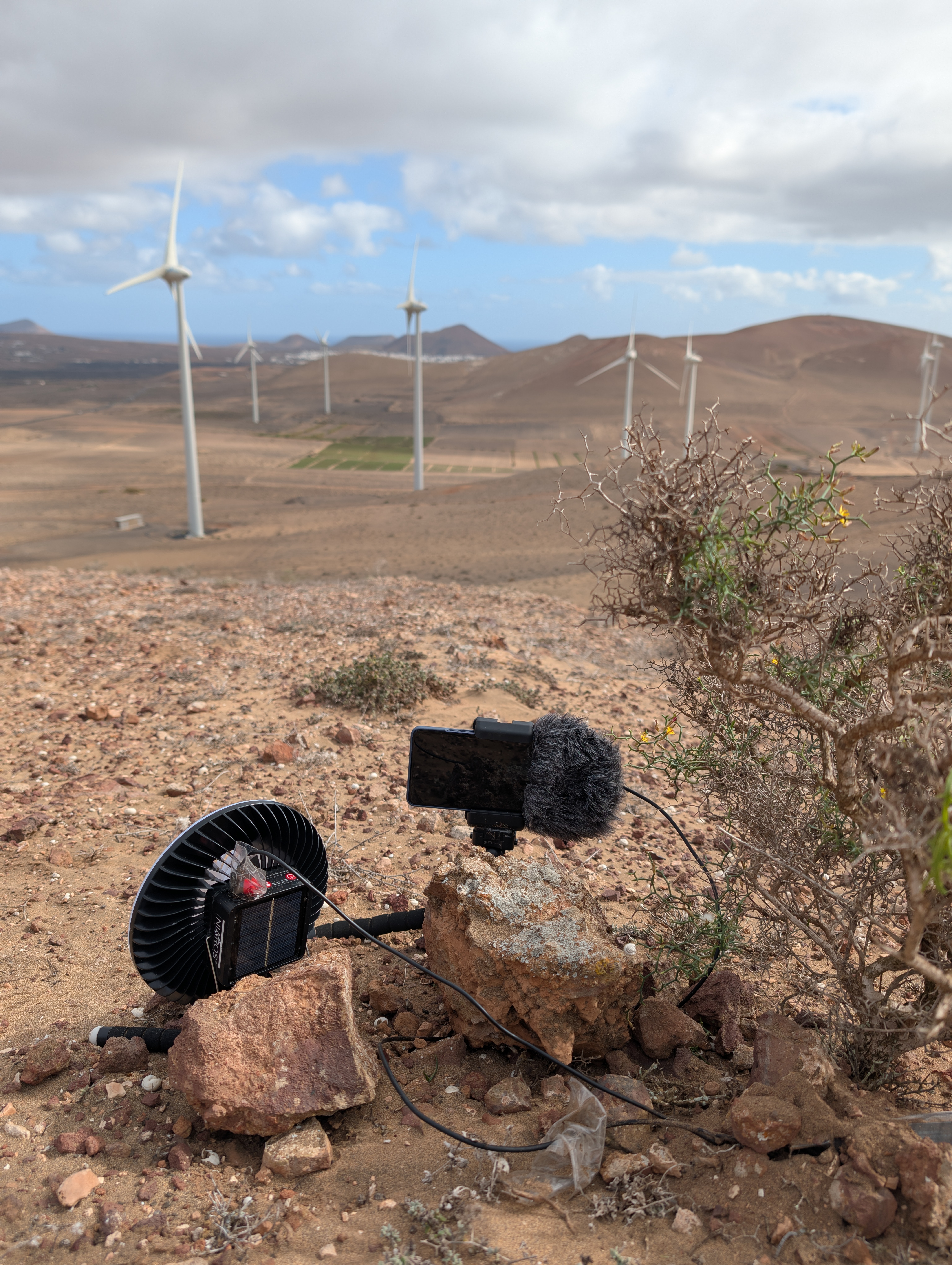 Self-sufficient TAO
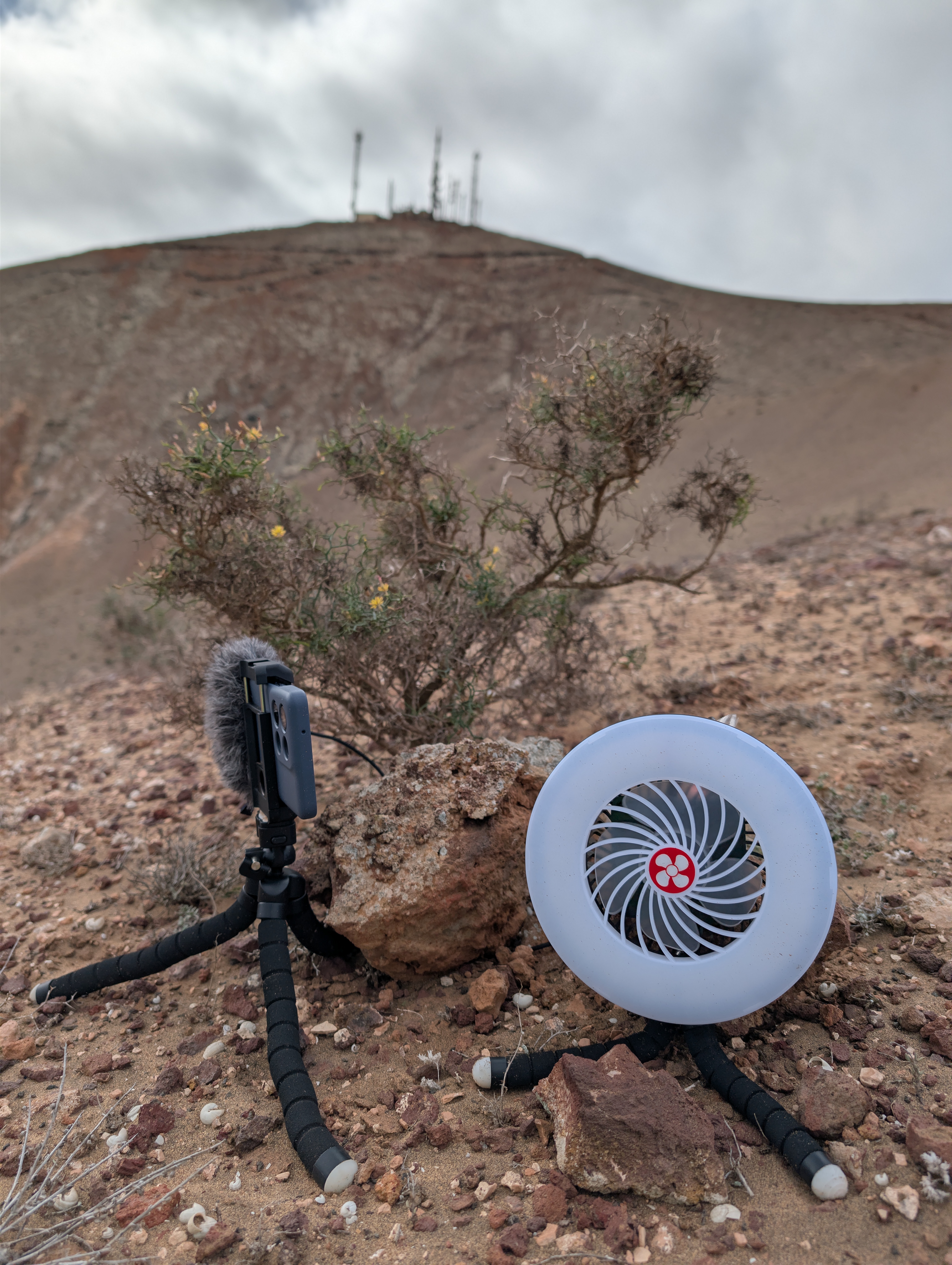 Energy independent
TAO V2: Build Process
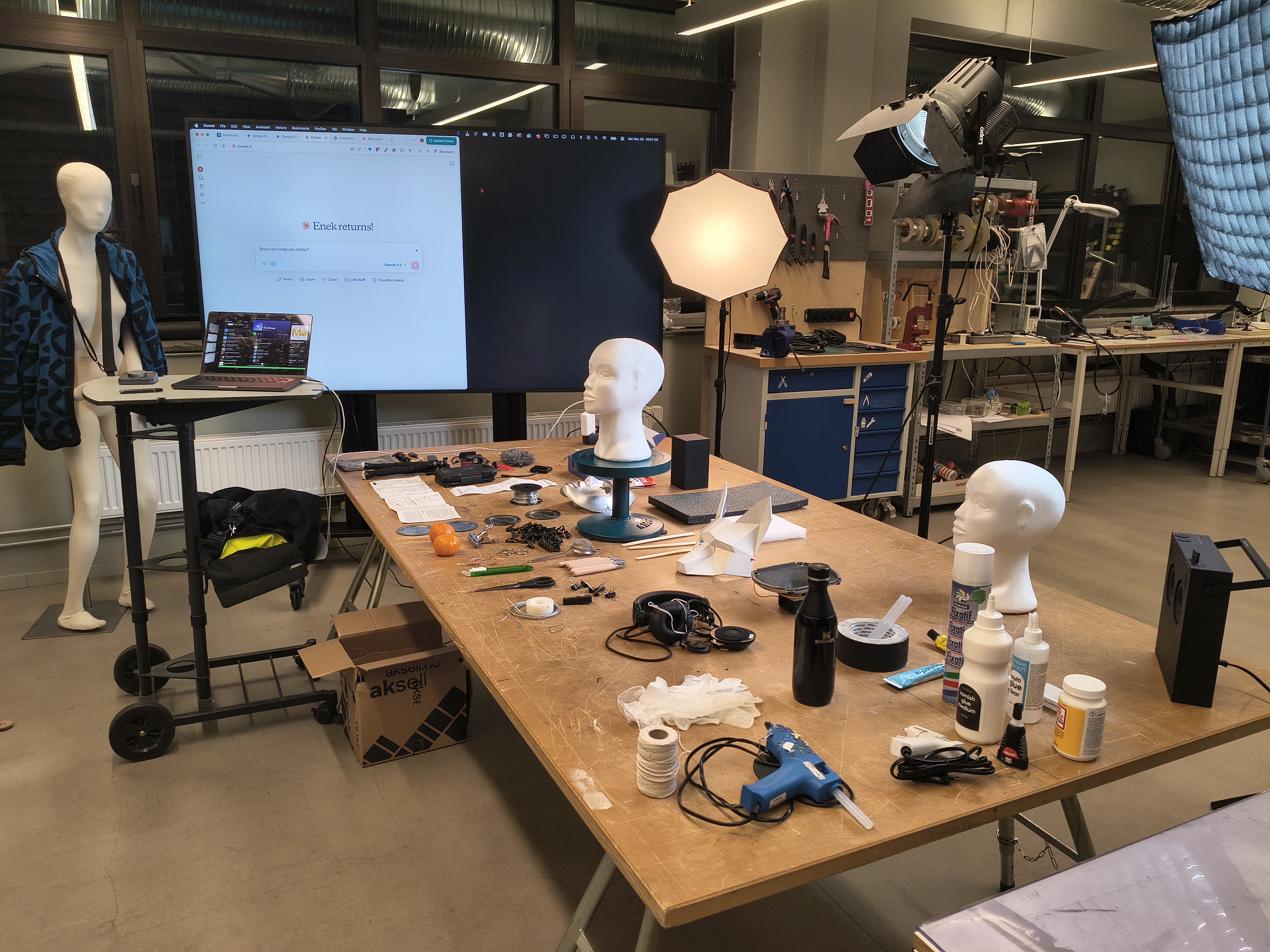
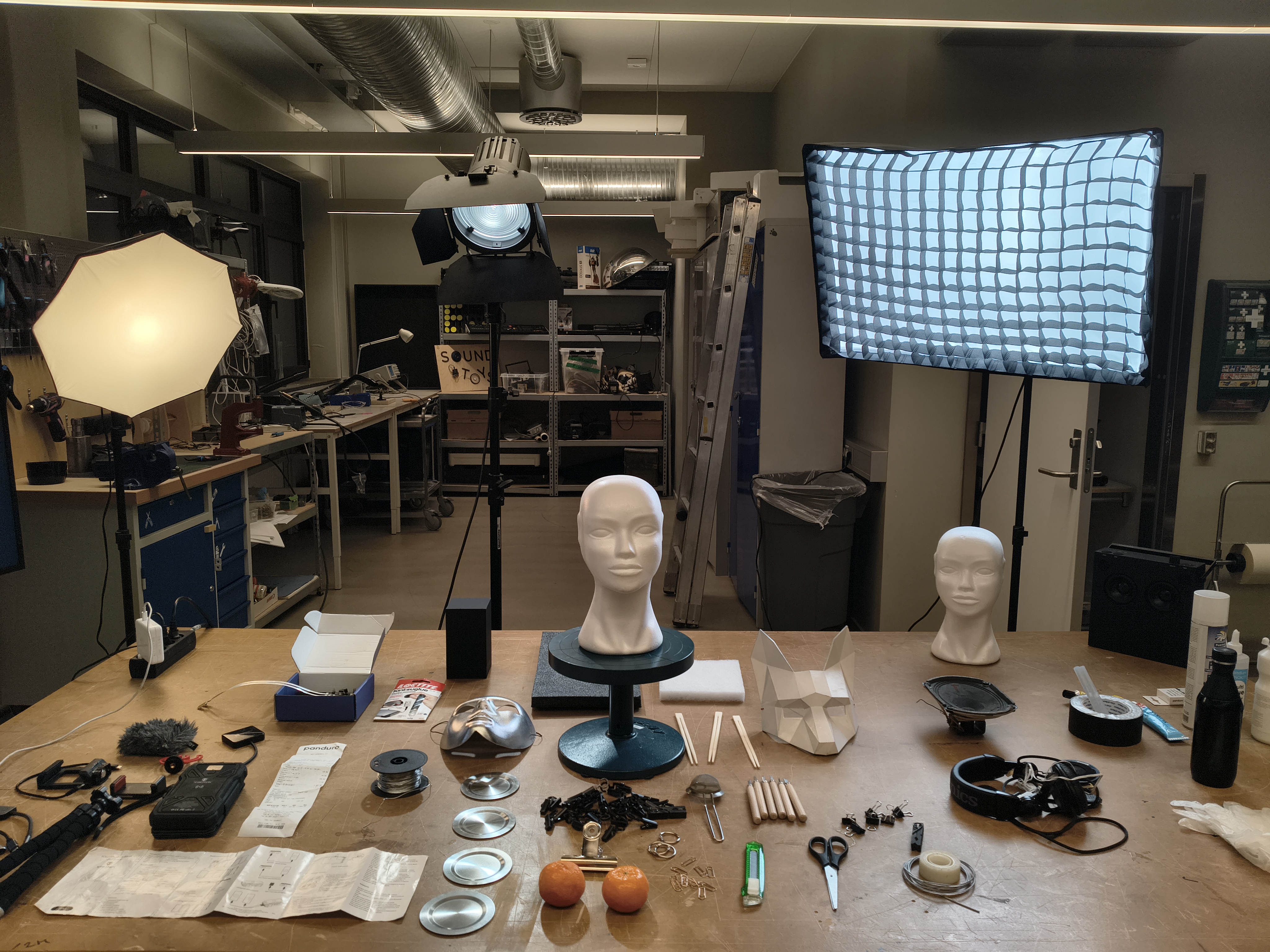 Materials prep
 Component layout
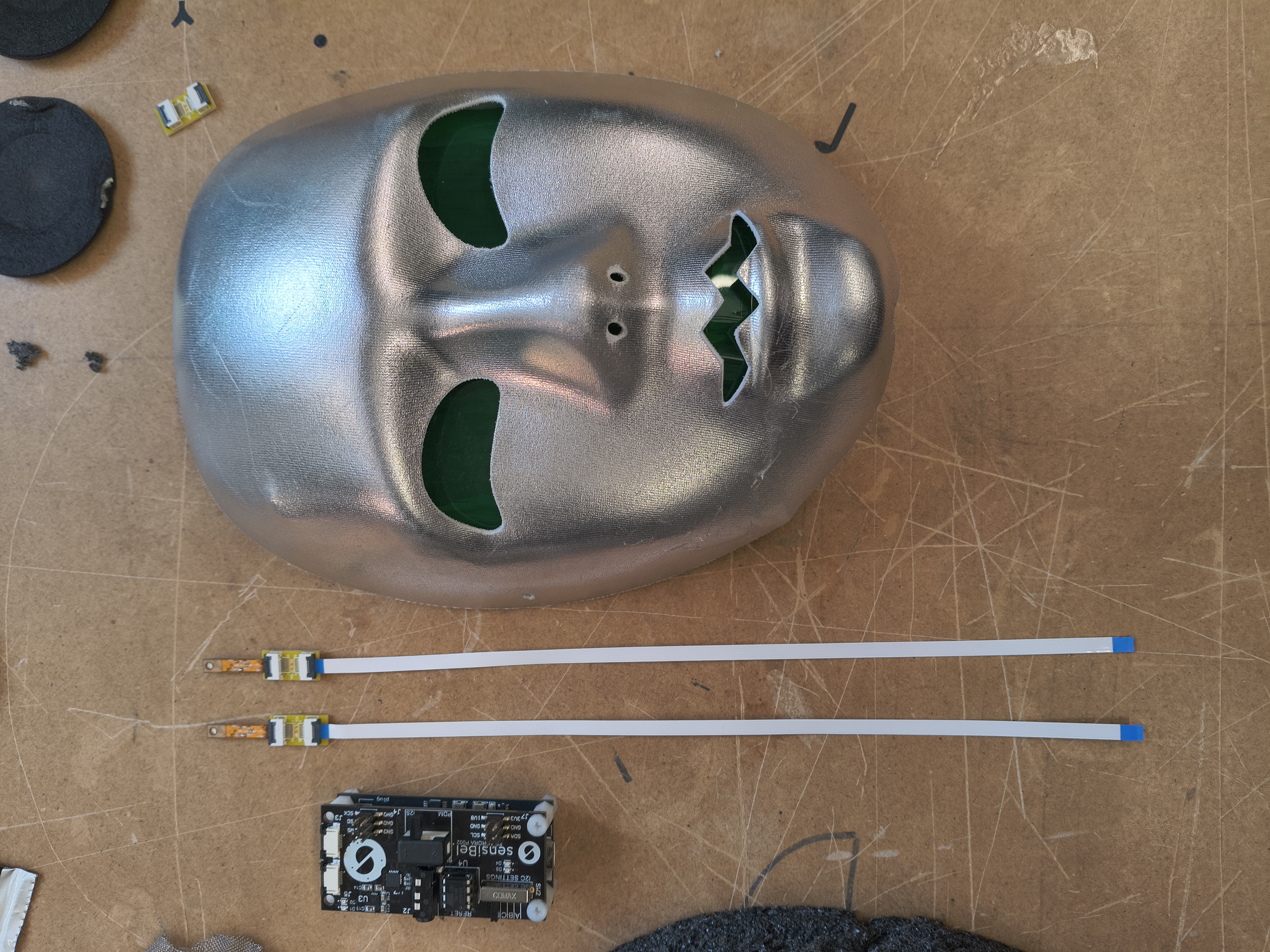 Head form
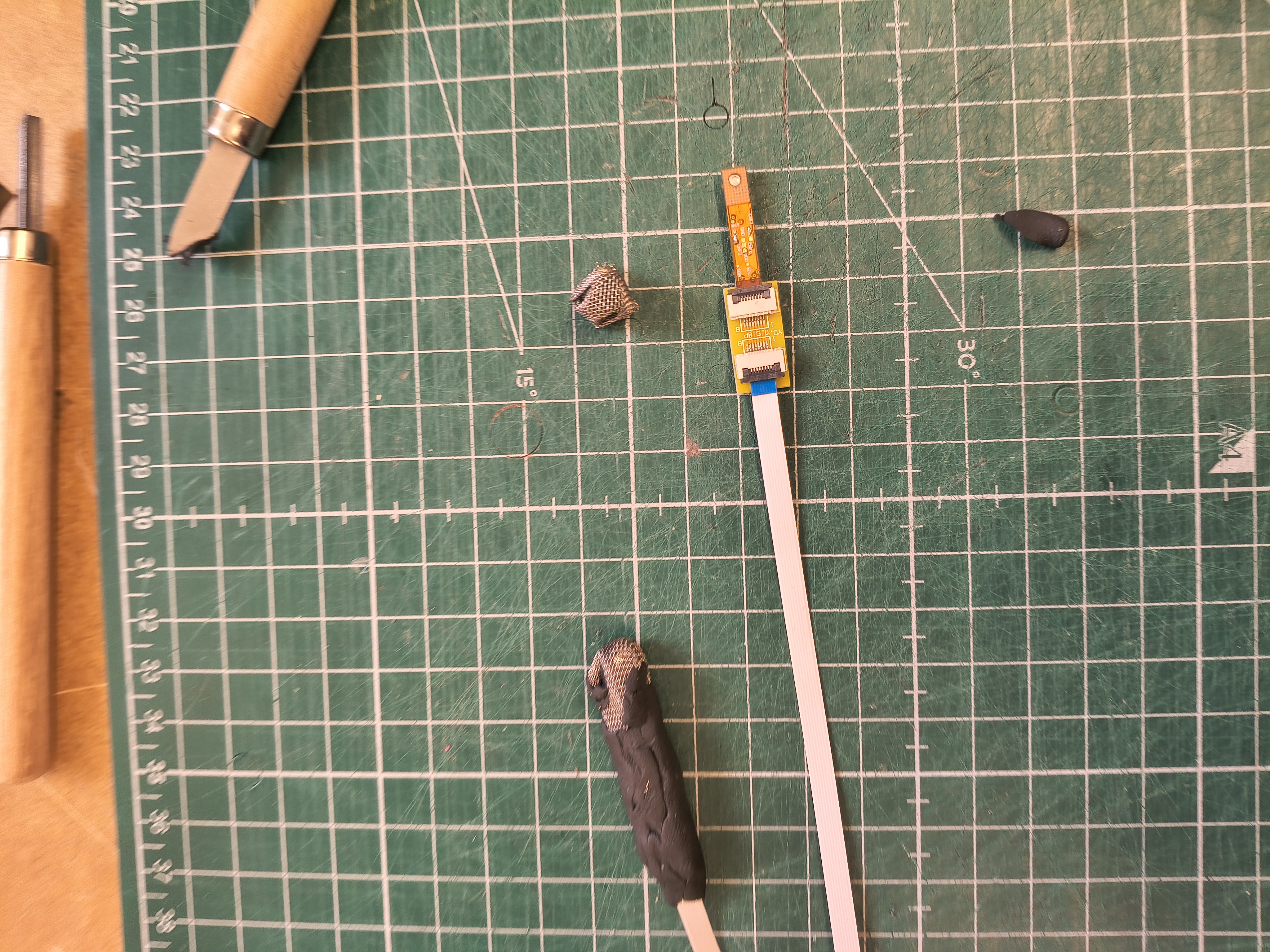 SensiBel integration
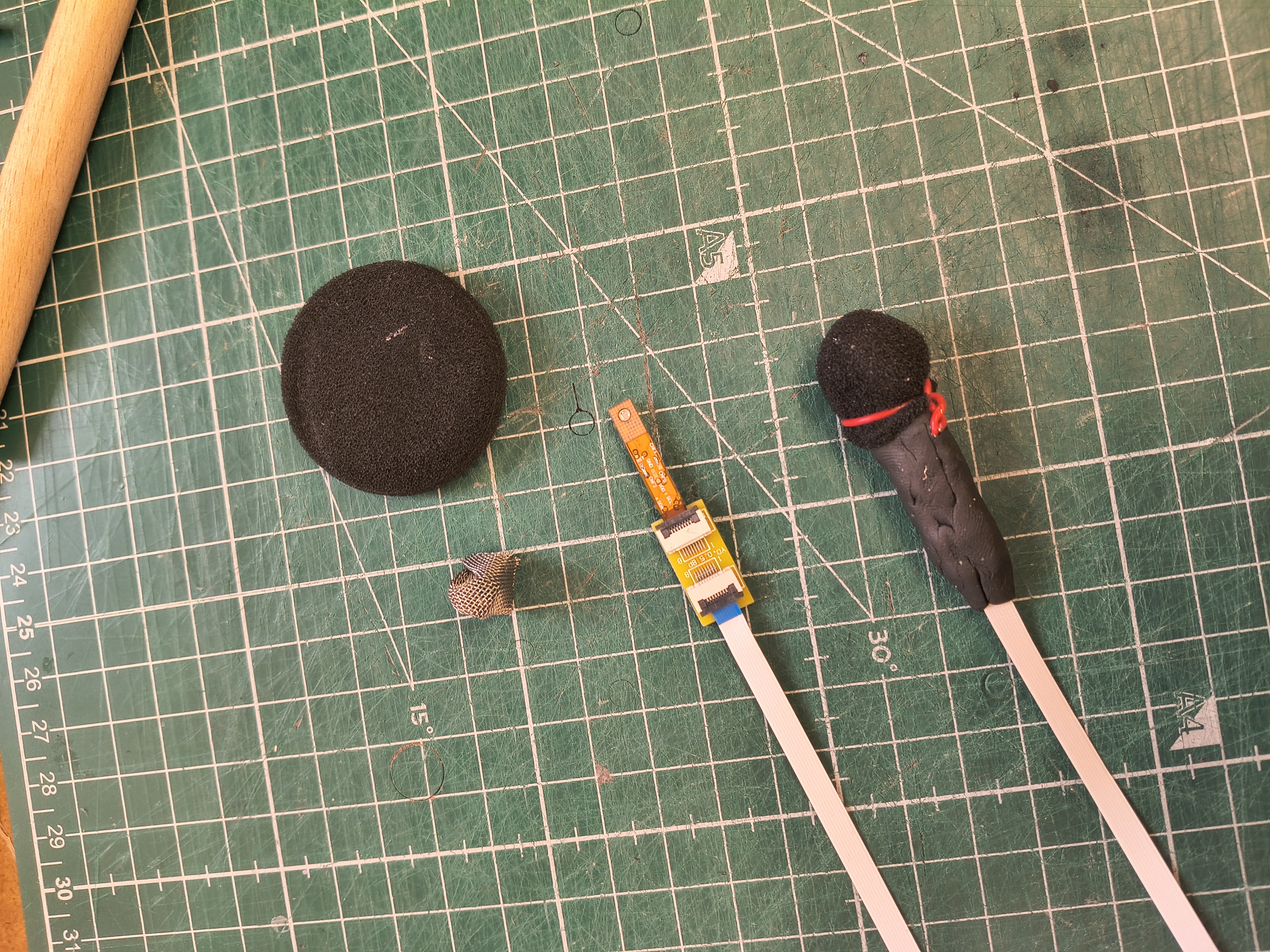 Windscreen assembly
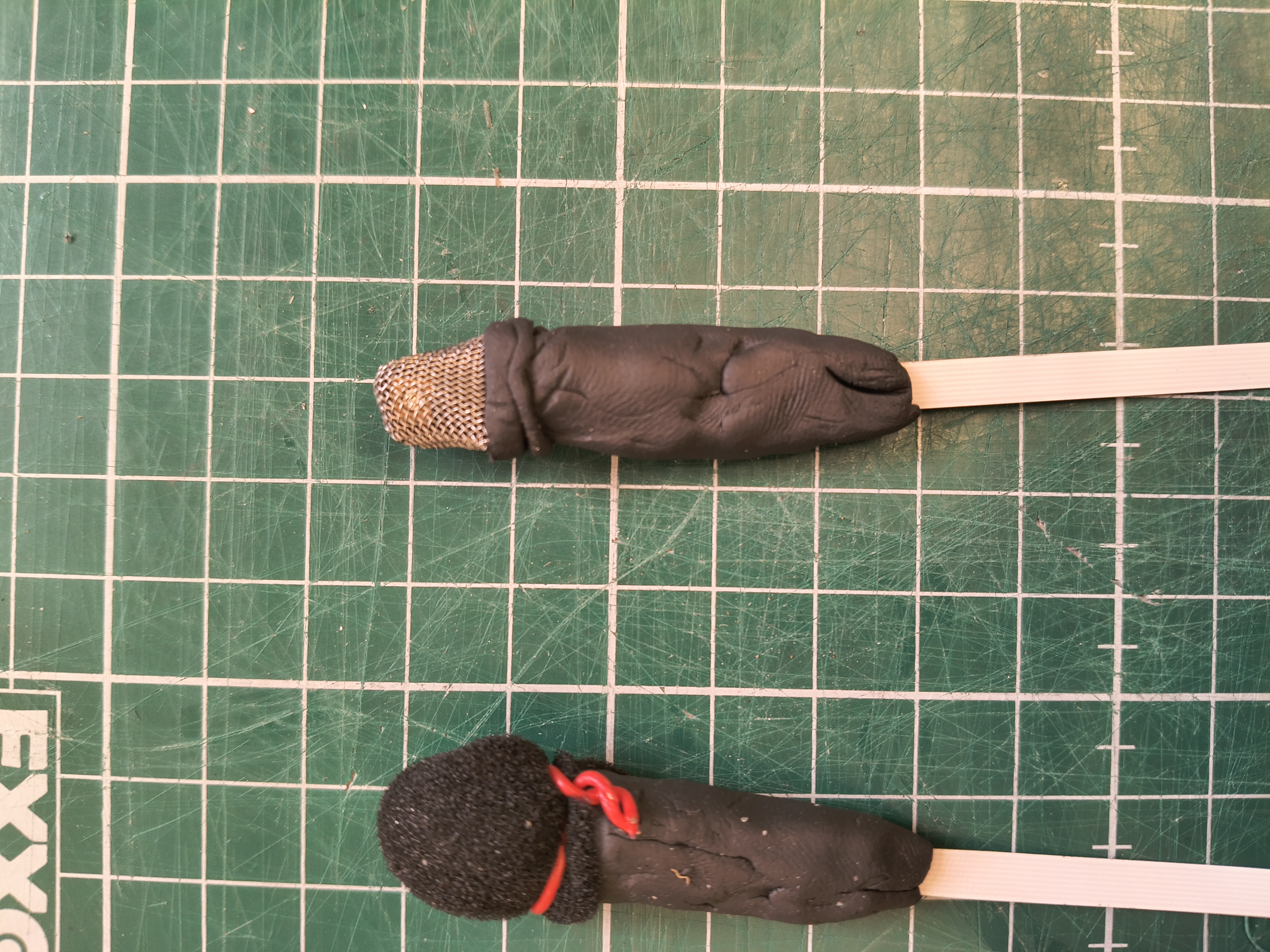 Furry coating
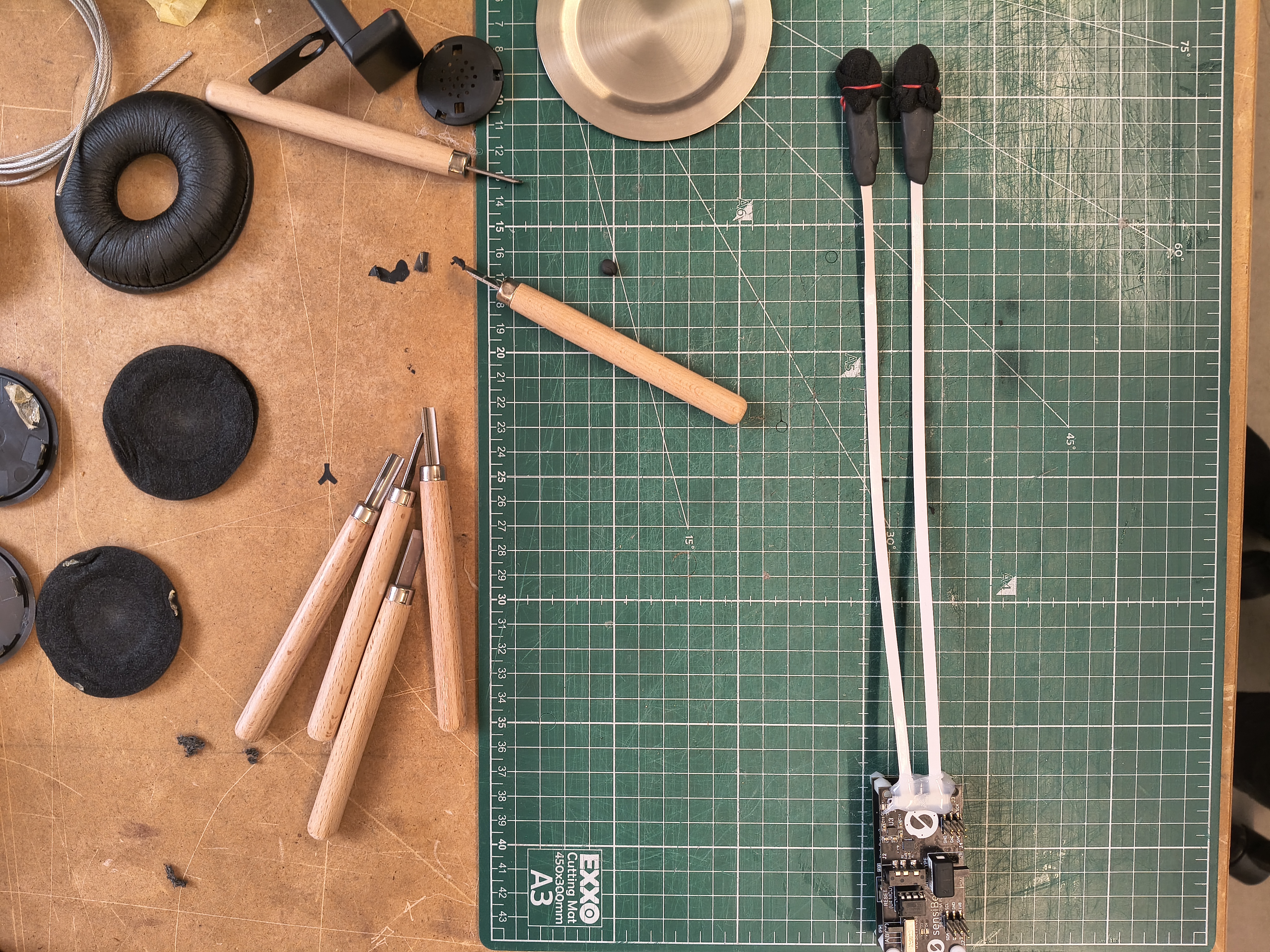 Binaural config
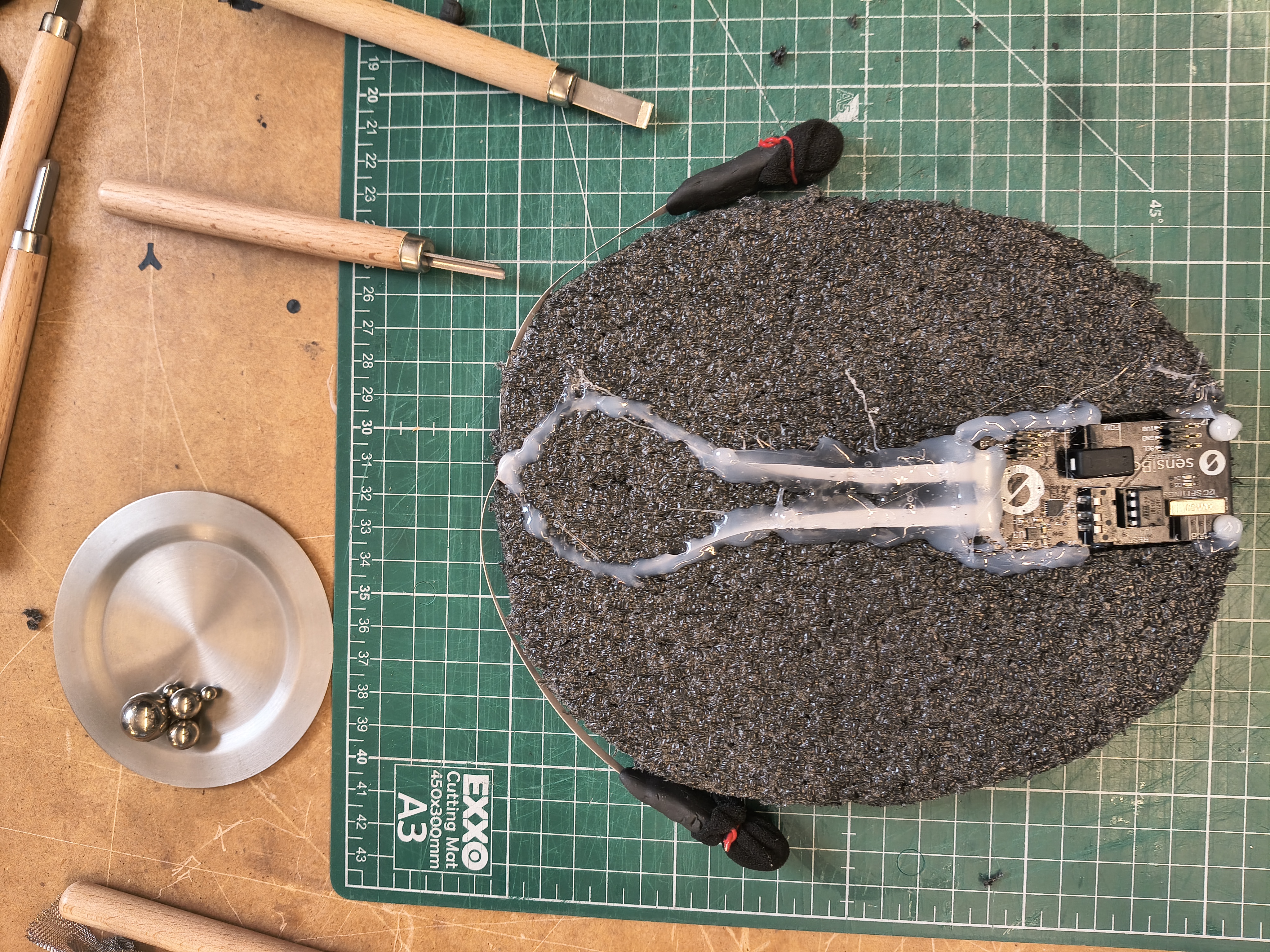 Night testing
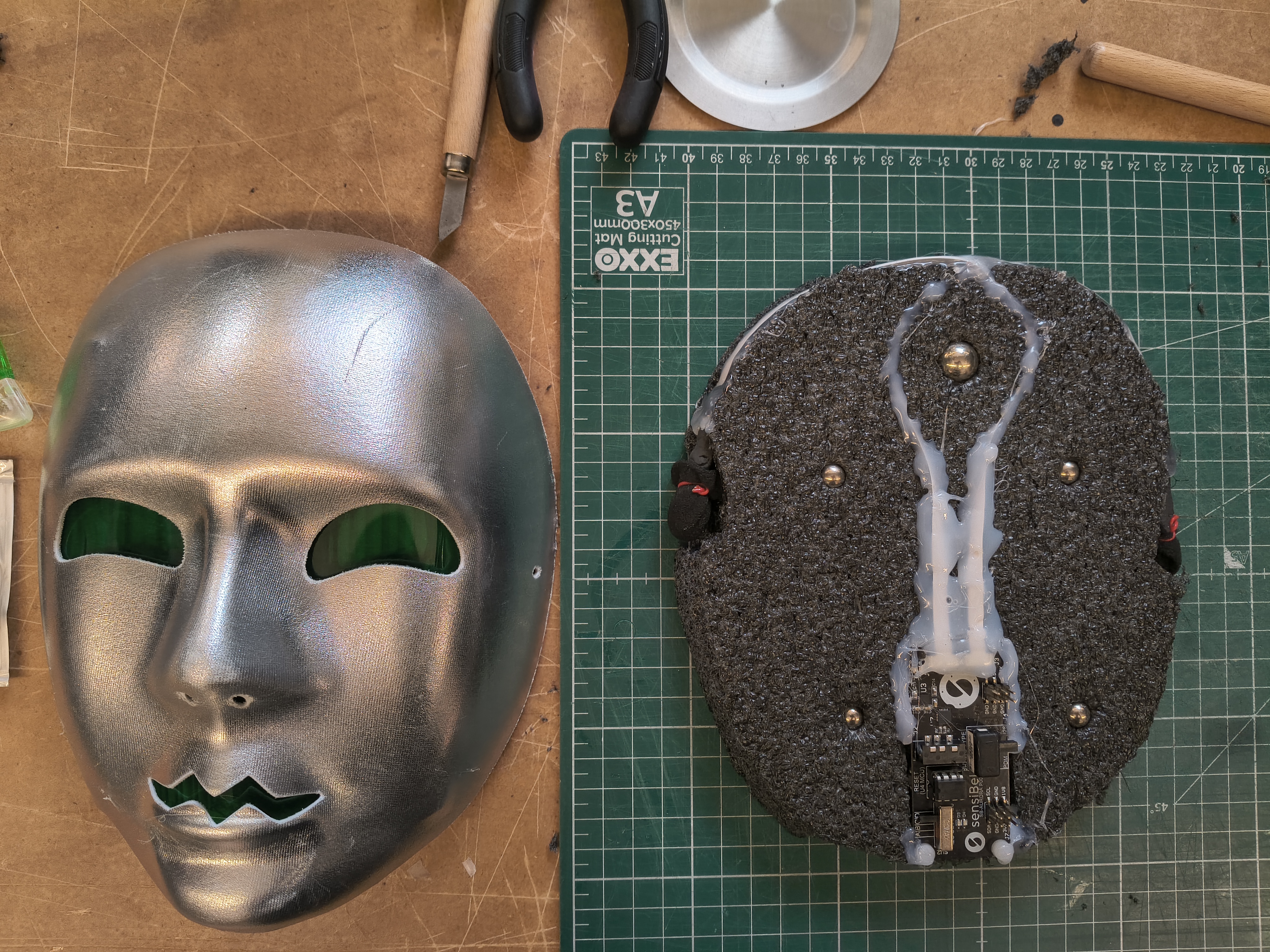 Form refinement
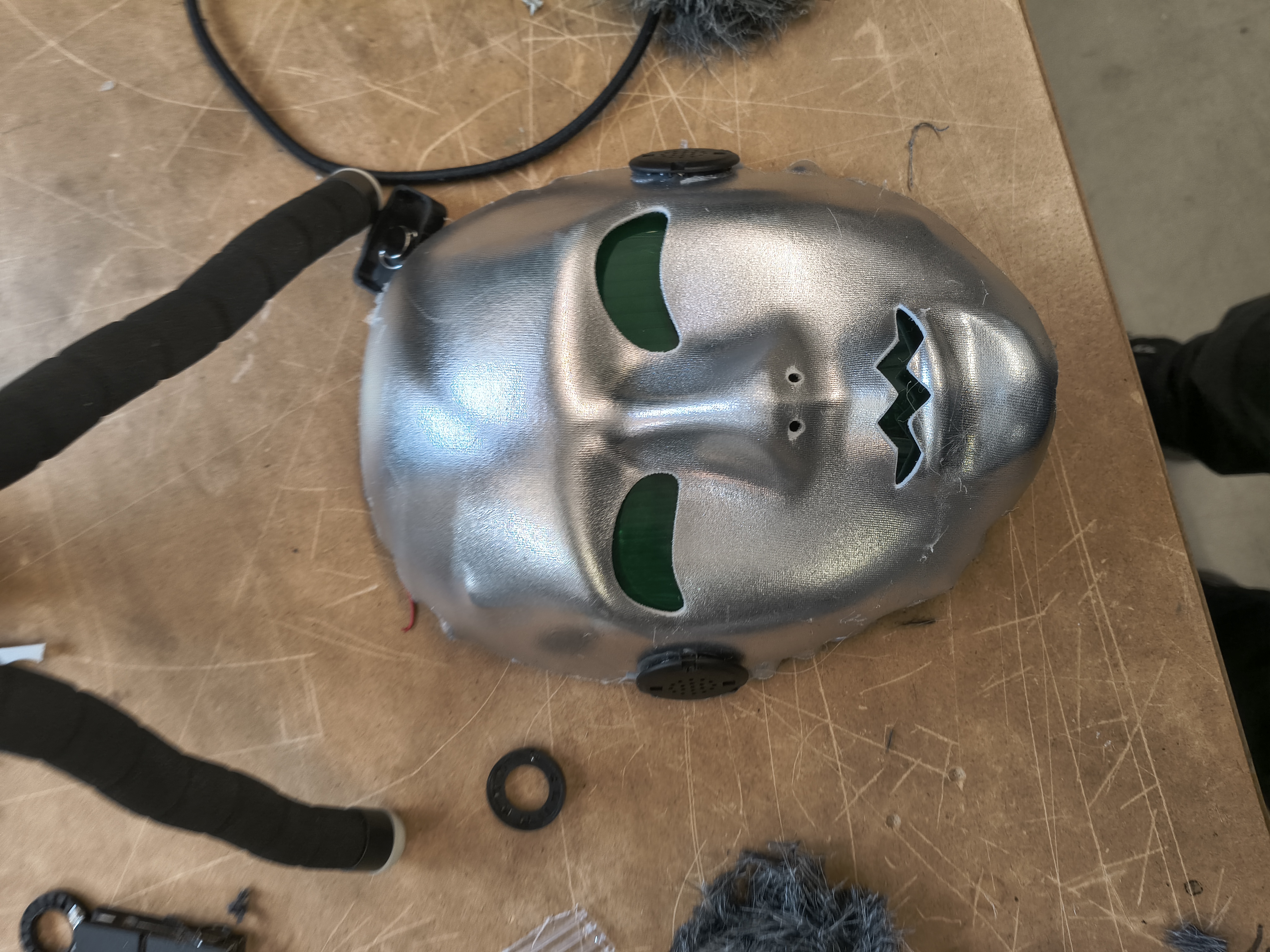 Detail work
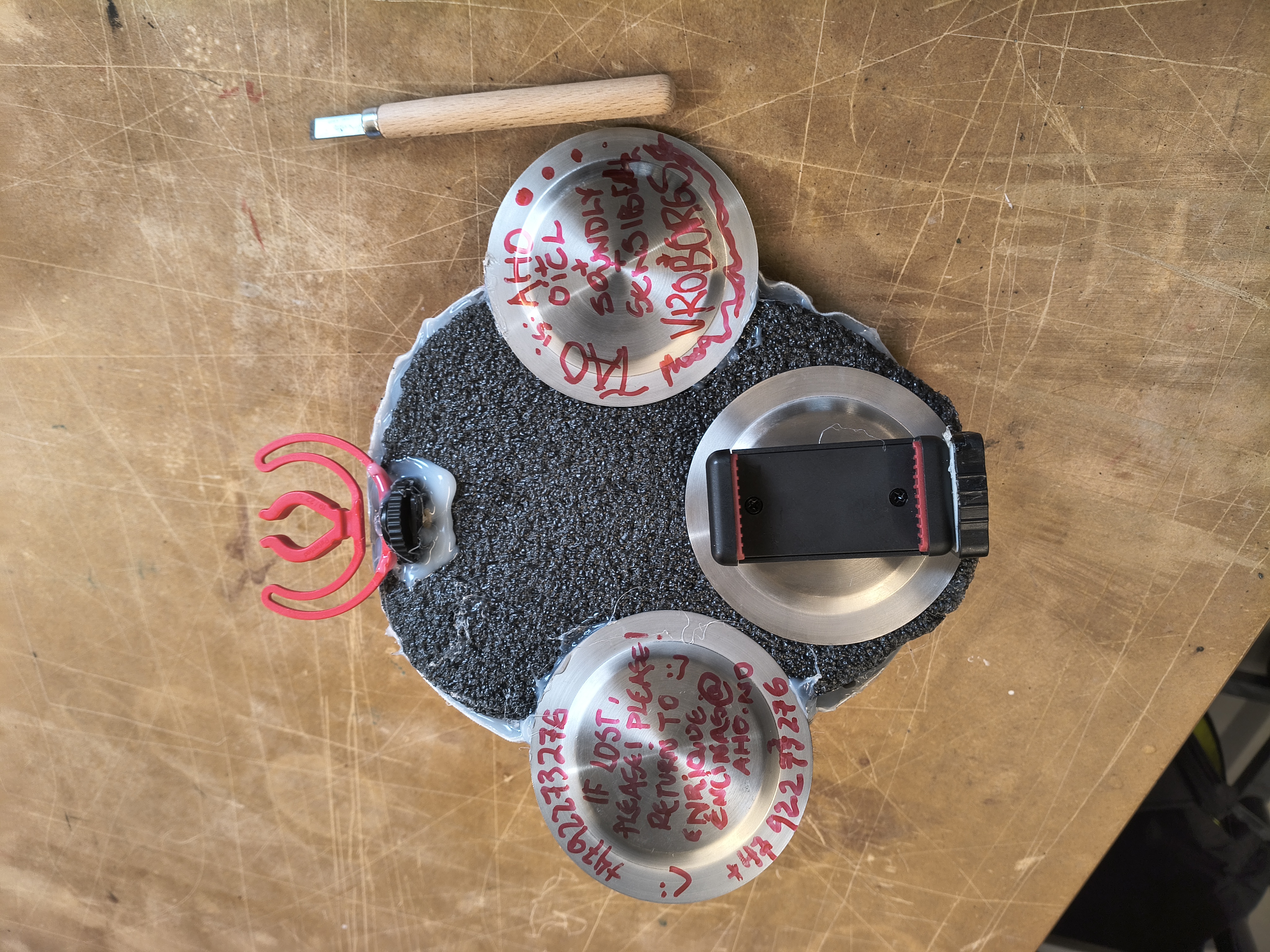 Daylight test
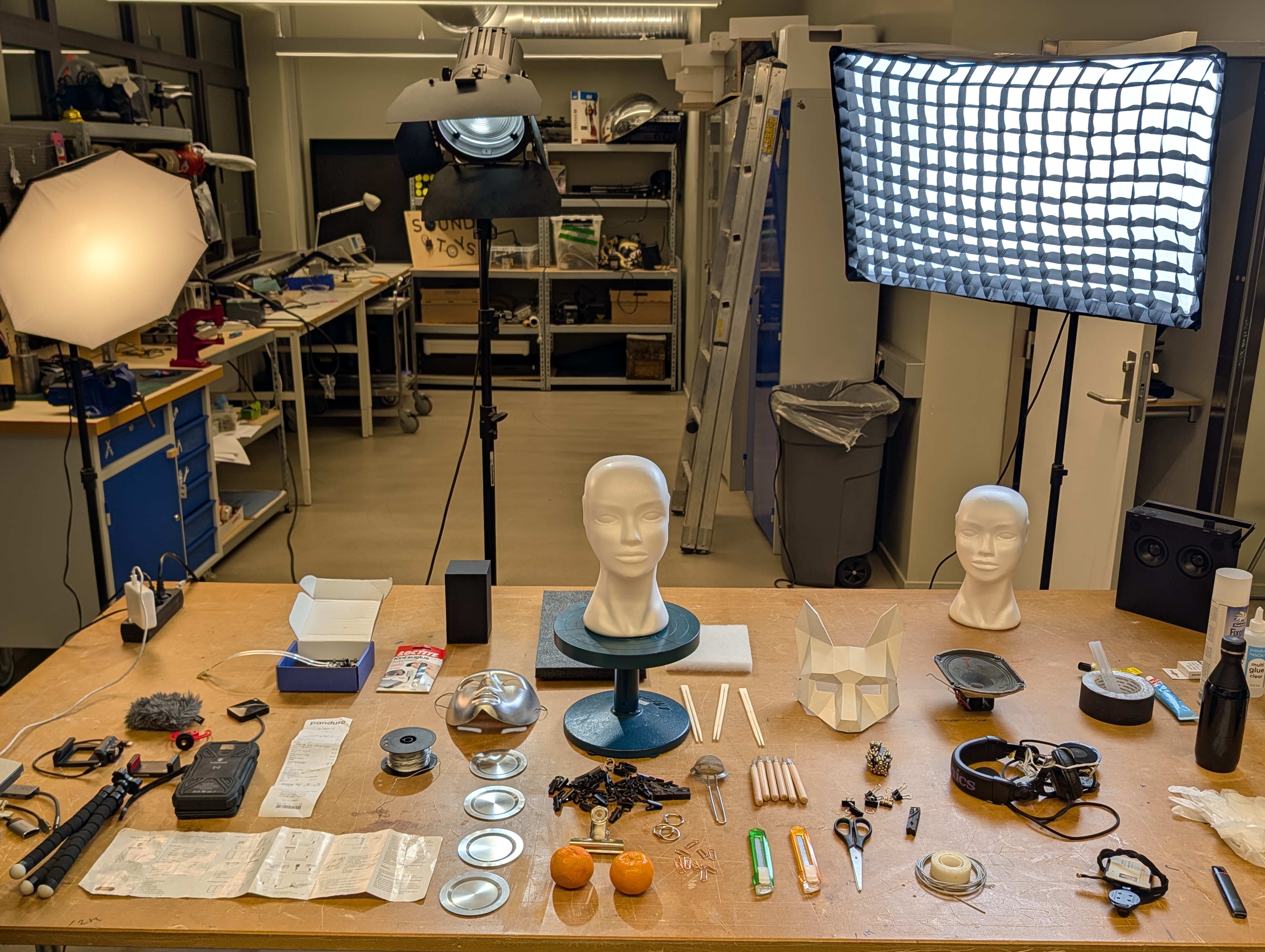 Electronics setup
TAO V2: AVU Prague
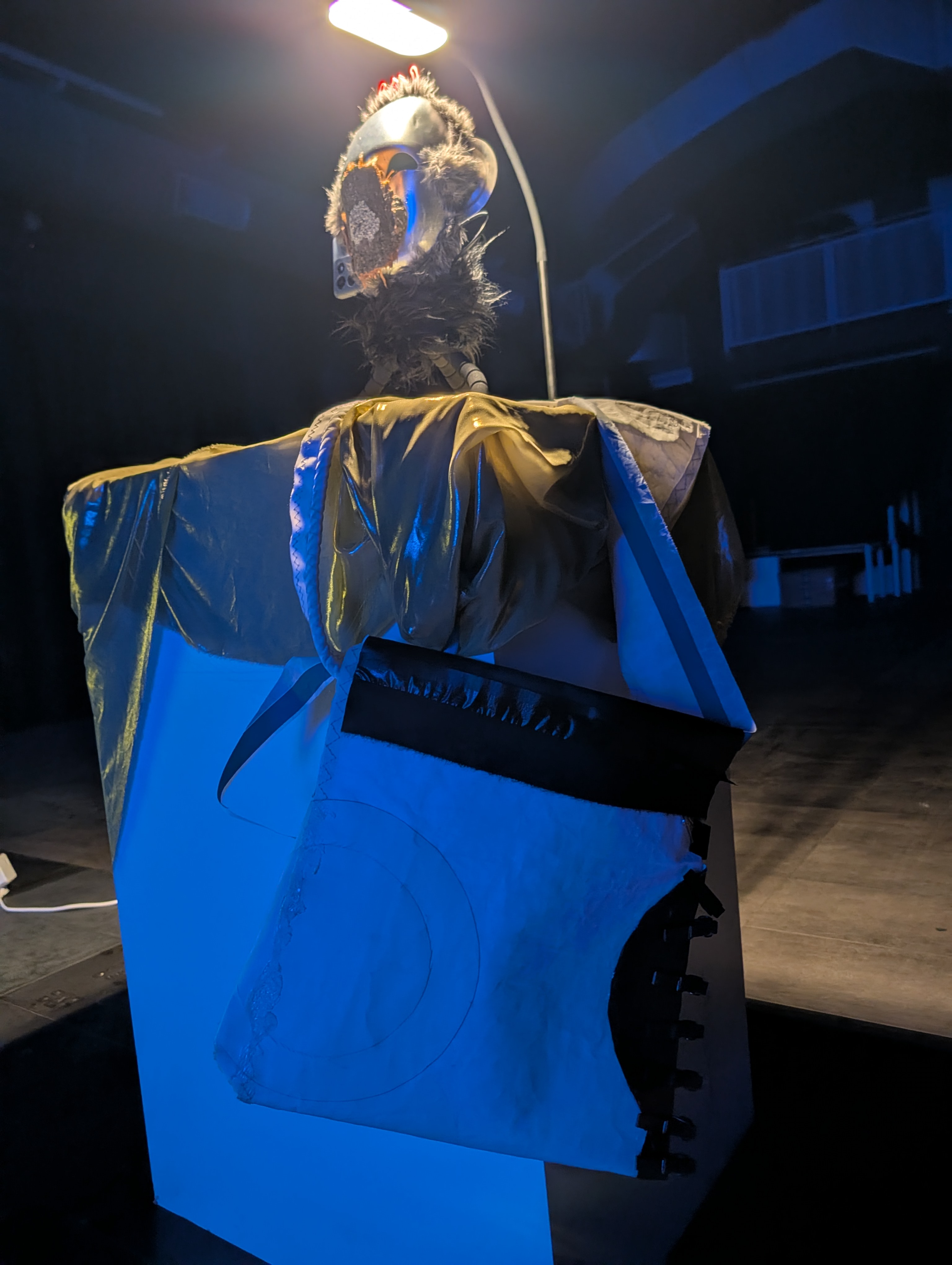 TAO Bag V1
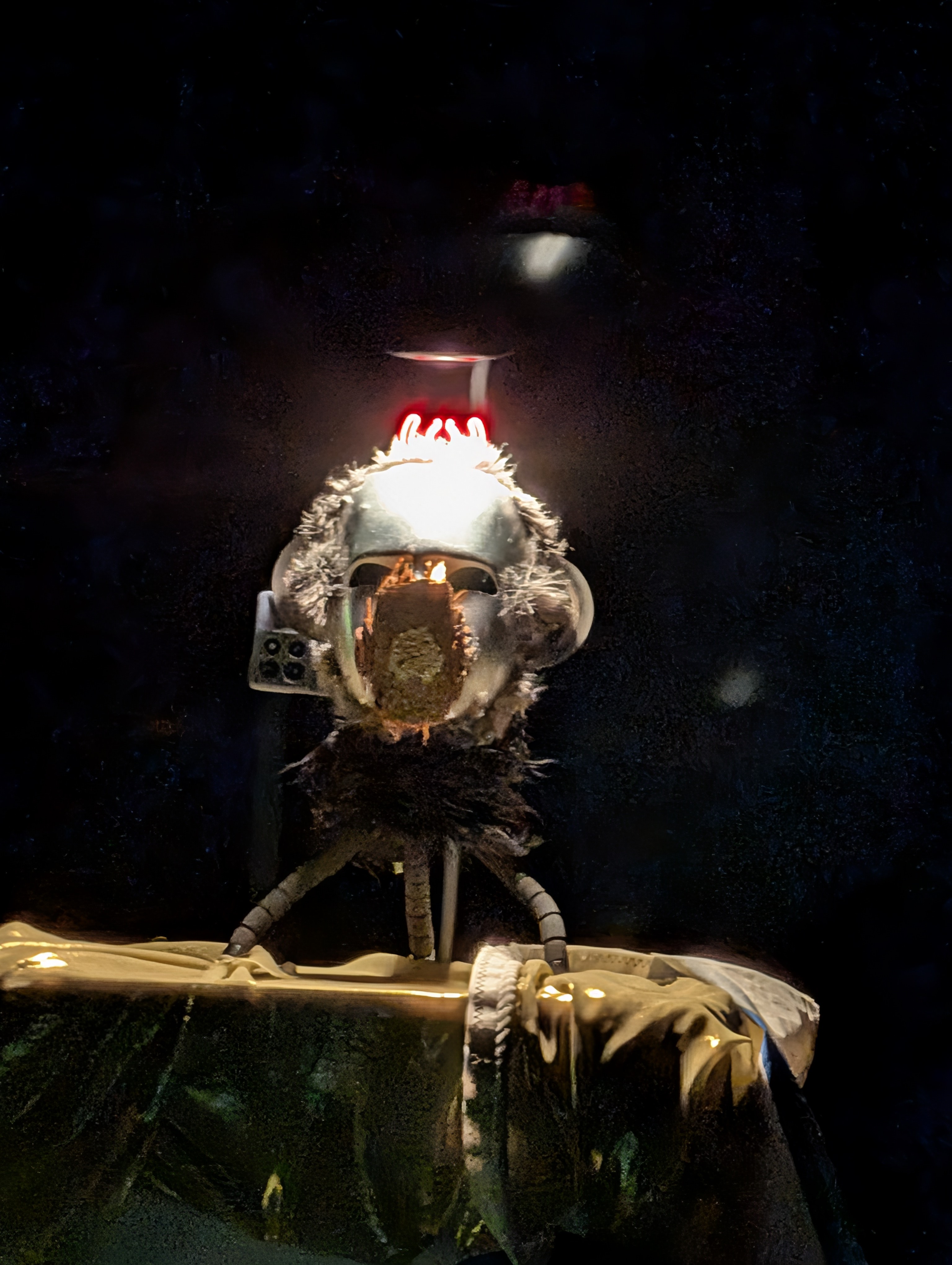 Academy setup
 Studio work
 Mikulas collab
 V3 development
 3D design
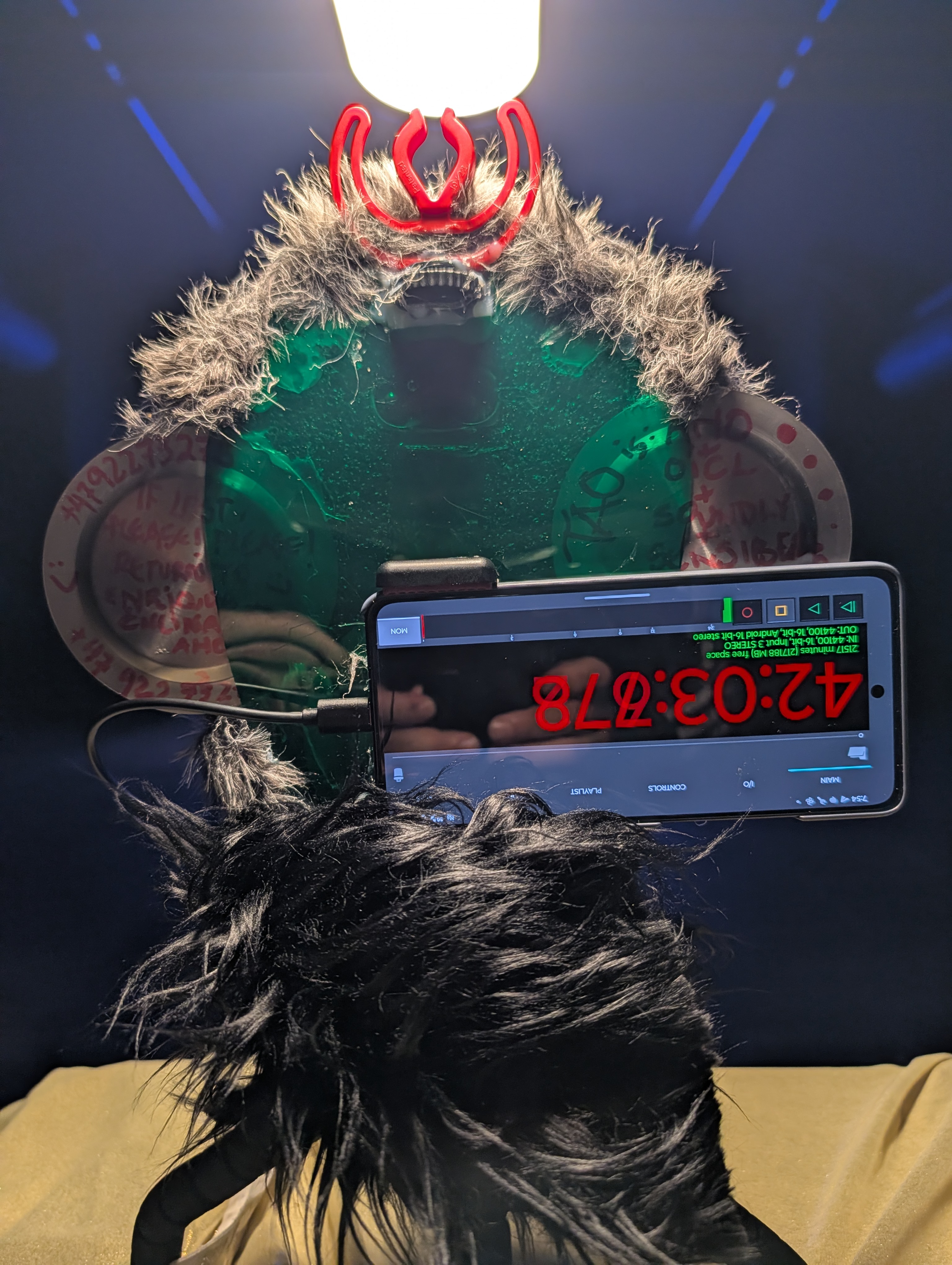 Prototype review
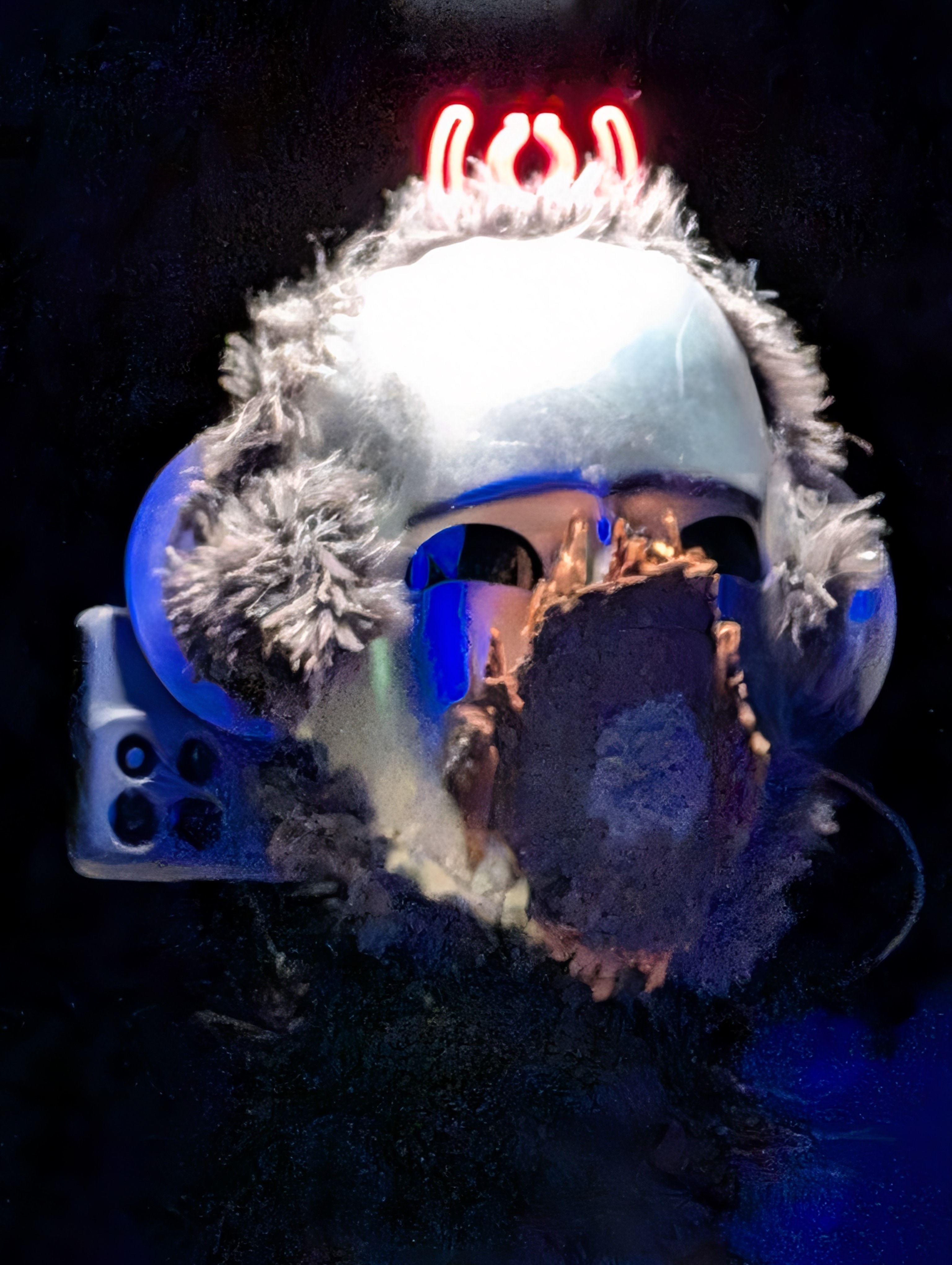 Technical session
 Phone attachable
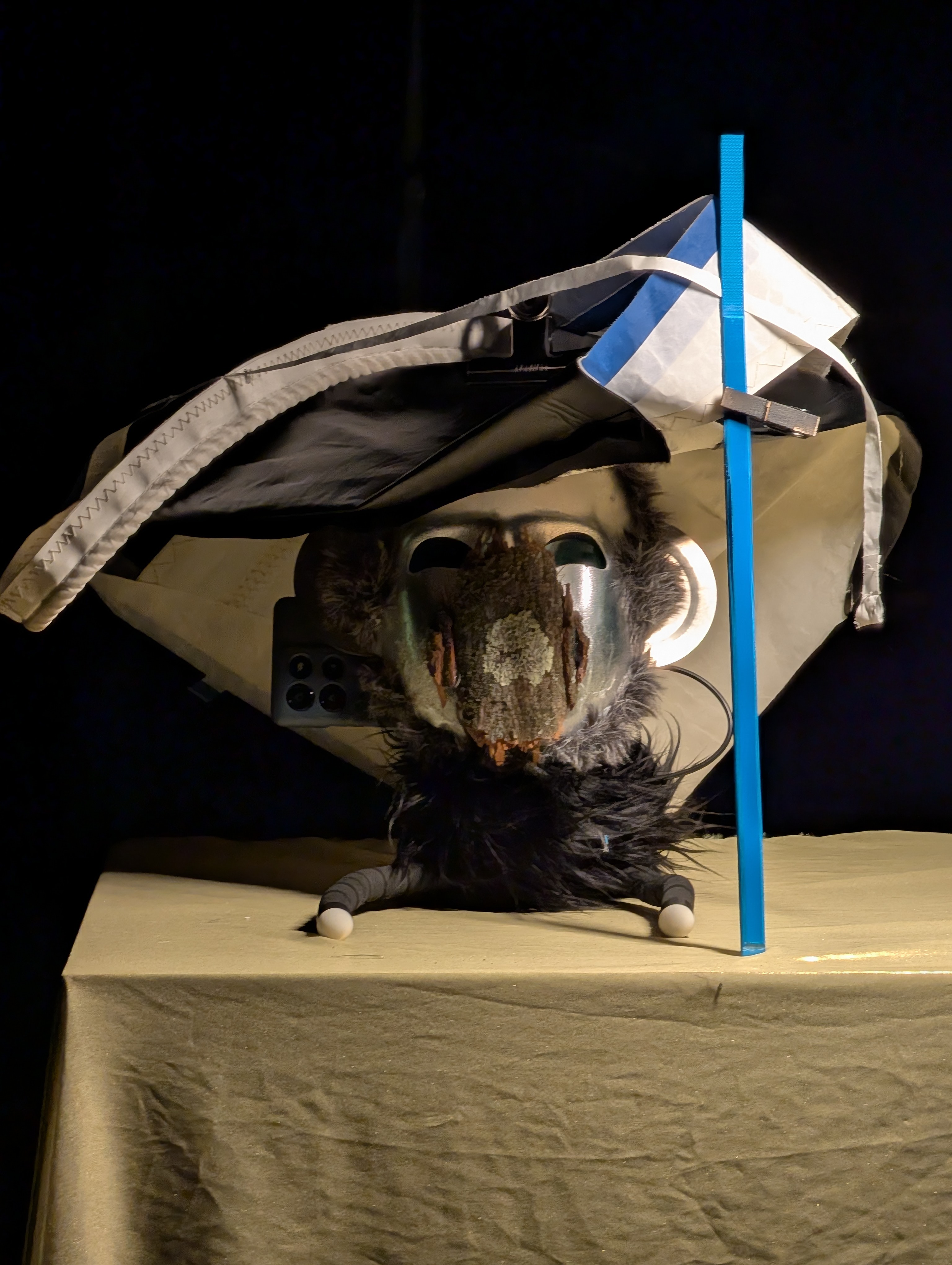 Final form
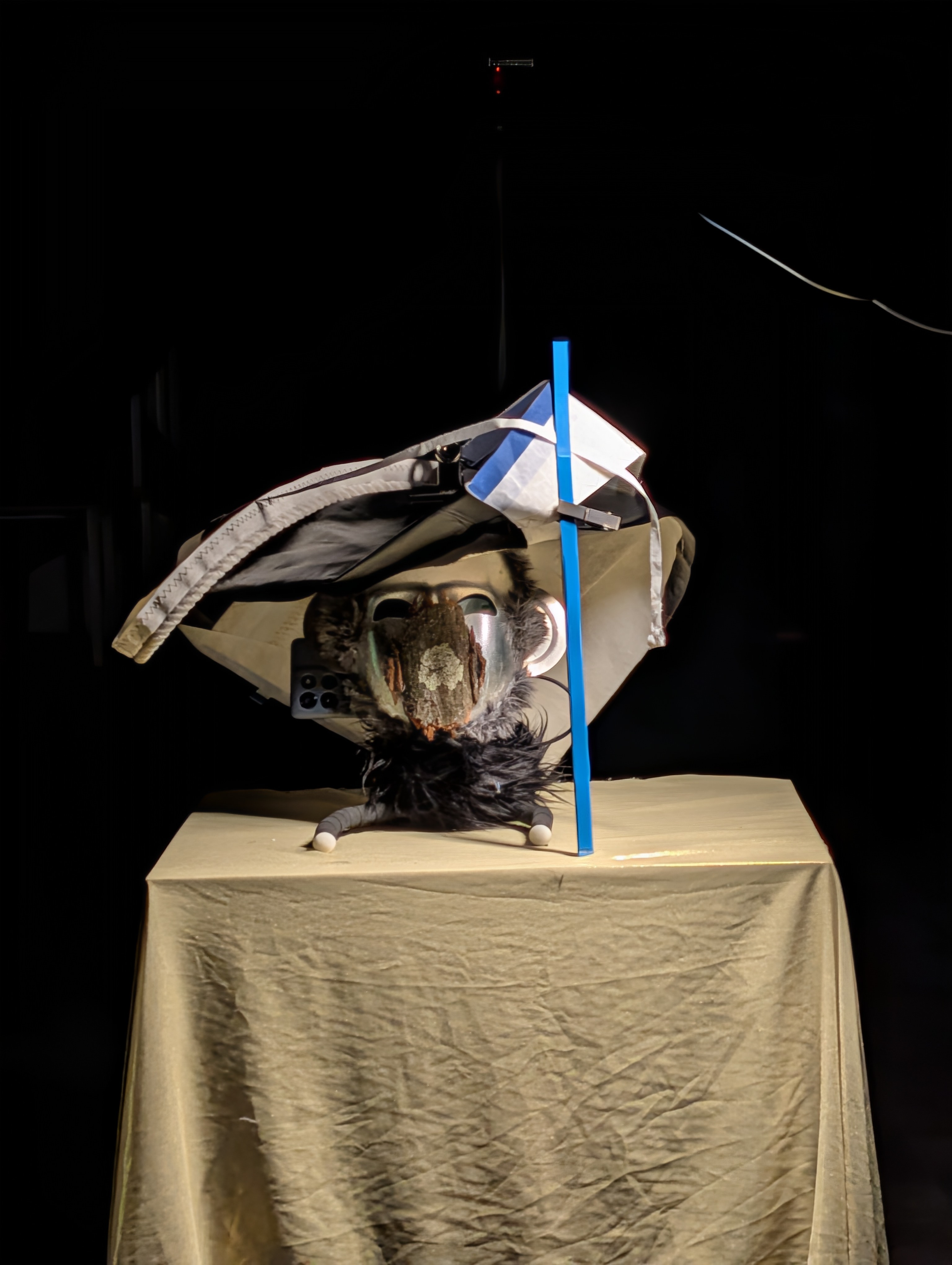 Portrait view
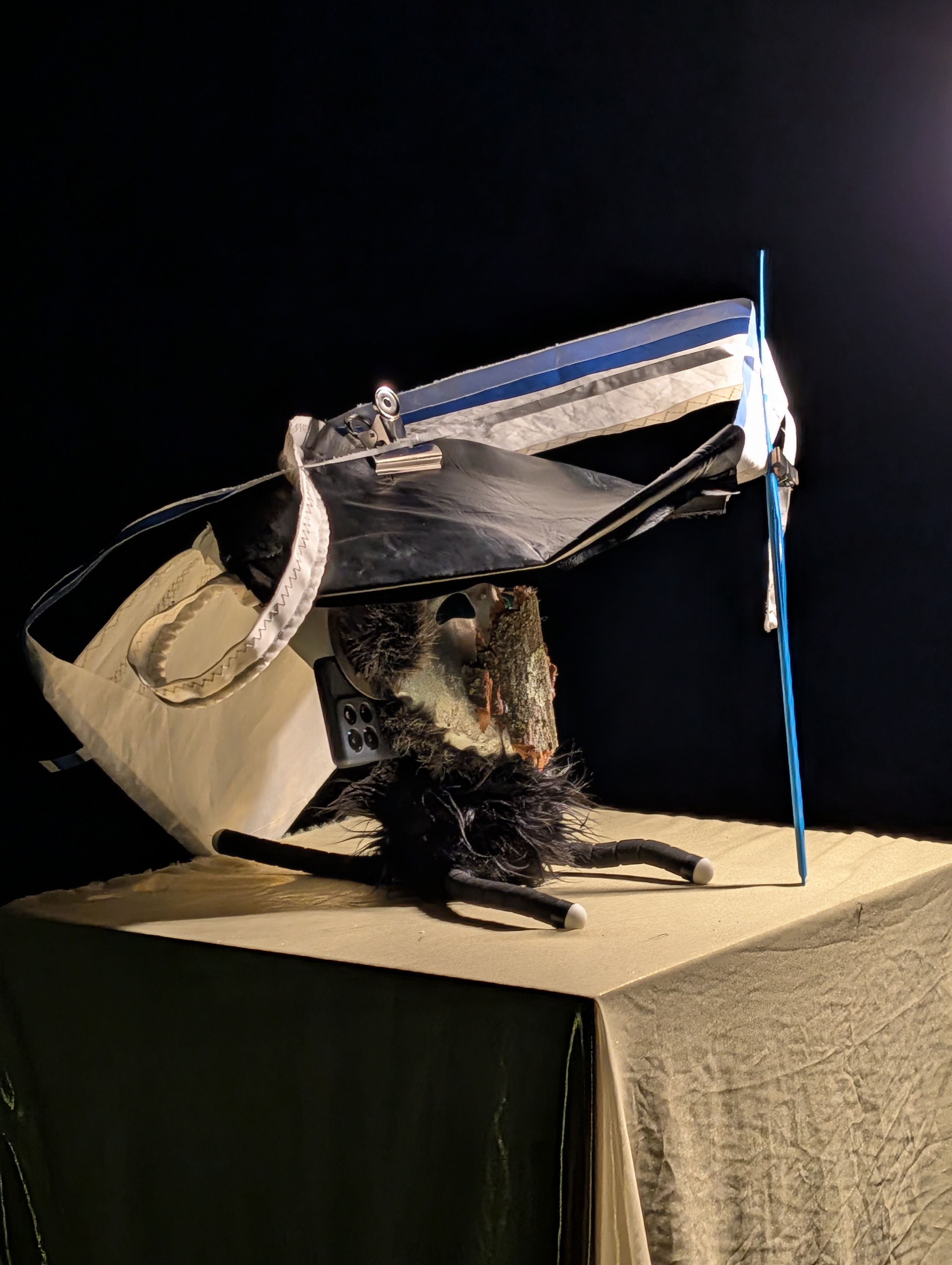 Anthropomorphized
TAO V2: Nezabudice Deployment
 Apiary arrival
 Site survey
 Beehive proximity
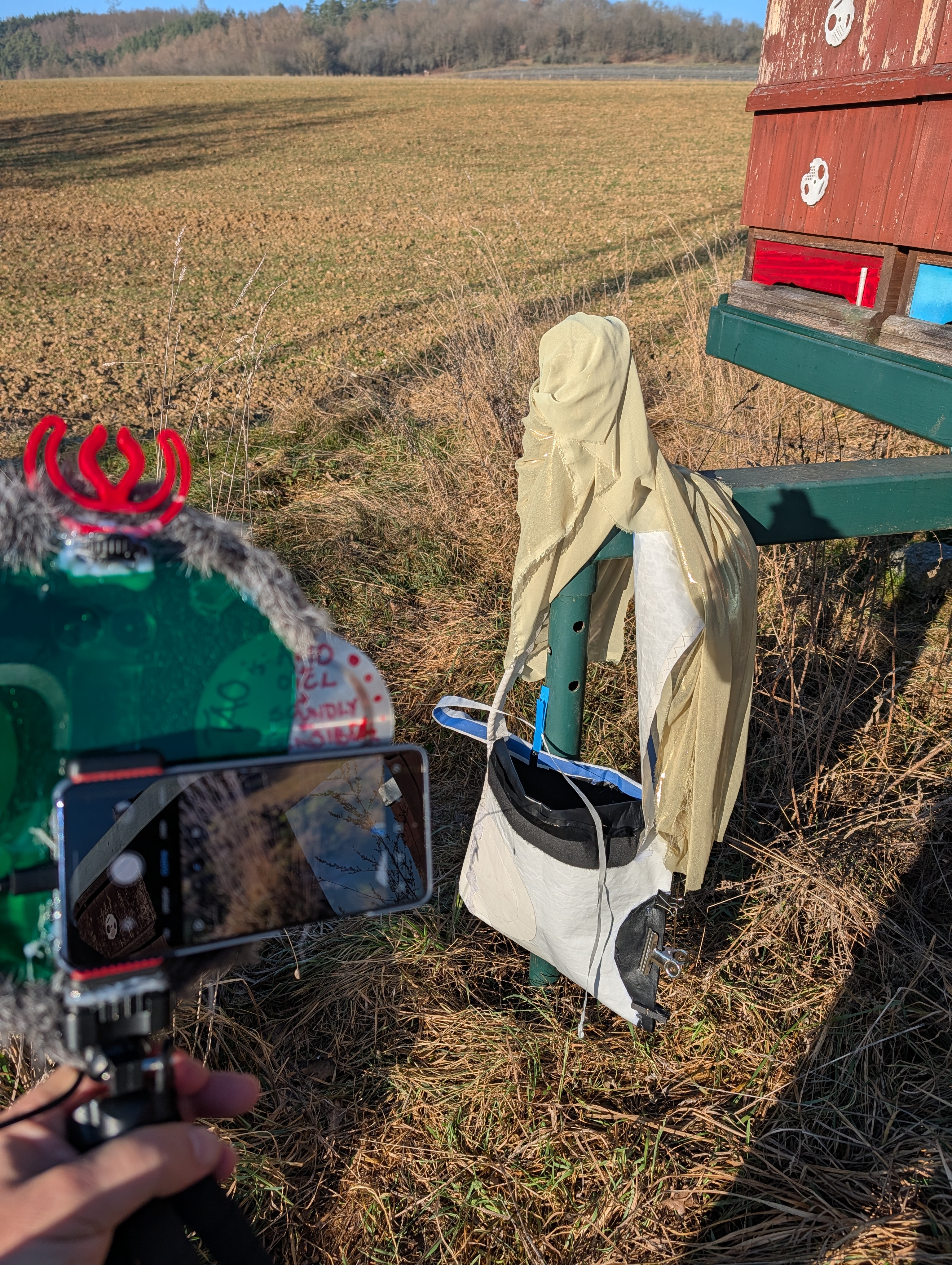 Deployment setup
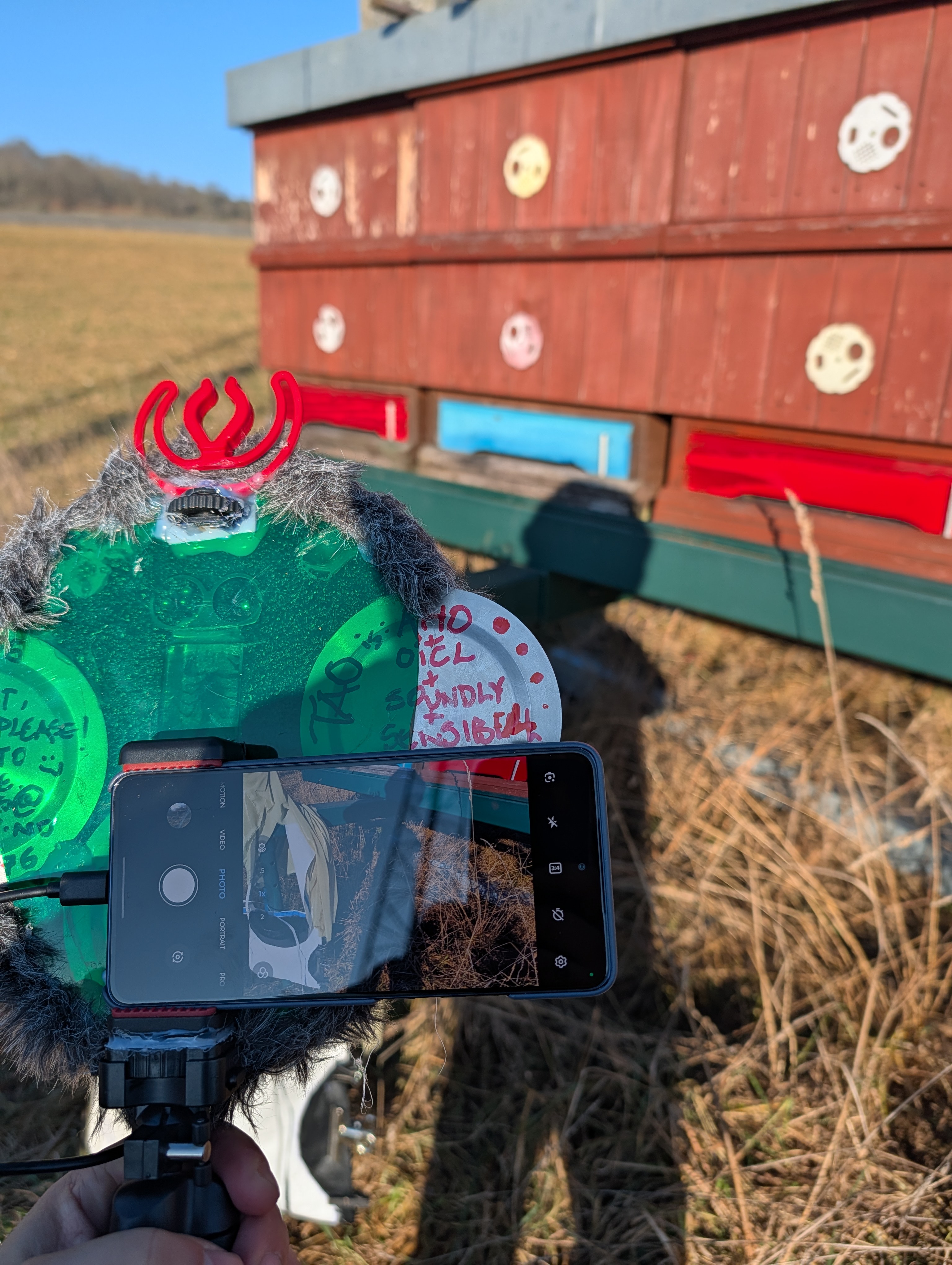 TAO positioned
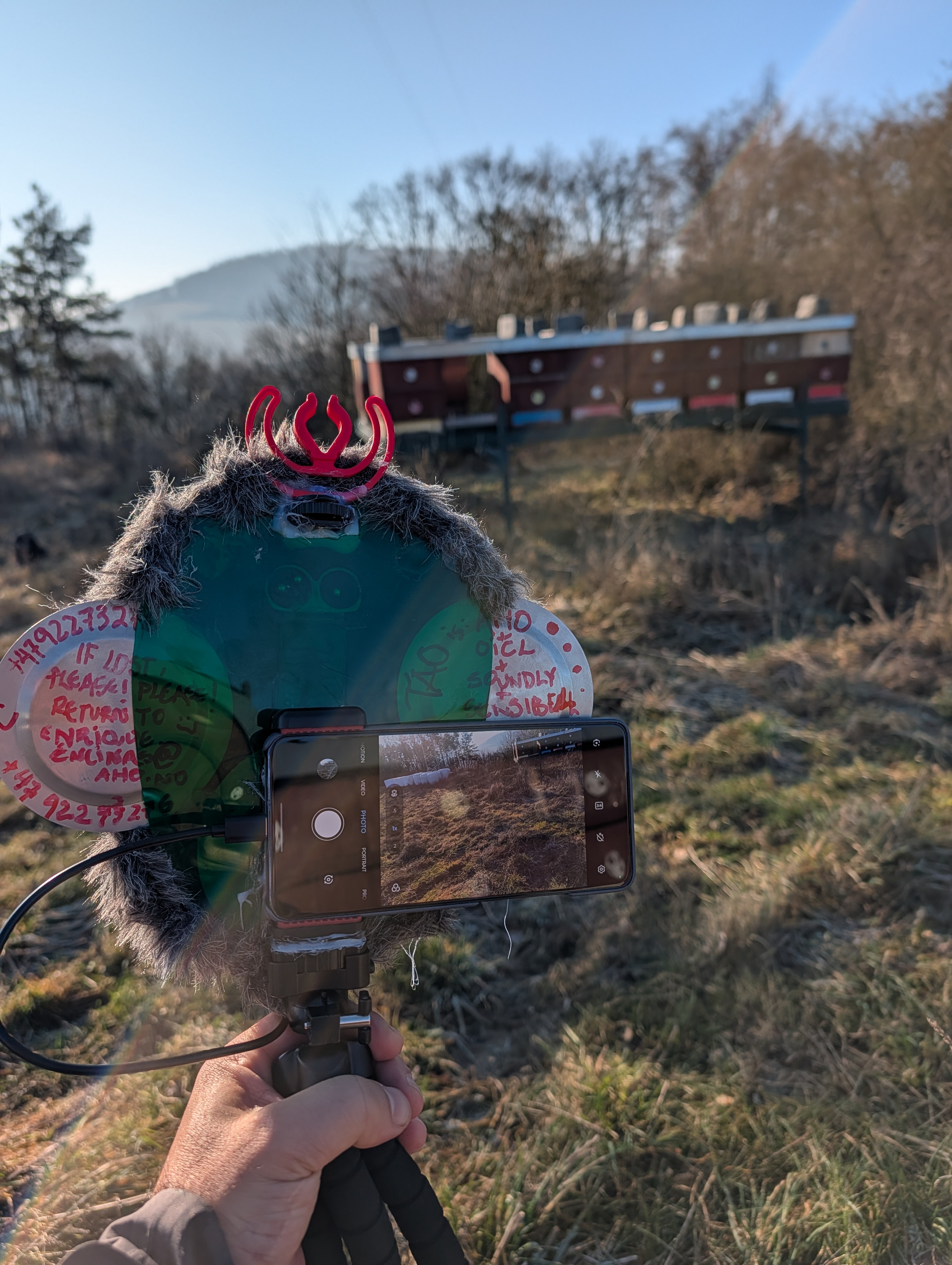 Listening oracle
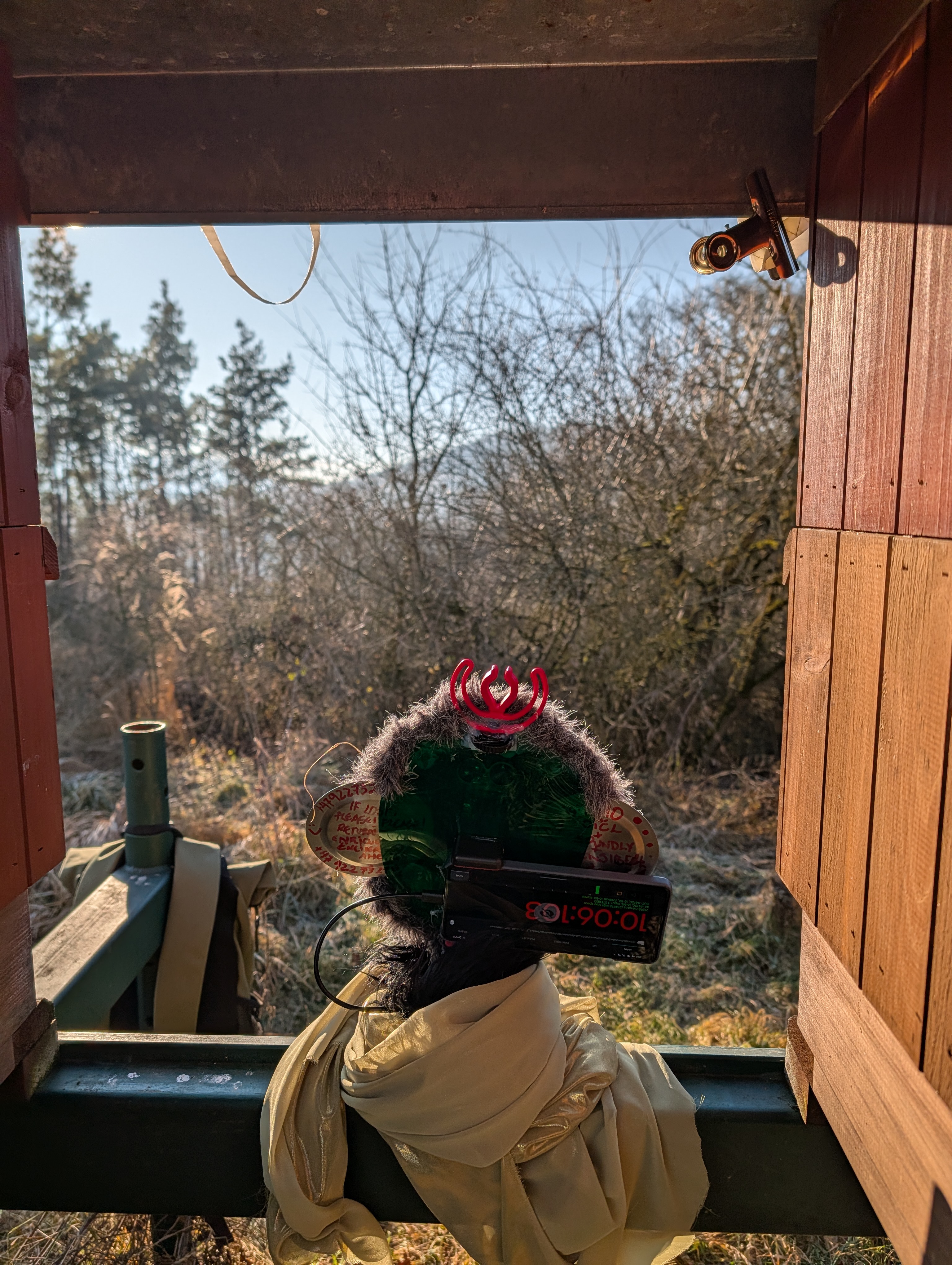 Winter landscape
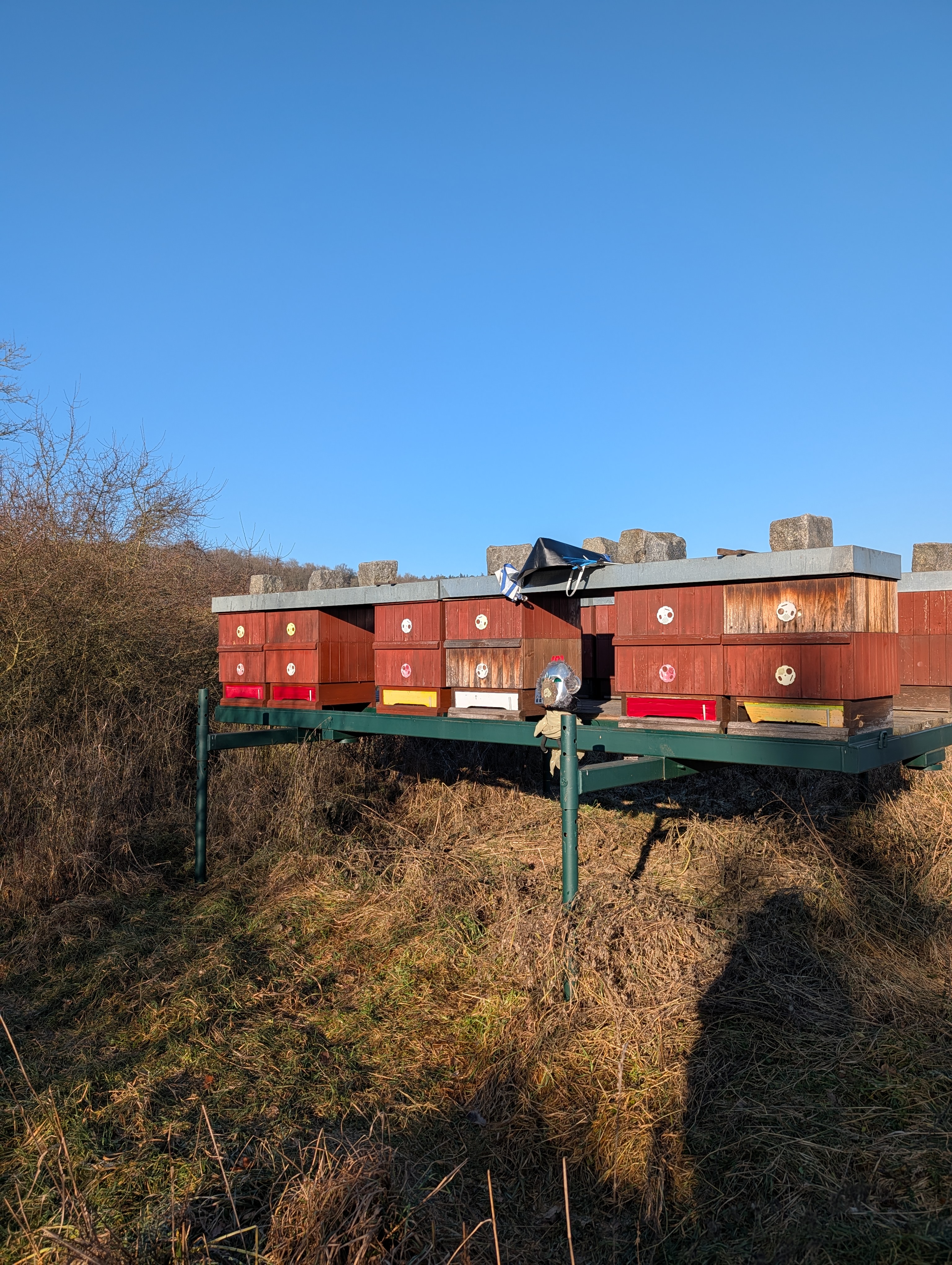 Field conditions
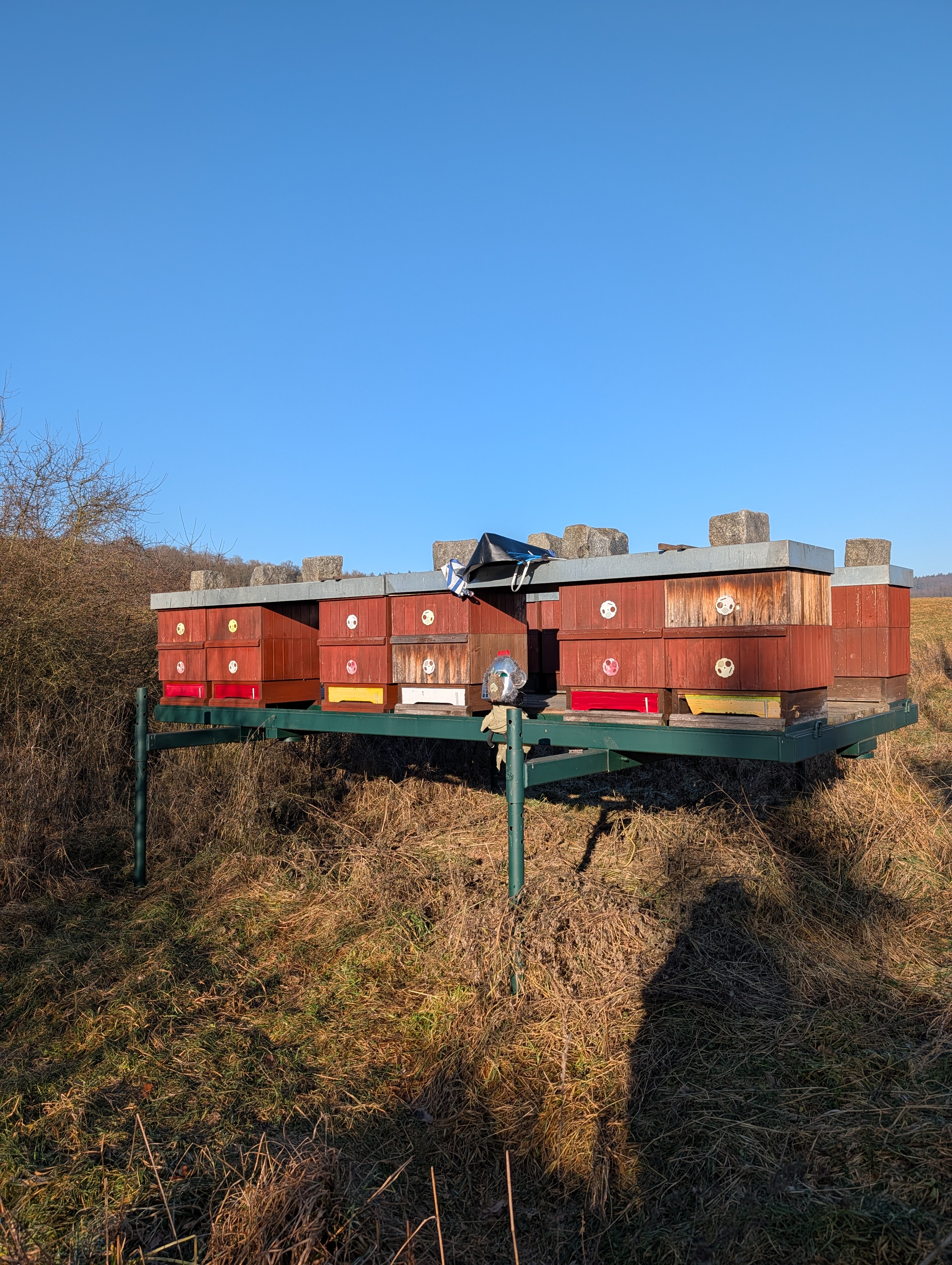 Czech countryside
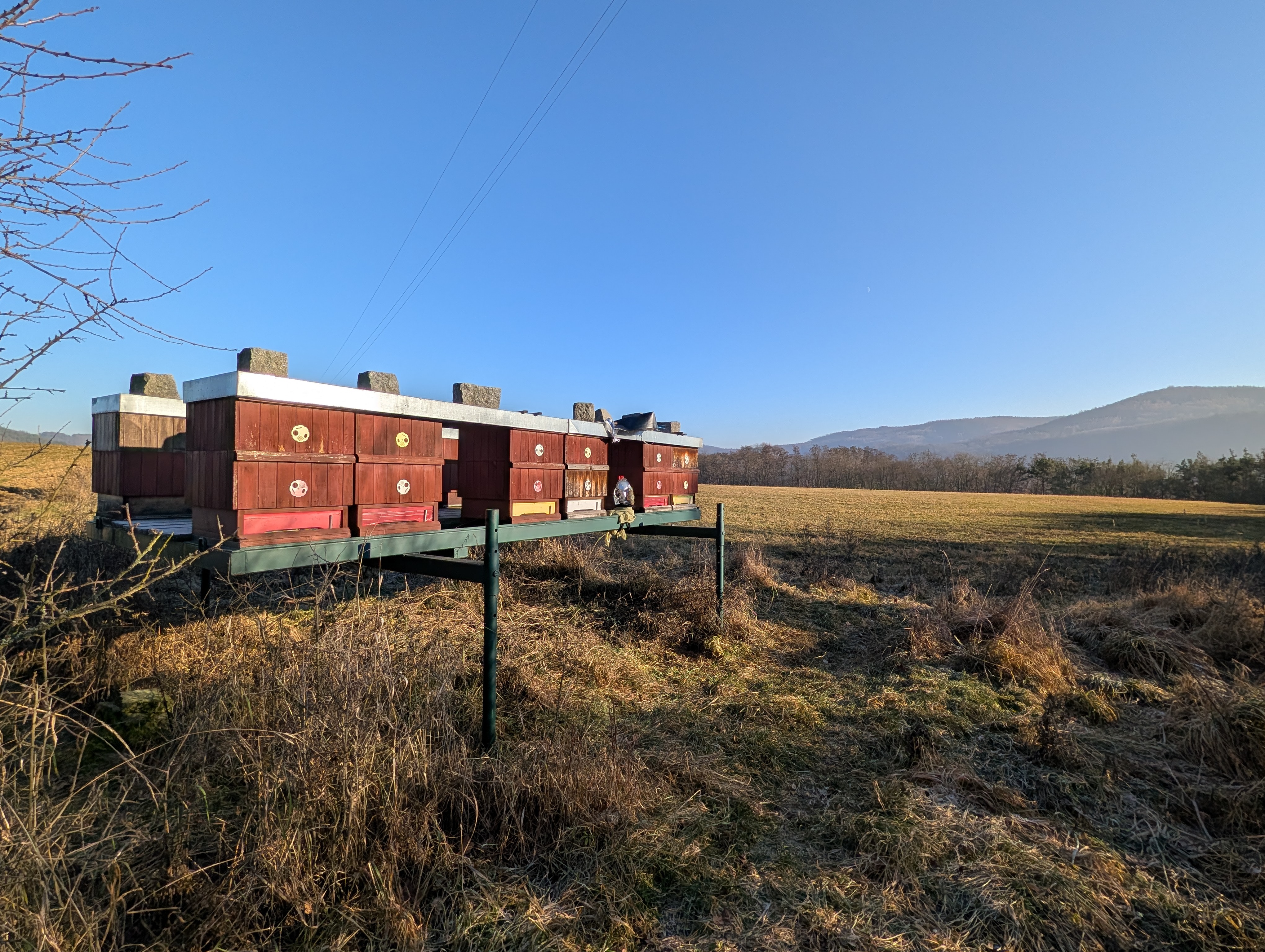 Agricultural setting
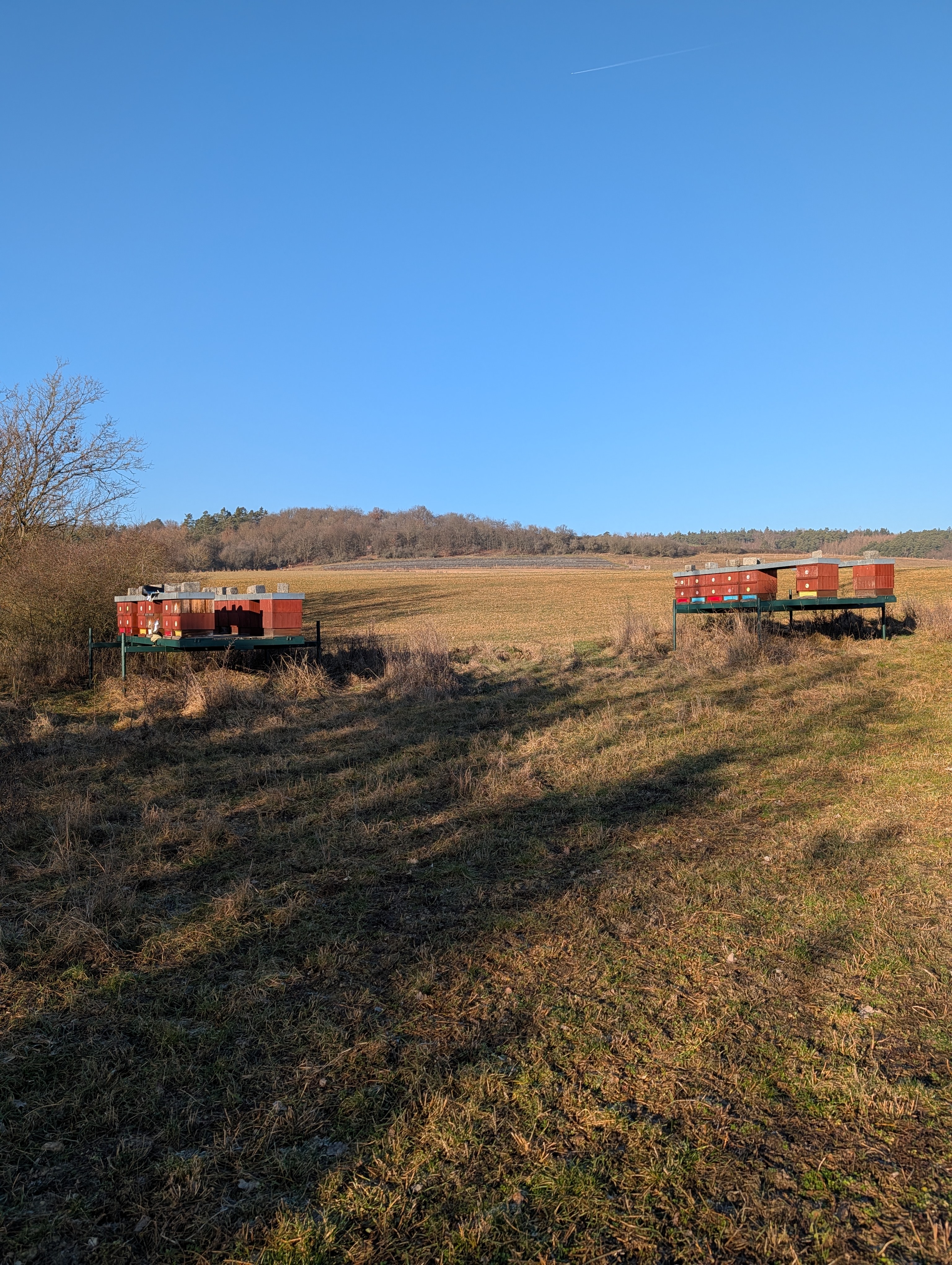 Soundscape capture
 Recording session
Acoustic Analysis: Spectrograms
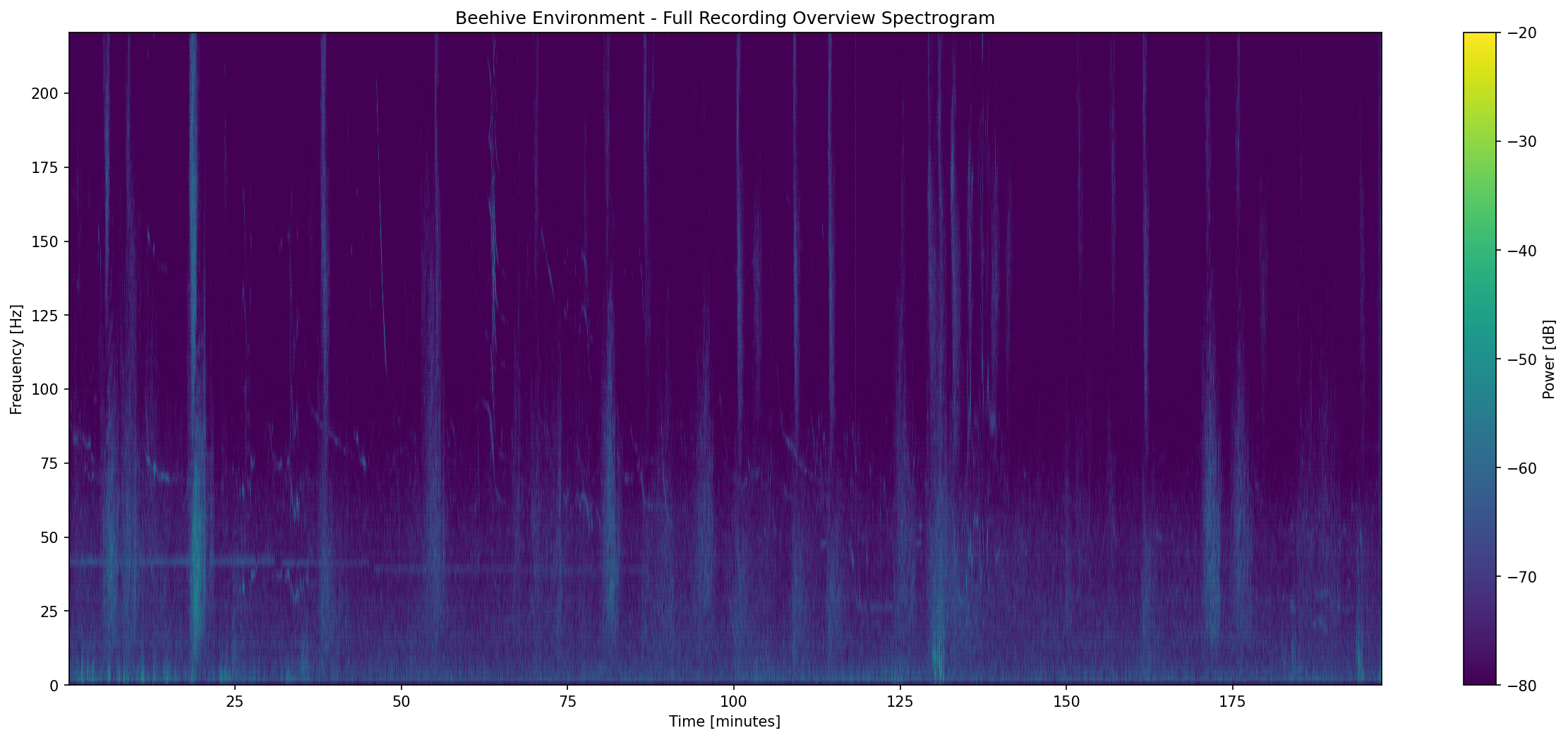 Overview
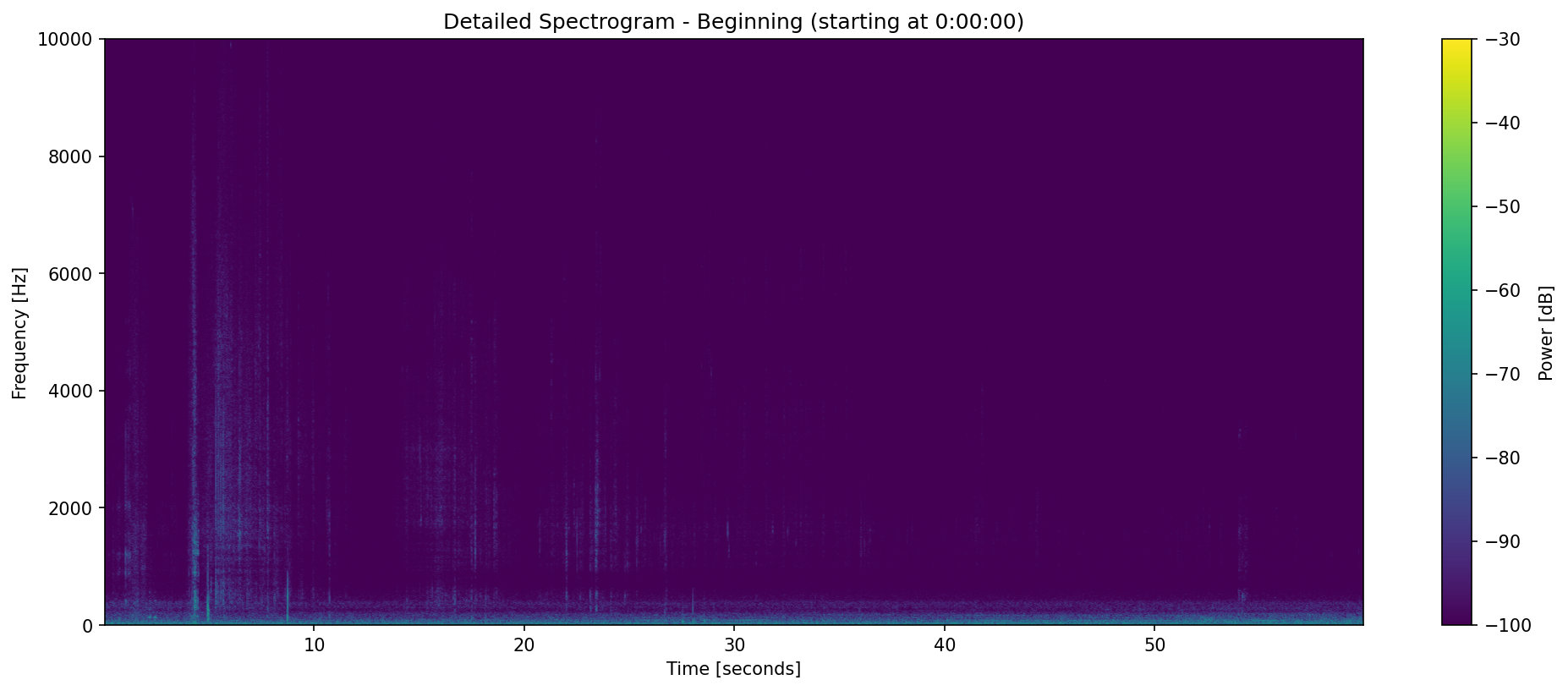 Beginning
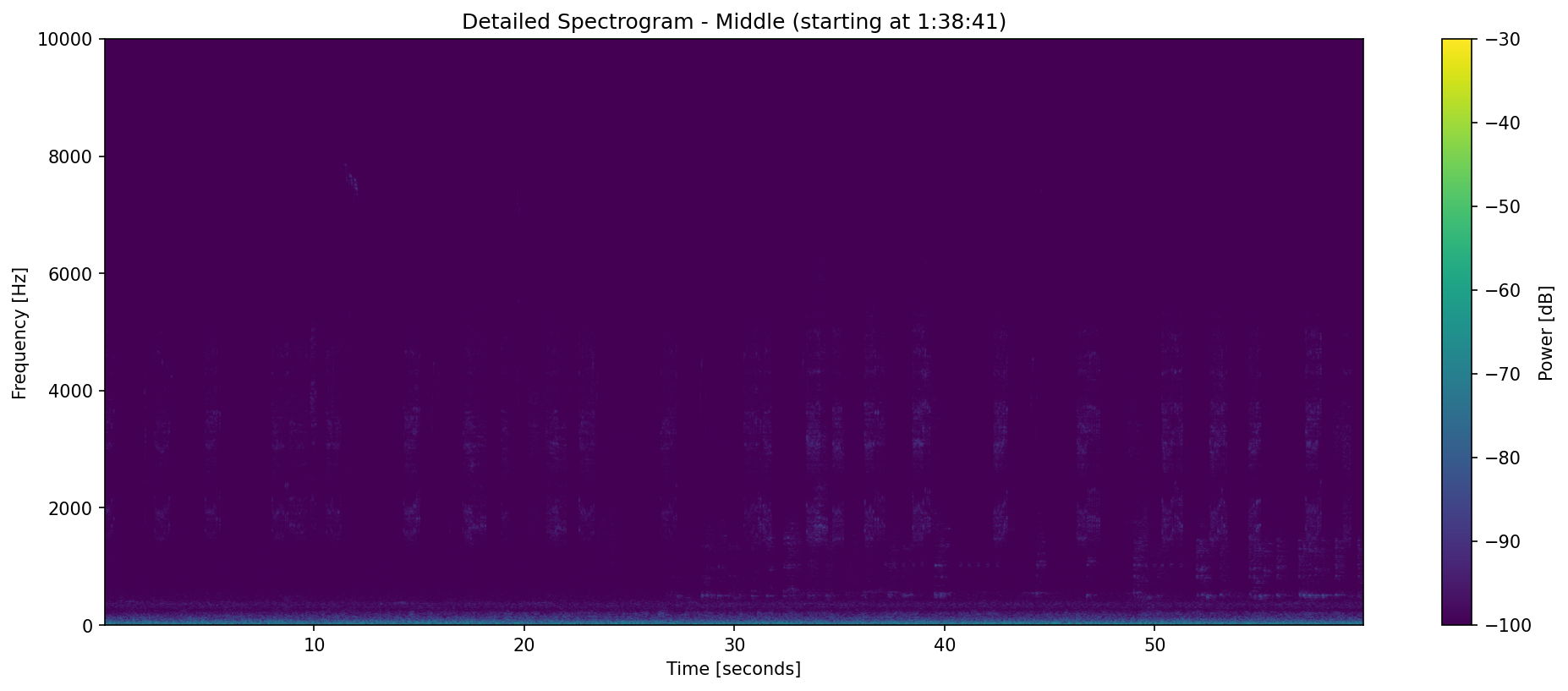 Middle
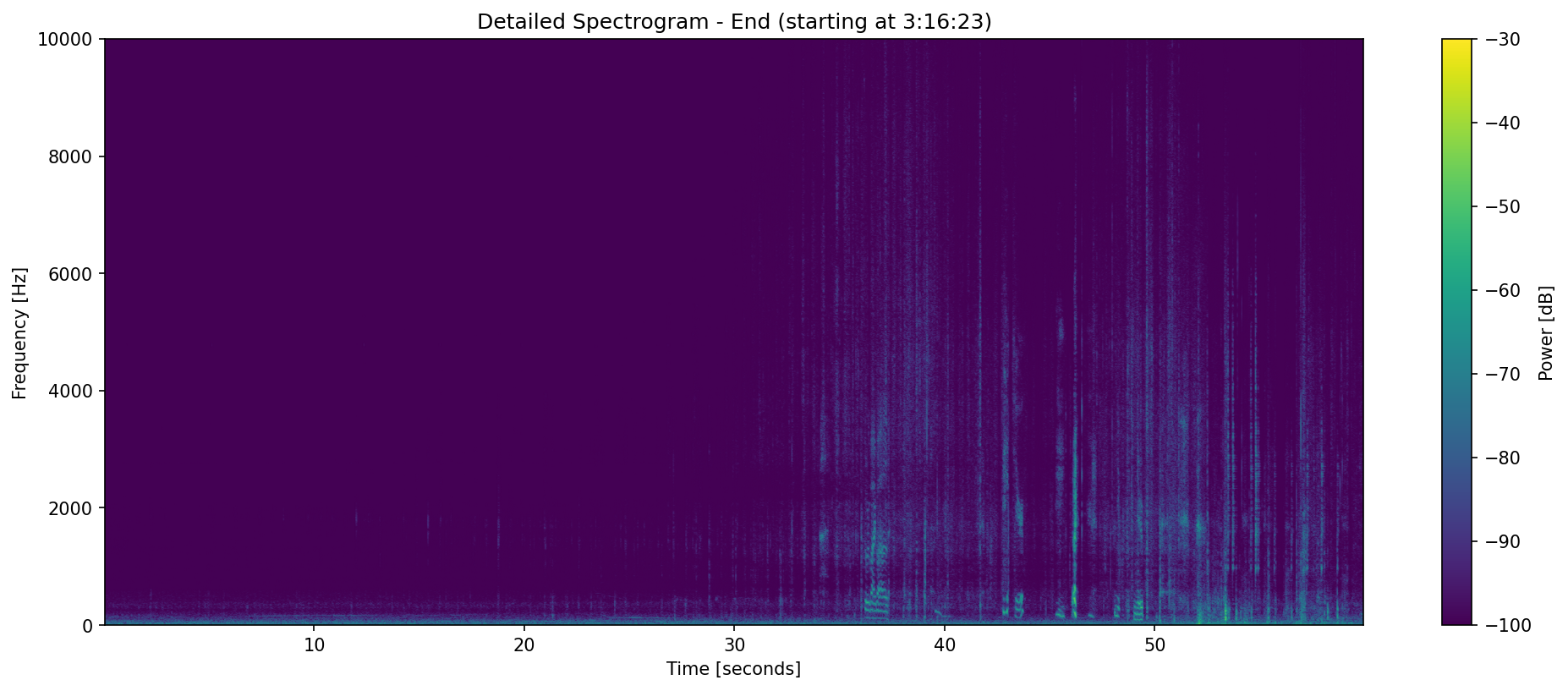 End
End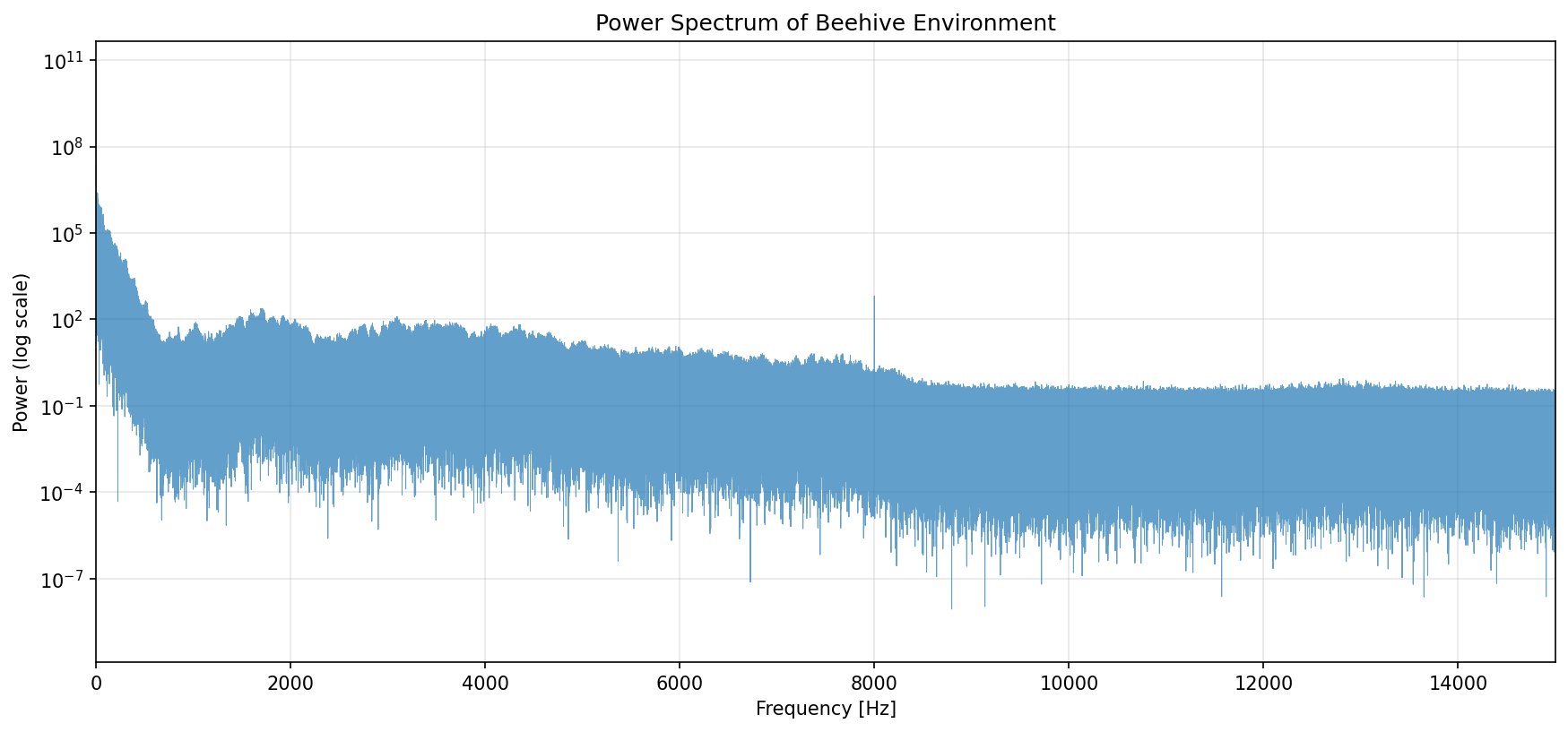 Frequency spectrum
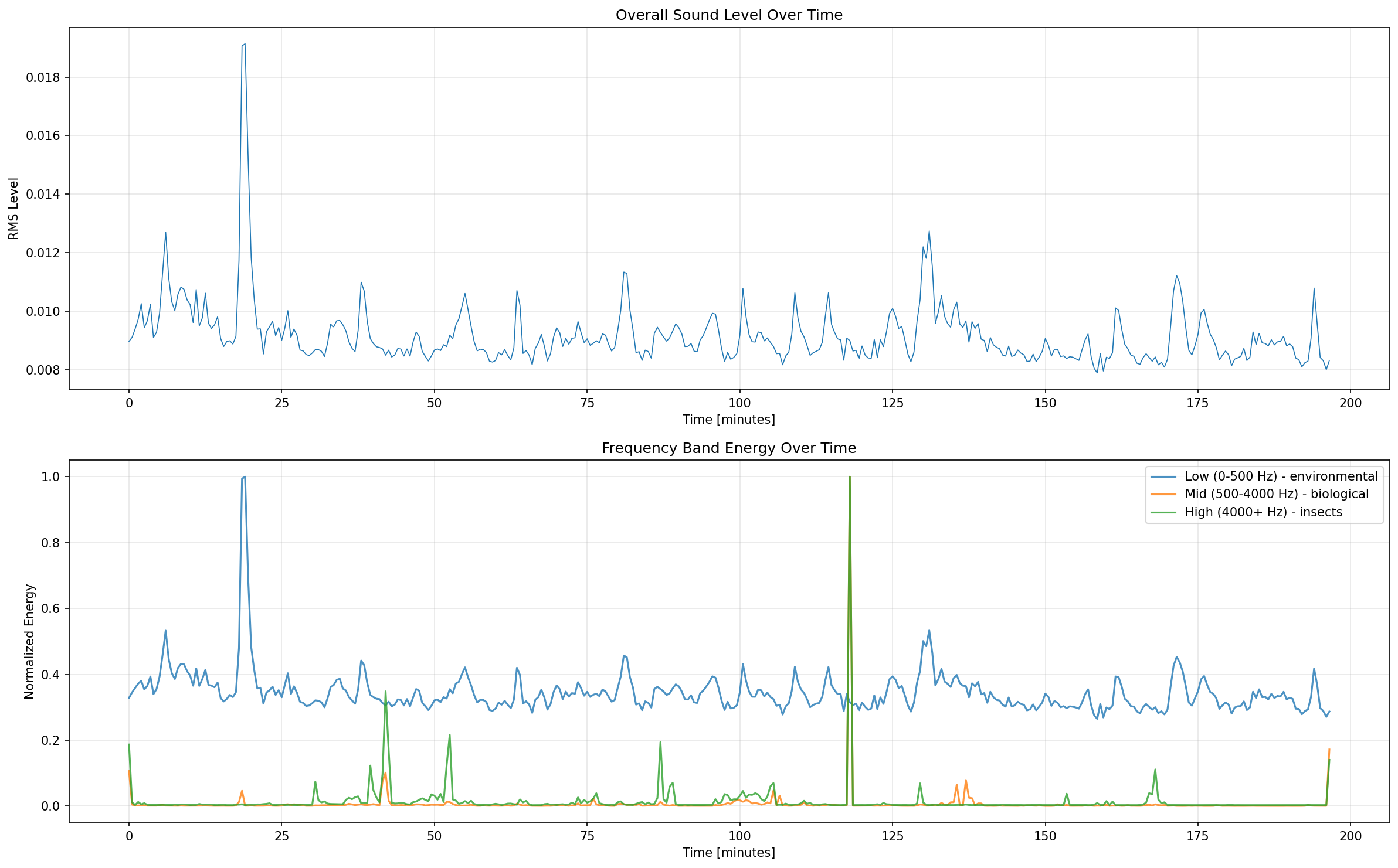 Time analysis
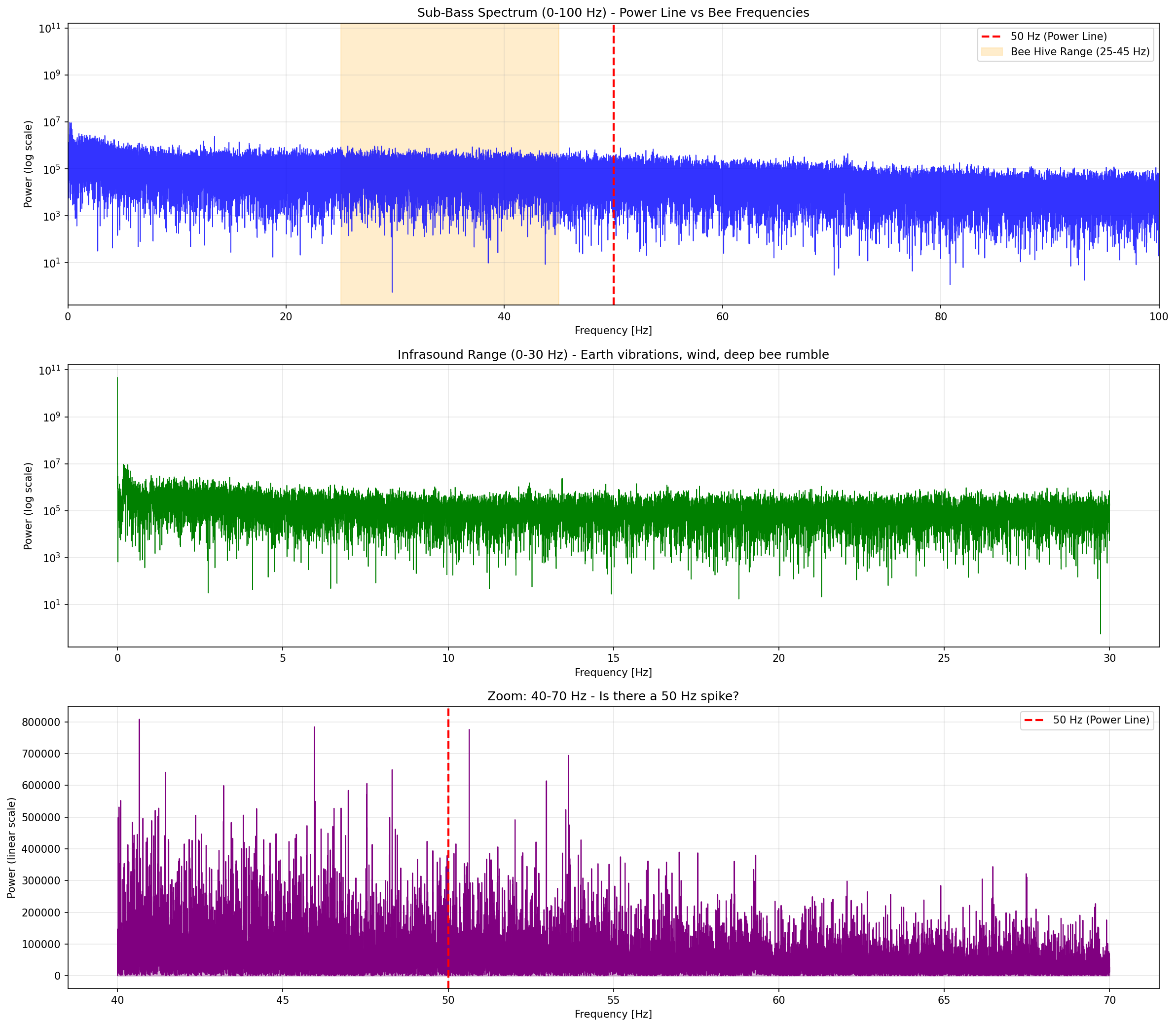 Sub-bass detail
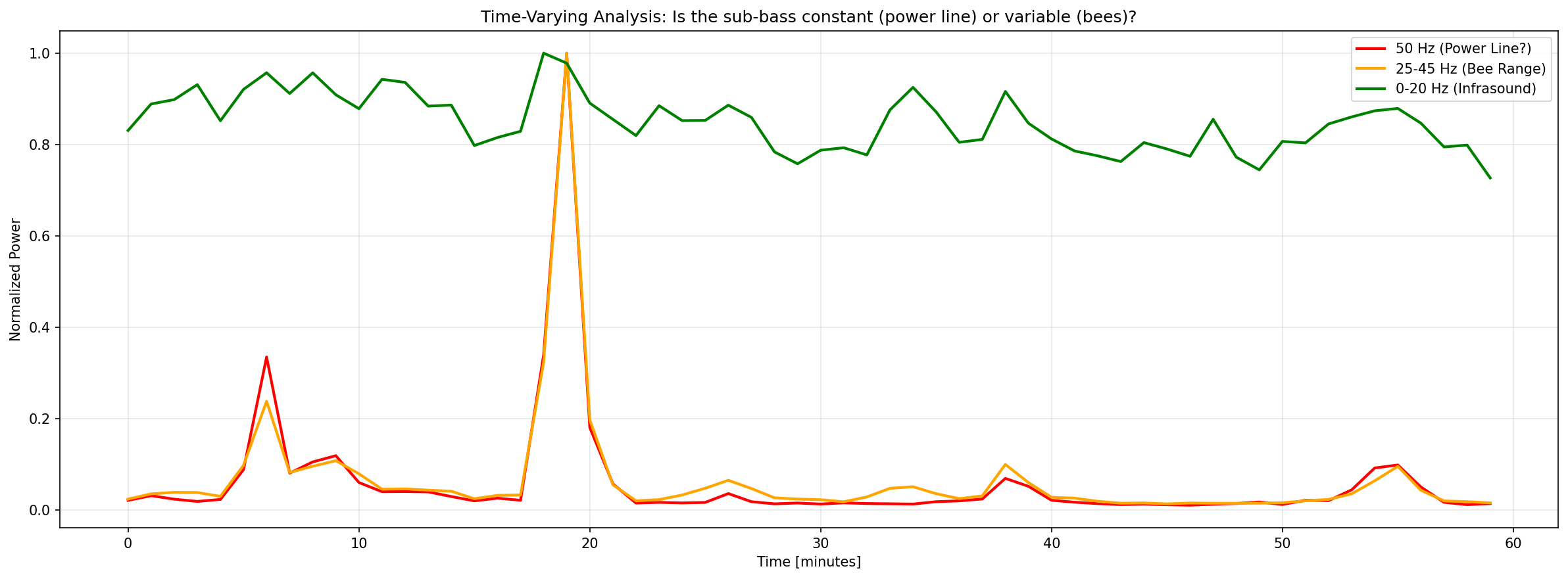 Sub-bass over time
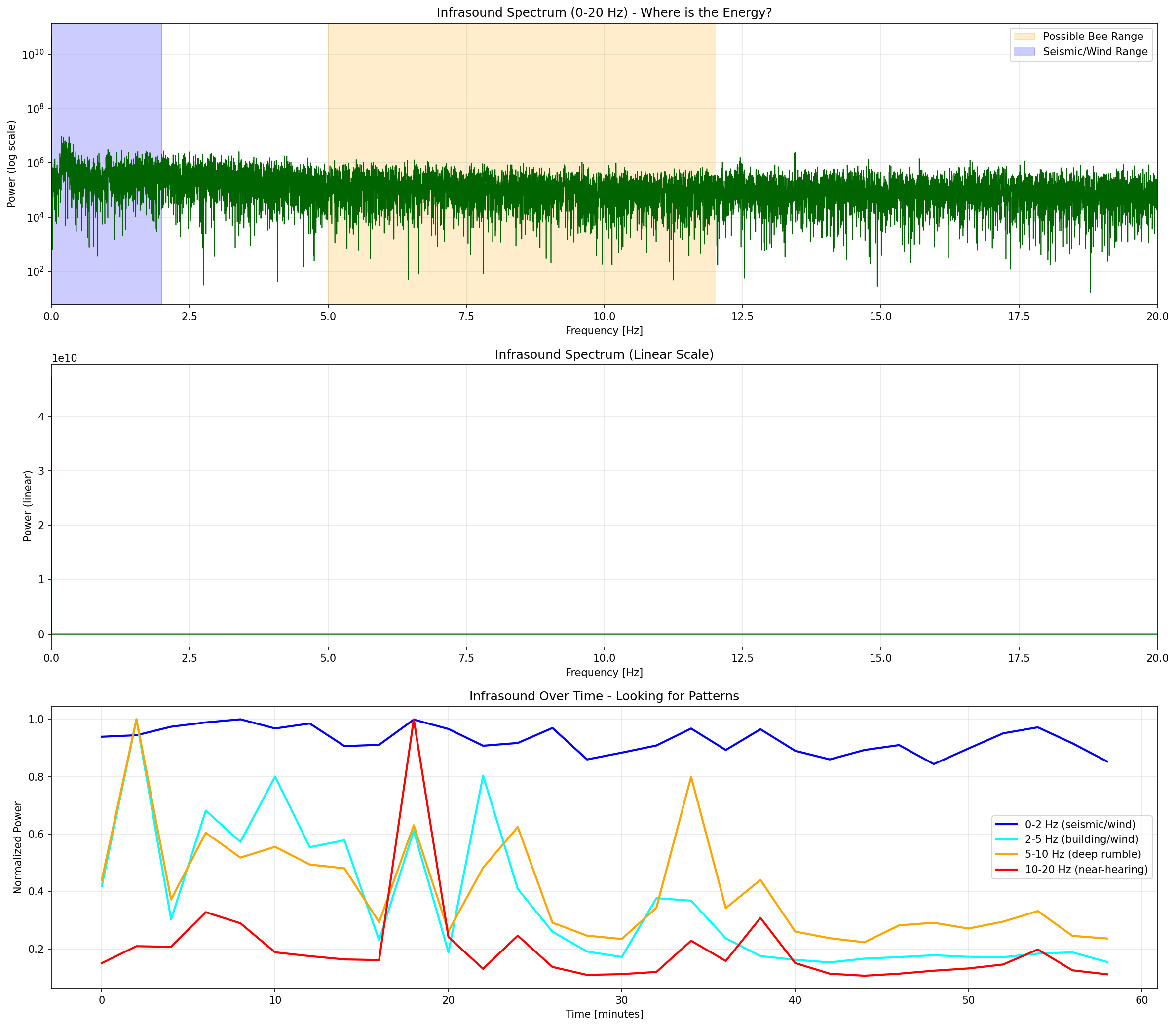 Infrasound detail
Technical Deep Dive
TAO V1: Hardware Evolution
The development of TAO V1 went through three distinct phases, each revealing critical lessons about autonomous field recording:
Phase I: SensiBel AURORA External (Discarded)
Initial prototypes used the SensiBel AURORA evaluation board via USB-C for lab-grade audio quality.
- Failure: Android Doze Mode interrupted USB power, causing driver crashes
- Failure: Exposed Flat Flex Cables vulnerable to vibration
- Failure: External DAC power draw exceeded solar budget
Phase II: Rugged Android Dual-Stream (Abandoned)
Attempted ruggedized phones with simultaneous audio/video capture.
- Failure: USB-C 2.0 bottleneck couldn't sustain high-bandwidth streams
- Failure: Thermal throttling under continuous load
Phase III: Audio-Priority with Adaptive Video (Selected)
Final architecture uses Moto G86 with integrated MEMS microphone array—eliminating all USB failure points.
TAO V2 Solution: SensiBel AURORA microphones embedded and protected within an anthropomorphized binaural head design—achieving professional audio quality while eliminating the USB instability that plagued V1.
TAO V1: Software Stack (The 4-App "Hack")
No single Android app handles simultaneous high-res audio, video, and SFTP transmission. TAO V1 uses four orchestrated applications:
| App | Function | Key Setting |
|---|---|---|
| Automate | Orchestration | 20-minute duty cycle, X/Y touch simulation |
| RecForge II | Audio capture | Unprocessed/Camcorder mode (bypasses noise suppression) |
| IP Webcam Pro | Video capture | MKV format, audio disabled, 640×480 @ 10fps |
| FolderSync | SFTP upload | One-way move (upload then delete) |
State Management: Automate uses Android System Settings to Force Stop all capture apps at cycle end—guaranteeing a "Cold Boot" state for every recording block, eliminating memory leaks.
Future Steps
Academic Dissemination: DIS 2025 Singapore
A major opportunity exists to present the Groise research framework at DIS 2025 (Designing Interactive Systems) in Singapore—combining academic publication with a tropical TAO deployment.
Long Paper Submission (tentative)
"Grammars of Noise: Acoustic Telepresence Across Ecological, Maritime, and Interspecies Domains"
- Theoretical framework: Groise as unifying research umbrella
- Case studies: TAO (environmental), OpenAmbient (industrial), BRINE (interspecies)
- The "noise as resource" argument threading through all three projects
Workshop Proposal (tentative)
"Sonifying the Unheard: Hands-on Acoustic Telepresence" — Participants work directly with TAO interfaces and OpenAmbient sonification concepts, exploring performative approaches to environmental data.
TAO Tropical Deployment
Deploy TAO in Singapore's tropical ecosystem (MacRitchie Reservoir or Bukit Timah Nature Reserve) for contrast with Norwegian Arctic and Central European deployments. Same system, radically different biophony/geophony—perfect documentation for the "noise is contextual" thesis.
Maritime Industry Engagement
Singapore's Port of Singapore Authority (MPA) is one of the world's busiest maritime hubs with active remote operations programs. The trip enables pilot testing of OpenAmbient concepts with actual vessel operators and potential industry partnerships.
Commercial & Scaling Opportunities
TAO V3 Case Commercialization
The 3D-printed phone-attachable exoskeleton with integrated SensiBel microphones could be productized as a consumer/prosumer acoustic sensing accessory.
"Noise Catcher" App
A significant opportunity exists for an Android application that automates the phone → autonomous sensor transformation, replacing the current 4-app stack with a single unified solution:
- Headless Operation: Foreground Service with screen disabled
- Dual-Stream Engine: Native high-res audio + low-res video
- Telemetry Sidecar: Battery, temperature, GPS metadata
- Built-in Store-and-Forward: Native SFTP with retry mechanisms
Open-Source Spatial Audio Tools: The app could leverage emerging open-source immersive audio frameworks:
- Eclipsa Audio (Google) — Google's new open-source immersive audio project enabling spatial audio encoding and rendering for everyone
- Apple Spatial Audio Framework — AVFoundation and Core Audio tools for spatial audio processing on iOS/macOS
- Apple PHASE — Physical Audio Spatialization Engine for real-time environmental audio simulation
TAO In-Ear: Binaural Field Recording Wearable
A potential evolution of TAO V3—or an independent V4 variant—would embrace the in-ear wearable microphone paradigm. Inspired by professional solutions like the Sound Professionals SP-TFB-2 and DPA 4560 headset microphone, this design places stereo microphones inside the human pinna—using the wearer's own ear canal and head mass to create authentic binaural effects.
- Form Factor: SensiBel Aurora MEMS microphones embedded in earphone or headphone housings
- Connection: Direct interface to any smartphone via the Noise Catcher app
- Use Case: Mobile binaural field recording where the recordist becomes the listening apparatus
- Advantage: True Head-Related Transfer Function (HRTF) capture using biological acoustics
- Applications: Immersive audio documentation, ASMR content creation, acoustic archaeology, walking soundscape journeys
This approach inverts TAO's typical "deploy and leave" methodology—instead, the human body becomes the mobile acoustic sensing platform, capturing the world from a genuinely embodied first-person perspective.
The Planetary Array
A distributed network of repurposed phones deployed by artists and researchers into diverse environments—urban ruins, forests, industrial zones. A central aggregator could create a global, time-delayed audio-visual map of the Anthropocene.
Budget & Expenses
Expenses to Date
Total invested in TAO development through December 2025:
| Item | Description | Cost |
|---|---|---|
| Hardware (TAO V1) | Moto G86 Power 5G + accessories | ~€350 |
| Travel (Lanzarote) | Field deployment logistics | ~€200 |
| Travel (Czech Republic) | Prague/Nezabudice deployment | ~€100 |
| Server/Hosting | VPS, domains, streaming infrastructure | ~€50 |
| Total Spent | ~€850 | |
Future Resource Needs
| Item | Description | Estimated Cost |
|---|---|---|
| DIS 2025 Singapore | Registration, flights Oslo↔Singapore, accommodation (5-7 nights) | €2,500-3,500 |
| TAO V3 3D Printing | Multiple prototype iterations, final production run | €200-400 |
| TAO Bag V2 | SegraSegra techwear collaboration | €TBC |
| Claude Pro Credits | AI coding assistance for Noise Catcher app development | €500 |
| Total Estimated Future Needs | €3,350-4,900 | |
Funding Strategy
Please get in touch with enrique.encinas@aho.no if you can contribute to this project.
Downloads
Download the complete unified technical report for offline reference:
989 lines • 5 parts • Full technical documentation